
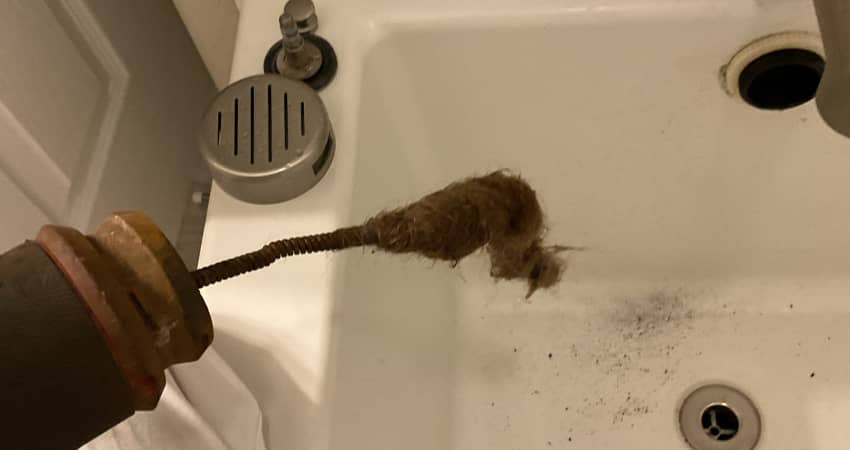
Standing ankle-deep in soapy water is often the first obvious sign of a clogged shower drain. In most cases, loose hair gradually combines with soap residue, skin oils, shampoo, and other products until water could no longer move freely through the pipe.
A shower drain clogged with hair may seem like an easy do-it-yourself fix, but the wrong method can push the blockage deeper, damage drain components, or expose you to harsh chemicals. When your shower drain is clogged with hair, start with the least aggressive approach.
Start by Removing the Drain Cover
Before reaching for tools or cleaners, remove the shower drain cover if it can be lifted or unscrewed safely. Some covers pull straight up, while others are secured with screws. Place any hardware somewhere it will not fall into the drain.
Use a flashlight to inspect the opening. Hair often collects immediately below the cover or around the drain flange. If the clog is visible and within easy reach, put on rubber gloves and pull it out by hand.
A plastic drain-cleaning tool with small barbs may also help retrieve hair near the surface. Insert it gently, twist slightly, and pull it back out. Avoid forcing it around tight bends because inexpensive plastic tools can break and become another obstruction inside the pipe.
Once the visible material is removed, run warm water for a minute to see whether the drain has improved.
Clean the Drain Cover and Stopper
Hair and soap residue can build up on the drain cover itself, restricting water before it even enters the pipe. Scrub the cover with warm, soapy water and an old toothbrush on both sides.
Some shower and bathtub drains include a stopper assembly that extends below the surface. Hair can wrap around these components and form a thick mat. If the stopper is designed for easy removal, clean it thoroughly before reinstalling it.
Do not disassemble unfamiliar drain hardware or use excessive force. Damaging the stopper, drain flange, or waterproof seal around the opening can create a leak that is more serious than the original clog.
Try a Plunger for a Shallow Blockage
A cup-style plunger can sometimes loosen a hair-and-soap clog located near the drain opening. Add enough water to cover the bottom edge of the plunger, then place it directly over the drain to create a seal. Push and pull several times using controlled pressure. The goal is to move the clog back and forth until it breaks apart or comes within reach.
After plunging, remove any debris that rises into the shower. Do not simply rinse it back down the drain.
Use a Hand-Operated Drain Snake (Very Carefully)
When a shower drain clogged with hair is too deep to reach but still appears confined to the shower, a small hand-operated drain snake may help. Feed the cable into the drain slowly until you feel resistance. Rotate the handle while applying light pressure. The cable may hook into the hair or break through the blockage.
Pull it back gradually and clean off any material before repeating the process.
Never force the cable. Hard resistance may be a pipe fitting, a sharp bend, or a blockage that requires different equipment. You can scratch fixtures, damage older pipes, or leave part of the cable stuck in the drain. Stop if the snake will not advance or becomes difficult to retrieve.
Avoid Harsh Chemical Drain Cleaners
Chemical drain cleaners are often marketed as a quick answer for hair clogs, but they can create additional risks. These products may contain highly corrosive ingredients that generate heat as they react with the blockage. Repeated use can damage some pipes, seals, metal finishes, and drain components. They may also dissolve only part of the clog, leaving behind enough buildup for the problem to return.
Never combine different drain cleaners or mix them with bleach, ammonia, vinegar, or other household products. The reaction can produce dangerous fumes, intense heat, or splashing chemicals.
Will Baking Soda and Vinegar Clear Hair?
Baking soda and vinegar will fizz when mixed together, but that reaction is not usually strong enough to dissolve a dense mat of hair.
The mixture may loosen light soap residue or help freshen a mildly sluggish drain, but it’s not a dependable solution for a shower drain clogged with hair.
Boiling water is also not appropriate for every plumbing system. Extremely hot water may soften certain plastic pipes, damage seals, or stress older components. Warm or hot tap water is generally a safer choice after mechanically removing the clog.
When to Call a Professional Plumber
A clogged shower drain may require professional attention when:
- The clog returns shortly after cleaning
- Water does not drain after removing visible hair
- The drain makes persistent gurgling sounds
- Water backs up through another fixture
- Several drains in the home are slow
- Sewage odors are coming from the drain
- A snake will not pass through the pipe
When more than one fixture is affected, the obstruction may be in a branch drain or the main sewer line rather than directly beneath the shower. A plumber can use professional drain-cleaning equipment and, when necessary, inspect the line to identify heavy buildup, damaged piping, or tree-root intrusion.
Contact George Brazil Plumbing & Electrical when a clogged shower drain in your Sun City home will not clear or keeps coming back.