
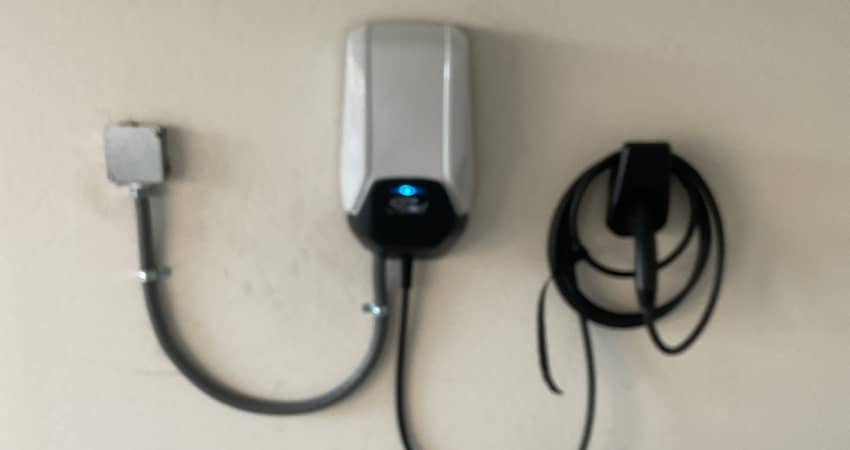
Installing a home EV charger can eliminate routine trips to public charging stations and help ensure that your vehicle is ready each morning. About 80% of electric vehicle charging currently takes place at home, so residential charging is an important part of EV ownership.
For most Scottsdale homeowners searching for EV charger installation near me, the main decision is whether to continue using a standard Level 1 outlet or install a faster Level 2 charging station. The answer depends on your daily driving, vehicle, electrical capacity, charger location, budget, and utility rate plan.
This guide explains the costs, electrical requirements, permits, rebates, outdoor-installation considerations, and contractor qualifications involved in planning a home charging project.
Level 1 vs. Level 2 Home EV Charging
Level 1 charging uses a standard 120-volt household outlet. It requires little or no new equipment when the home already has a dedicated outlet, but it charges your vehicle very slowly. It may be adequate for a plug-in hybrid, someone with a very short commute, or someone who can leave the vehicle connected for long periods.
Level 2 charging uses a 240-volt circuit and delivers substantially more power. It is generally the preferred choice for full battery-electric vehicles, longer commutes, households with two EVs, and drivers who want to restore their daily mileage overnight.
Feature | Level 1 Charging | Level 2 Charging |
|---|---|---|
Electrical supply | 120 volts | 240 volts |
Installation | May use a suitable existing outlet | Requires a dedicated circuit |
Charging speed | Slow | Significantly faster |
Best suited for | Plug-in hybrids and limited daily driving | Battery EVs and regular commuting |
Typical role | Occasional or supplemental charging | Primary home charging |
A larger charger is not automatically the best choice. Each EV has an onboard charger that limits how much alternating-current power the vehicle can accept. Installing a high-output unit will not increase charging speed beyond that limit.
The right EV home charger installation should provide enough power to replace your typical daily mileage during the hours when the vehicle is parked.
How Much Does EV Charger Installation Cost in Scottsdale?
EnergySage reports that EV home charger installation in Arizona costs an average of approximately $2,063. That figure provides a useful starting point, but it does not include panel upgrades or other major electrical work that some homes may require.
The total price includes more than the charging station itself. A complete estimate may account for:
- The Level 2 charging unit
- Electrician labor
- A dedicated circuit breaker
- Wiring, conduit, fittings, and mounting materials
- Permit and inspection fees
- Load-management equipment
- Trenching or concrete work
- Drywall or finish repairs
- Panel or service upgrades
One of the largest cost variables is the distance between the electrical panel and the charger. A garage wall next to the panel may allow for a short, direct circuit. Installing the charger on the opposite side of the home or in a detached garage requires more wiring, conduit, labor, and possibly trenching.
Cost Factor | Why It Matters |
|---|---|
Charger amperage | Higher output may require larger wiring and breakers |
Distance from panel | Longer circuits use more material and labor |
Wall construction | Finished walls and ceilings complicate routing |
Outdoor placement | Requires weather-rated equipment and materials |
Panel capacity | Limited capacity may require management equipment or upgrades |
Detached garage | May require trenching, conduit, or a subpanel |
Permits | Fees and requirements vary by project scope |
An onsite evaluation is the best way to estimate electric car charging installation costs. An electrician can inspect the panel, calculate the electrical load, measure the circuit route, evaluate the mounting location, and review the charger’s specifications before providing a written scope.
Can Your Electrical Panel Support a Level 2 Charger?
The EPA says a home with at least 200-amp service and two empty spaces for a double-pole breaker will likely have capacity for Level 2 charging. However, a formal load evaluation is still needed. A qualified Level 2 EV charger installer should calculate the home’s expected electrical demand, including:
- Air conditioners and heat pumps
- Electric water heaters
- Ranges, ovens, and clothes dryers
- Pool pumps, spas, and pool heaters
- Workshop equipment
- Existing 240-volt circuits
- Solar and battery-storage systems
- The proposed charger output
We run our AC in Scottsdale for long periods, so a panel may appear to have room for another breaker, but already be close to capacity, especially when pool equipment or other appliances power on. In some cases, installation requires an electrical panel upgrade.
Load-management equipment can also reduce or pause charging when other major appliances are operating and resume charging as capacity becomes available. This may allow some homeowners to add Level 2 charging without increasing the electrical service.
Another solution may be to add a subpanel to create breaker space, but it does not increase the total power available to your home. That’s why it’s so important for EV charging station installers to do load calculations to support your total electrical usage.
What Happens During a Home EV Charger Installation?
A professional EV home charger installation typically includes:
- Reviewing the vehicle’s charging specifications
- Determining the desired charging output
- Inspecting the panel and service equipment
- Completing an electrical load calculation
- Selecting the mounting location
- Planning the wiring and conduit route
- Obtaining required permits
- Installing the breaker, circuit, and charger
- Completing applicable inspections
- Testing the equipment and reviewing operation
Garage and Outdoor EV Charger Installation
Charger placement affects convenience, safety, cable management, and installation cost. Before choosing where to place the charger, make sure it’s a locationthat’s easy to attach to your vehicle. Consider whether you usually park nose-in or back into the garage. The charging cable should reach the vehicle comfortably without being pulled tight, driven over, or stretched across a walkway. The connector should have a wall-mounted holder that keeps it off the floor.
A practical location should also account for:
- Garage doors and pedestrian doors
- Shelving, cabinets, and appliances
- Vehicle doors and bumpers
- Cable length
- Distance from the panel
- The possibility of a second EV
- Occasional driveway charging
An outdoor EV charger installation requires equipment specifically approved for exterior exposure. Scottsdale installations may face intense heat, direct sunlight, dust, irrigation, and wind-driven monsoon rain. Exterior-rated conduit, fittings, mounting components, and enclosures may also be required.
Hardwired equipment is generally selected for an outdoor EV charger installation because it eliminates an exposed plug connection.
Scottsdale EV Charger Permits and Inspections
Adding a dedicated 240-volt EV charging circuit typically requires an electrical permit and inspection. The exact requirements depend on the installation scope, equipment, property, and local permitting authority.
An experienced electrician to install an EV charger should determine which permits are required, prepare the application, include applicable fees in the estimate, schedule the inspection, and correct any installation-related issues identified by the inspector.
Permit approval helps document that the breaker, wiring, grounding, charger, and related components were reviewed for compliance. Your utility company may also need to conduct its own inspection and approval if the project involves replacing or relocating service-entrance or metering equipment. The contractor may need to coordinate project plans, equipment approval, inspections, and temporary service disconnection with both organizations.
APS Rebates and Smart-Charging Savings
Scottsdale homeowners served by Arizona Public Service (APS) should check current programs before purchasing a charger. The APS marketplace for Level 2 smart-charging equipment offers APS EV charger rebates depending on the equipment, promotion period, and customer eligibility.
APS SmartCharge currently offers a one-time $25 bill credit plus a $5 monthly participation credit. Depending on the selected option, customers may share charging data or allow limited adjustments to charging times when demand is lower or cleaner energy is available.
Over time, your electricity rate plan can have a larger long-term effect than the equipment rebate. APS’s EV overnight plan lists a summer on-peak energy charge of 36.824 cents per kilowatt-hour, compared with 8.468 cents per kilowatt-hour during the overnight period.
A smart charger or the vehicle’s scheduling controls can automatically delay charging until lower-priced hours. If you’re an APS customer, you’ll want to confirm the APS EV charger rebate, rate-plan rules, compatible equipment, and enrollment requirements before purchasing or scheduling installation.
SRP EV Charger Incentives
Some Scottsdale properties receive electricity from Salt River Project rather than APS. SRP currently offers residential customers up to a $250 instant rebate on qualifying Level 2 chargers purchased through its marketplace. Some equipment purchased elsewhere may also qualify.
SRP’s EV Smart ChargeTM program may provide a $50 enrollment bill credit and an additional annual credit for eligible participants. SRP also offers residential price plans that encourage EV charging during super off-peak hours, generally when system demand and electricity prices are lower.
These programs can change over time, so you’ll want to review them first before making a purchasing decision or changing your rate plan.
How to Choose EV Charging Station Installers
Level 2 charging is high-powered electrical work, so any contractor you work with should not be based only on the lowest price. Compare electric car charging installation based on licensing, electrical experience, permitting, load calculations, written estimates, and warranty coverage.
Ask each contractor:
- Is your Arizona electrical contractor license active?
- How many residential EV chargers have you installed?
- Is a formal load calculation included?
- Do you install hardwired and plug-in equipment?
- Do you handle permits and inspections?
- Can you install outdoor-rated chargers?
- Can you provide load-management options?
- What workmanship warranty is included?
- Will you coordinate with APS or SRP when necessary?
Estimates from EV charging station installers may vary because they do not always include the same work. One quote may exclude permits, drywall repairs, trenching, surge protection, or service modifications.
A qualified level 2 EV charger installer should explain why the proposed charger output, breaker, wiring, and installation method are appropriate. Be cautious of anyone who recommends adding the largest possible breaker without inspecting the service or calculating the electrical load.
FAQs — Frequently Asked Questions About EV Home Charger Installation
How long does it take to install a home EV charger?
A straightforward installation near the panel may be completed in several hours. Projects involving long wiring routes, trenching, panel work, permits, or utility coordination can take longer.
Does every Level 2 charger require a panel upgrade?
No. Many homes can support Level 2 charging without upgrading the panel. The decision depends on service capacity, calculated demand, charger output, breaker space, and equipment condition.
Can I do an outdoor EV charger installation in Arizona?
Yes. The charger and electrical materials must be approved for exterior use and installed to withstand expected heat, sunlight, dust, moisture, and physical exposure.
Should I buy a charger before calling an electrician?
Schedule an electrical evaluation first. This can prevent you from buying an oversized charger that might not work with your car. Your Level 2 EV charger installer can evaluate your system and recommend the appropriate EV charger for your home.
Who should install a Level 2 EV charger?
A licensed electrical contractor with EV charging experience should perform the work. Homeowners searching for EV charger installation near me should verify the contractor’s license, load-calculation process, permitting practices, warranty, and experience with the selected equipment.
Can a charger be installed without a full-service upgrade?
A lower-output charger or load-management system may allow the home to support Level 2 charging without increasing the electrical service.
George Brazil Plumbing & Electrical can evaluate your Scottsdale home, complete the necessary load calculations, recommend appropriate equipment, and handle the electrical installation. Contact George Brazil to schedule an assessment with an experienced electrician to install an EV charger safely.