
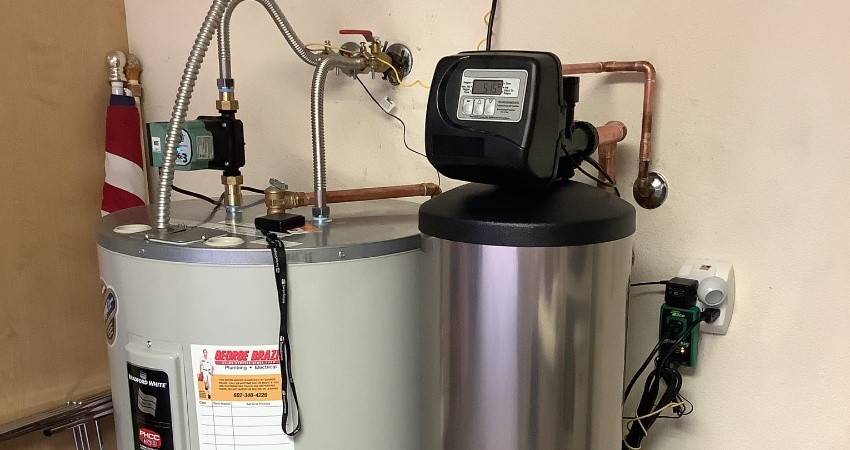
Every North Scottsdale home has unique water treatment needs. For homeowners in DC Ranch and Grayhawk, finding the right solution comes down to balancing water quality, household usage, and personal preference. That might mean a comprehensive whole-house filtration system, targeted under-sink reverse osmosis (RO) for drinking water, or a combination of both.
Scottsdale’s municipal water meets all federal drinking standards, but its naturally high mineral content and municipal treatment additives mean that homeowners may want a way to remove even more minerals or potential contaminants.
From whole-home carbon filtration and water softeners to specialized point-of-use systems, understanding your home’s specific water chemistry helps you tailor a solution for water treatment in Scottsdale that fits your lifestyle.
What Scottsdale’s 2026 Water Quality Report Reveals
Scottsdale’s 2026 Water Quality Report provides detailed information about the city’s water sources, hardness, dissolved minerals, and treatment methods.
Where North Scottsdale Gets Its Water
Scottsdale obtains water from several sources, including the Colorado River through the Central Arizona Project (CAP), the Salt and Verde rivers through the Salt River Project (SRP), and local groundwater.
| Water Source | Share |
| Central Arizona Project | 71% |
| Salt River Project | 13% |
| Groundwater | 8% |
| Recycled water | 8% |
These percentages represent Scottsdale’s overall water portfolio, not the exact composition delivered to individual homes. Recycled water is used for applications such as irrigation and aquifer replenishment rather than being directly supplied as untreated drinking water. The city operates advanced treatment facilities, including the CAP Water Treatment Plant in North Scottsdale and the Chaparral Water Treatment Plant near Hayden and McDonald Roads. Both facilities use filtration and disinfection processes to produce drinking water that meets applicable standards.
Hardness, Dissolved Solids, and Chlorine
For North Scottsdale homeowners, the report’s mineral measurements are especially useful.
| Water Characteristic | AVERAGE Level |
| Hardness north of Chaparral Road | 13–17 grains per gallon |
| Indian School Road to Chaparral Road | 13–15 grains per gallon |
| North of Chaparral Road | 13–17 grains per gallon |
| Total dissolved solids (TDS) | 325–710 ppm |
| Sodium | 48–140 ppm |
| Chlorine | 0.64 ppm |
Regardless of where you live in Scottsdale, you’ve got hard to very hard water coming from the city. Scottsdale does not soften its municipal water, explaining that treating the entire supply for hardness would not be cost-effective, particularly because much residential water is used outdoors.
Scottsdale also uses chlorine for disinfection rather than chloramine. This matters when choosing carbon filtration media because different disinfectants can require different treatment configurations.
While the water meets federal standards and is safe to drink, Scottsdale water may contain trace amounts of:
- Arsenic
- Barium
- Chromium
- Fluoride
- Nickel
- Nitrate
- Selenium
- Alpha Emitters
- Uranium
What Types of Whole-House Water Filtration Systems Are Available?
Water filtration, softening, conditioning, and reverse osmosis perform different functions. The right Scottsdale water filtration system will depend on what substance you want to remove or reduce.
Activated Carbon Filtration
Activated carbon is commonly used in a whole-house water filter to reduce chlorine taste and odor.
Water passes through carbon media that adsorbs certain substances. Granular activated carbon and carbon block filters are common configurations, although their effectiveness depends on contact time, flow rate, and media characteristics.
Because Scottsdale uses chlorine to treat municipal water, activated carbon is often a practical choice for homeowners who want to improve water taste and smell throughout the house. However, carbon filtration does not substantially remove the calcium and magnesium responsible for water hardness.
Traditional Water Softeners
Conventional water softeners use ion exchange to remove calcium and magnesium. As water passes through a resin tank, hardness minerals are exchanged for sodium or potassium ions. The system periodically regenerates the resin using salt. This process produces softened water, which can reduce mineral scale accumulation in water heaters, plumbing fixtures, and water-using appliances.
However, regeneration requires water and produces wastewater containing dissolved salts.
Salt-Free Water Conditioners
A whole-house water conditioner is an alternative for homeowners who want to manage mineral scale without traditional salt-based softening.
Many systems use template-assisted crystallization to change how dissolved minerals form scale. Instead of removing hardness minerals, they reduce the minerals’ tendency to attach to plumbing surfaces.
These types of whole-house water conditioners typically do not require salt or regeneration wastewater. However, conditioning is not equivalent to softening. Calcium and magnesium remain in the water, and results vary by technology and water chemistry.
Reverse Osmosis Drinking Water Systems
Reverse osmosis forces water through a semipermeable membrane that reduces many dissolved substances, including certain salts, metals, and minerals. Homeowners have options for an RO system that acts as a whole-home water filtration system or an under-sink system specifically for drinking and cooking.
Which Scottsdale Water Filtration Systems Are Right for Your Home?
The right equipment really depends on your goals. Whether you’re considering whole-house water filtration or a point-of-use system, here are some basic guidelines you can use to help you filter your options.
| Your Primary Goal | Treatment to Consider |
| Reduce chlorine taste and odor throughout the house | Activated carbon filtration |
| Remove calcium and magnesium | Traditional water softener |
| Reduce scale without salt | Salt-free conditioner |
| Reduce selected dissolved substances in drinking water | Under-sink reverse osmosis |
| Address both chlorine and hardness | Carbon filtration plus softening or conditioning |
| Capture particles before other equipment | Sediment pre-filtration when needed |
For example, if you’re primarily concerned with chlorine taste, carbon filtration may meet your needs. If you are focused more on removing hardness minerals, you may find more benefit from a water softener.
Another household may want both treatments. In that case, a properly configured whole home water filtration system can incorporate multiple technologies to handle all of your needs.
Whole-House Water Filtration for DC Ranch and Grayhawk Homes
North Scottsdale’s established residential communities have varied plumbing systems, property sizes, and existing water treatment equipment. These differences influence installation requirements and system sizing.
DC Ranch: Established Plumbing and Larger Homes
DC Ranch began development in 1997, with approximately 3,000 homes in the original plan. Some properties may have existing water treatment loops in garages or utility spaces. Others may have softeners or filters installed years ago that are approaching replacement age.
Homes in neighborhoods such as Desert Camp and Country Club Village vary considerably in size and configuration. For larger homes with multiple bathrooms, a whole house water filter system must support simultaneous water usage without significantly reducing pressure.
Grayhawk: Replacing Aging Water Treatment Equipment
Grayhawk developed around the Talon and Raptor golf courses, which opened in the mid-90s. Much of the surrounding residential development occurred during the 1990s and 2000s, and many properties in The Park and The Retreat may have water treatment equipment installed during construction or added by previous owners.
Before replacing an older system, homeowners should determine whether it still meets their treatment goals.
For example, someone replacing a traditional softener may prefer a more efficient model or decide that salt-free conditioning better matches their priorities. Existing equipment should be evaluated individually rather than assuming that systems of similar age have experienced identical wear.
How to Choose the Best Whole-House Water Filter System
Choosing the best whole house water filter system requires more than comparing brands. For effective water treatment in Scottsdale, homeowners should evaluate independently verified performance, flow capacity, service requirements, and compatibility with Scottsdale’s water chemistry.
Verify Filtration Performance and Certifications
The Centers for Disease Control and Prevention (CDC) recommends you check a filter’s specific contaminant-reduction claims rather than assuming every system removes the same substances. Several independent certification standards can help you evaluate equipment:
- NSF/ANSI 42: Covers aesthetic reduction claims, including chlorine taste and odor.
- NSF/ANSI 53: Covers specific contaminant-reduction claims associated with potential health effects.
- NSF/ANSI 44: Applies to conventional ion-exchange water softeners.
- NSF/ANSI 58: Covers residential reverse osmosis systems.
Certification to a standard does not mean a system removes every substance covered by that standard. Always verify the specific reduction claims for the equipment.
Match Flow Rate to Household Demand
Filtration systems are rated for particular water flow rates, typically measured in gallons per minute (GPM). A four- or five-bathroom home may have several fixtures operating simultaneously. An undersized system can restrict water pressure during periods of high demand.
Larger carbon filtration systems also need sufficient contact time between the water and filtration media to deliver their rated performance. That’s why getting a professional evaluation of your home, water usage, and existing plumbing is so important to make sure you get the right size whole-house water filter system without overspending on capacity you don’t need.
Consider Maintenance and Service Access
Before purchasing equipment, evaluate how easily it can be maintained. Important considerations include sediment pre-filters, media replacement schedules, bypass valves, and available installation space. A bypass valve allows the system to be isolated for maintenance while preserving household water service.
Can You Combine Whole-House Water Filtration With Softening or Conditioning?
Yes. Combining compatible treatment technologies can provide benefits that a single system cannot deliver.
For example, carbon filtration can reduce chlorine taste and odor while a traditional softener removes hardness minerals. A whole-house water conditioner may be used instead when scale reduction without salt is the priority. You may also want to add under-sink reverse osmosis for drinking and cooking water.
However, this does not mean every North Scottsdale property needs three separate treatment systems. The correct equipment sequence depends on water chemistry, manufacturer specifications, and whether components require protection from substances in the incoming water.
A professional plumber can determine whether combining technologies offers meaningful benefits and can recommend the right solution for your Scottsdale home.
What Does Whole-House Water Filtration Installation Involve?
Installing residential treatment equipment requires evaluating the existing plumbing, determining where treatment should occur, and selecting an appropriate installation location.
Evaluating Existing Plumbing
Many Arizona homes have concrete slab foundations, making accessible plumbing connections particularly important.
Some homes already have dedicated water treatment loops in garages or utility rooms. These connections simplify replacement or installation when they are compatible with the proposed equipment. Without an existing loop, however, a plumber may need to modify the main supply line or install additional piping.
You’ll also want to consider how water is used. In Scottsdale, where residential water use typically involves landscape irrigation, treating outdoor water may be unnecessary.
Installation and System Sizing
Once the plumbing configuration is established, the installer selects equipment based on household demand and the treatment objectives.
A typical installation may involve connecting the filter to the main supply line, adding shutoff and bypass valves, and verifying adequate clearance for maintenance. After installation, the plumber should check for leaks, confirm acceptable water pressure and flow, and follow manufacturer startup procedures.
A properly installed whole-house water filtration system should provide the intended treatment without interfering with normal household water use.
Maintenance and Water Conservation Considerations
Every water treatment technology requires some level of maintenance.
Carbon filters eventually become exhausted and need replacement or servicing. Water softeners require salt replenishment and regeneration, while salt-free conditioners require periodic media or cartridge replacement.
Reverse osmosis also produces wastewater. The EPA reports that typical point-of-use RO systems can generate five gallons or more of wastewater per gallon of treated water. EPA WaterSense-labeled systems must limit that amount to 2.3 gallons or less. These differences are particularly relevant in Scottsdale, where water conservation remains an important municipal priority.
Removing chlorine throughout a home also eliminates the disinfectant residual in the treated water. Proper equipment maintenance and manufacturer-recommended servicing are therefore important for controlling microbial growth within the treatment system.
When comparing Scottsdale water filtration systems, consider ongoing maintenance, water efficiency, and expected equipment performance alongside the initial installation requirements.
FAQs — Frequently Asked Questions About Water Treatment in Scottsdale
Do North Scottsdale homes need whole-house water filtration?
Scottsdale’s municipal drinking water meets applicable safety standards. However, many homeowners choose whole-house water filtration to improve how the water tastes or smells.
Does a whole-house water filter remove hard water minerals?
Most carbon filtration systems do not remove calcium and magnesium. A traditional water softener will remove these minerals, while salt-free conditioning can help reduce scale formation.
Is whole-house reverse osmosis necessary in Scottsdale?
Some Scottsdale municipal water customers who want additional drinking water purification may opt for an under-sink RO system. A whole-home water filtration system that incorporates whole-house RO generally requires more equipment, maintenance, and water consumption than some households need.
Can an existing water softener be replaced with a filtration system?
Often, although the technologies provide different results. A plumber should evaluate the existing connections, equipment requirements, and treatment goals before recommending a replacement. In some cases, combining filtration with softening or conditioning provides a better solution than replacing one technology with another.
George Brazil Plumbing & Electrical can help DC Ranch, Grayhawk, and other North Scottsdale homeowners select and install water treatment equipment that fits your exact needs. Schedule a consultation today.