
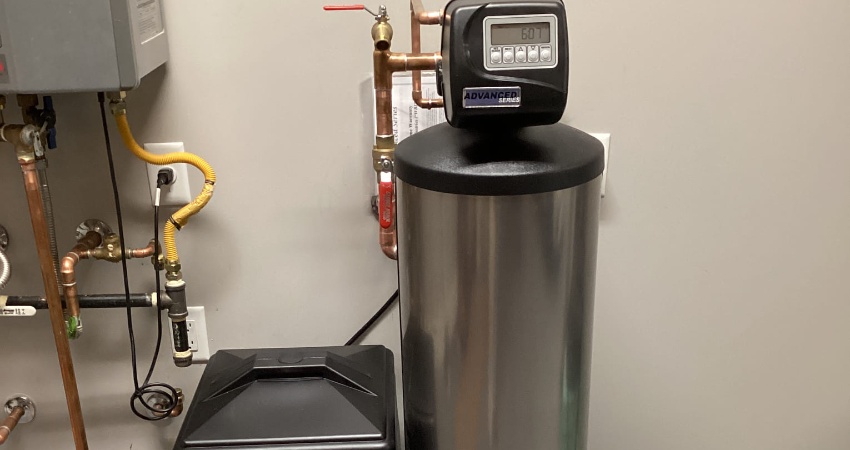
For Scottsdale homeowners who want to remove hardness minerals from their water, traditional salt-based softeners are generally the better choice. However, a salt free water softener (often called a water conditioner) may be preferable for homeowners who want to reduce mineral scale without using salt or producing regeneration wastewater. For those living in the DC Ranch and Grayhawk areas, the decision often comes down to water quality goals, maintenance preferences, and conservation.
Understanding how these systems work can help you choose whether a salt-free water softener or salt-based solution is the best treatment solution for your North Scottsdale home.
How Salt-Based and Salt-Free Water Softeners Work
Both systems address problems associated with hard water, but they use fundamentally different methods.
Traditional Salt-Based Water Softeners
Conventional water softeners use ion exchange to remove calcium and magnesium, the minerals responsible for water hardness. Water passes through a resin bed that captures these minerals and replaces them with sodium or potassium ions.
Periodically, the system regenerates the resin using a salt solution, flushing accumulated minerals into the wastewater system. The result is softened water, which can:
- Improve soap performance
- Reduce mineral buildup
- Help protect plumbing fixtures and appliances that use water
However, homeowners must replenish salt and maintain the system. Regeneration also consumes water and produces wastewater containing dissolved salts.
Salt-Free Water Conditioners
Most salt-free water softeners use technology such as template-assisted crystallization (TAC) to change how dissolved hardness minerals form scale. Instead of removing calcium and magnesium, these systems encourage the minerals to form microscopic crystals that are less likely to stick to plumbing surfaces.
Salt-free conditioners generally do not reduce measured water hardness or deliver the same soap and detergent benefits as traditional softeners. However, they typically eliminate salt refills and regeneration cycles, making them an attractive alternative for homeowners prioritizing lower maintenance and water conservation.
Salt-Free Water Softener vs. Salt Water Softener: Key Differences
Let’s compare salt-free water softeners vs. salt water softeners to understand the key differences.
| Feature | Salt-Based Softener | Salt-Free Conditioner |
| Removes hardness minerals | Yes | No |
| Reduces scale formation | Yes | Yes, depending on technology |
| Requires salt | Yes | No |
| Uses regeneration water | Yes | Typically no |
| Maintenance | Salt refills and periodic service | Media replacement and periodic service |
| Produces softened water | Yes | No |
| Primary benefit | Hardness removal | Scale reduction |
When comparing a salt-free water softener vs salt water softener, consider whether you want to remove hardness minerals or simply manage their effects. For example, if you want better soap lathering and less mineral interference with laundry, you may prefer salt-based softening. Those primarily concerned about scale accumulation may find salt-free conditioning sufficient.
Why Scottsdale’s Water Conservation Priorities Matter
Scottsdale has additional reasons to consider how water treatment equipment affects the local environment. The city relies partly on reclaimed wastewater for irrigation and other uses. Salt-based softeners contribute to wastewater salinity, which conventional wastewater treatment processes do not effectively remove. Elevated salinity can complicate water reuse and affect the environment. Choosing a system that avoids salt discharge helps address these concerns.
For homeowners who prefer conventional softening, high-efficiency equipment can reduce water and salt consumption. The Environmental Protection Agency recommends selecting NSF/ANSI 44-certified water softeners that consume no more than five gallons per 1,000 grains of hardness removed and achieve salt efficiency greater than 3,350 grains per pound.
Choosing a Water Treatment System for DC Ranch and Grayhawk Homes
North Scottsdale’s established residential communities have different plumbing configurations and water treatment needs.
DC Ranch Homes
DC Ranch opened in 1997 and was developed by DMB Associates, with approximately 3,000 homes across the master-planned community. Homes in communities such as Desert Camp and Country Club Village may have water treatment equipment installed years ago. Owners replacing these systems should consider whether they still need traditional softening or whether scale reduction is their primary concern.
Larger properties with multiple bathrooms and high hot-water demand may benefit from conventional softening, especially when mineral removal is a priority.
Grayhawk Homes
Grayhawk developed around the Talon and Raptor golf courses, which opened in 1994 and 1995. Many surrounding homes date from the late 1990s and early 2000s.
Homeowners in The Park and The Retreat may already have salt-based systems that have undergone years of service as well. Before replacing an aging unit, consider whether a more efficient salt-based model would meet your needs or whether a salt-free water conditioner could provide adequate scale protection.
Which Water Softener Is Right for Your Scottsdale Home?
The right system depends on what you want your water treatment equipment to accomplish. Whichever approach you prefer, proper system sizing and installation are important. An experienced plumber can evaluate your home’s existing equipment, water usage, and treatment objectives to recommend an appropriate solution.
In Scottsdale, DC Ranch, or Grayhawk homes, contact George Brazil Plumbing & Electrical to compare water softening and conditioning options and select the right system for your home.