
Sun City Grand in Surprise, AZ is an active adult community with great amenities. Four 18-hole championship golf courses. Tennis, bocce ball, softball, horseshoe pits, and 22 pickleball courts. Outdoor and indoor pools, fitness centers, and walking trails. There are more than 120 different clubs for all sorts of interests and all sorts of scheduled events throughout the community.
But even a great retirement lifestyle becomes less enjoyable when your shower suddenly runs cold or your water heater breaks down.
The Grand was developed by Del Webb from 1996 to 2005, and many homes have already replaced their original water heaters at least once. For homeowners facing another replacement, a gas tankless water heater may be worth considering.
However, switching from a conventional gas tank involves more than just swapping it out for a tankless gas water heater. You have to think about venting, gas supply, drainage, hot water delivery, and hard-water maintenance, which all affect the installation and cost.
Is a Gas Tankless Water Heater a Good Upgrade for Sun City Grand Homes?
A conventional gas water heater typically stores 40 to 50 gallons of heated water, and its burner periodically activates to maintain the desired temperature, even when nobody needs hot water.
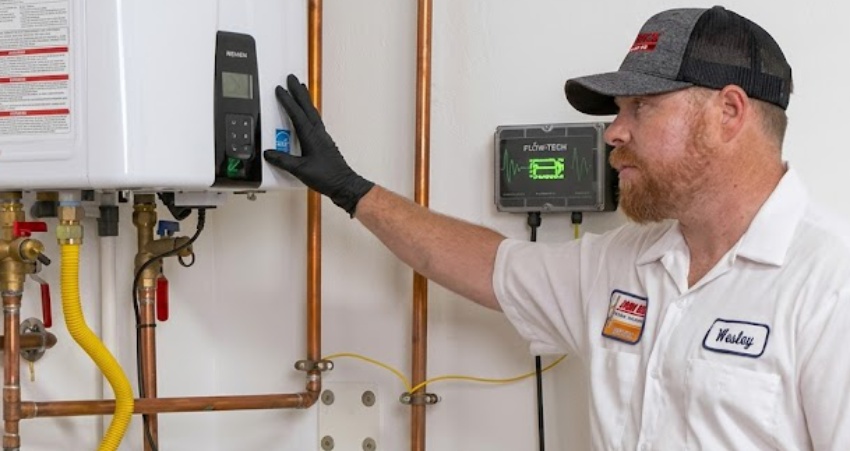
A tankless gas water heater operates differently. Instead of storing heated water, it activates when you open a hot water faucet. Water passes through a heat exchanger, where a gas burner heats it before delivery to the home’s plumbing.
So, tankless water heaters offer several advantages:
- Continuous hot water: A properly sized system can supply hot water for extended periods without exhausting a stored supply.
- Improved efficiency: Heating water on demand eliminates most standby heat losses.
- Space savings: Wall-mounted equipment takes up less room than a conventional storage tank.
- Longer potential lifespan: Properly maintained tankless systems can often operate 15 to 20 years or longer.
For one- or two-person households in The Grand, tankless equipment can be particularly appealing because you may not use a lot of hot water simultaneously. However, a tankless hot water heater does not offer unlimited hot water. Your system must still be sized for multiple showers, appliances, and visiting family members.
What Changes When You Replace a 2000s Gas Tank With a Tankless Water Heater?
Replacing an older gas storage heater with tankless often requires modifications to the home’s existing infrastructure.
Gas Supply and Line Capacity
Conventional gas storage heaters often have lower maximum burner input ratings than whole-home tankless models. A modern natural gas tankless water heater may require up to approximately 199,000 BTUs per hour at maximum output (depending on the model). That doesn’t mean your existing gas line must be replaced. However, a plumber needs to evaluate pipe sizing, length, gas pressure, and the combined demand from other appliances.
For example, a home may have sufficient gas capacity for its existing water heater, furnace, and kitchen range, but adding a higher-output tankless model could require modifications. Some installations can use existing piping, while others need a larger supply line or different routing.
Venting: Condensing vs. Noncondensing Models
If you have a long vent run, are routing through finished spaces, or want maximum energy efficiency (0.90–0.98 UEF), you’ll want to consider a condensing tankless hot water heater. But, you need to have access to a drain, sink, or condensate pump. If you’re mounting the unit on an exterior wall with a short termination or a drain line is impractical, a noncondensing unit may be a better option. The tankless hot water heater experts at George Brazil can evaluate your home and offer you options for the best tankless water heater for your situation.
Here’s how the two options compare.
| Feature | Condensing Tankless | Noncondensing Tankless |
| Efficiency | Generally higher | Generally lower |
| Exhaust temperature | Lower | Higher |
| Vent materials | May use approved plastic venting | May require metal venting |
| Condensate drainage | Required | Not required |
| Installation | Depends on vent routing and drainage | Depends on venting requirements |
Existing storage-tank venting usually cannot be reused. The installer must verify approved materials, clearances, vent lengths, and termination locations. Some units also have different venting requirements and piping size, so even swapping a new natural gas tankless water heater for an older model may require additional installation work.
Condensing heaters produce water as moisture in the combustion exhaust cools. This condensate must drain through an approved connection. Depending on installation conditions, a condensate pump or neutralizer may also be required. For Sun City Grand homes with water heaters in garages or utility areas, the available drainage route can influence equipment placement and installation expense.
Water Connections and Electrical Requirements
Converting to tankless may require repositioning hot and cold water connections and installing isolation valves for future maintenance.
Gas-fired tankless heaters also need electricity to operate their controls, ignition systems, and combustion fans. A qualified installer must evaluate electrical access, mounting requirements, service clearances, and local permit requirements.
How Much Does Gas Tankless Water Heater Installation Cost?
According to HomeGuide’s January 2026 pricing data, tankless installations generally cost $1,400 to $5,600 across fuel types. Natural gas models specifically average approximately $2,100 to $5,600 installed, including equipment, labor, and typical modifications.
However, converting a conventional storage tank to a natural gas tankless water heater can exceed these estimates when substantial upgrades are needed. Your installation costs depend on:
- Equipment capacity and efficiency.
- Gas supply modifications.
- New venting and condensate drainage.
- Plumbing connection changes.
- Recirculation equipment.
- Permits and installation accessibility.
Replacing an existing tankless unit with a compatible model may be less complicated than converting an older storage-tank installation.
Choosing the Best Tankless Water Heater for Your Home
Selecting equipment involves matching heating capacity, efficiency, and features to your household’s needs.
Size the System for Peak Demand
Tankless capacity is commonly expressed in gallons per minute (GPM), representing how much hot water the system can produce under specified conditions. For example, a single shower might use approximately two gallons per minute, while two showers operating simultaneously could require twice that much.
The heater must also raise incoming water to the desired temperature. Higher temperature increases reduce the amount of hot water a unit can deliver. In Sun City Grand, a two-person household might normally use only one shower at a time. However, frequent visitors or simultaneous laundry and shower use may justify additional capacity.
Getting it right-sized is critical. Choosing an oversized heater adds expense without necessarily improving everyday comfort.
Compare Efficiency and Equipment Features
ENERGY STAR provides criteria and certification data that homeowners can use to compare qualifying equipment.
Certified residential gas-fired instantaneous heaters must meet a Uniform Energy Factor of at least 0.95 and deliver at least 2.8 gallons per minute at a 67°F temperature rise. That’s a highly efficient unit.
In practical terms, higher efficiency means less fuel is wasted during standardized testing, while delivery capacity indicates how much hot water the heater can produce under specified conditions.
The best tankless water heater for your home should balance efficiency with adequate flow, installation compatibility, warranty coverage, and maintenance access. Features such as a recirculation pump may also influence the decision.
Why Hot Water Still Takes Time to Reach Faucets in Single-Level Homes
Almost every home in The Grand has single-story layouts, sometimes with long distances between the water heater and bathrooms. Even with a tankless hot water heater, water must travel through the plumbing before reaching the faucet.
After hot water use stops, your Sun City Grand tankless water heater will leave water behind inside the pipes. This cools naturally over time, so the next time someone opens a faucet, that cooled water must flow out before heated water arrives.
Recirculation systems can reduce this delay by moving heated water closer to distant fixtures. While there is an extra cost, you might want to consider your options, including:
- Built-in pumps: Some tankless models include recirculation equipment and controls.
- External pumps: Compatible systems can use separate circulation pumps.
- Dedicated return lines: A separate pipe returns circulating water to the heater.
- Crossover valves: Certain systems temporarily use the cold-water line as a return path.
Recirculation may operate through timers, temperature sensors, or on-demand controls to reduce unnecessary pump use and heat loss.
Tired of waiting for your Sun City Grand tankless water heater to deliver hot water to your faucet? Recirculation may offer greater everyday convenience than simply selecting a larger heater.
Hard Water and Tankless Water Heater Maintenance in The Grand
Hard water is common throughout Surprise and surrounding communities, containing dissolved calcium and magnesium that can form scale inside water heating equipment.
Because tankless water heaters use compact heat exchangers and relatively narrow passages, mineral accumulation can significantly affect performance. Over time, scale may restrict water flow, reduce heat transfer, and contribute to overheating or equipment errors.
Regular tankless water heater service and maintenance is especially important in The Grand. This includes:
- Periodic heat exchanger descaling.
- Cleaning water inlet filters.
- Inspecting connections and service valves.
- Checking equipment for error codes.
- Evaluating water treatment options.
Annual descaling is a common recommendation, although manufacturer instructions, water hardness, and household usage determine the appropriate frequency.
Professional tankless water heater service can also identify developing problems before they interrupt hot water delivery.
Common Tankless Water Heater Problems and Warning Signs
Modern tankless heaters include electronic diagnostic systems that display error codes when operating problems occur.
Common warning signs include:
- Inconsistent hot water temperatures.
- Reduced hot water flow.
- Repeated ignition failures.
- Unexpected shutdowns.
- Unusual operating noises.
- Visible leaks.
For example, a Rinnai Code 11 generally indicates that the heater attempted ignition but couldn’t confirm a flame. Possible causes include interrupted gas supply, ignition component problems, burner issues, or flame detection failures.
Other manufacturers use different error codes and diagnostic procedures.
If your unit shows an error code, make a record of it when you’re calling for tankless water heater service, especially if an error code returns after a restart.
George Brazil Plumbing & Electrical repairs all major tankless brands, including Rinnai, Navien, Noritz, and Rheem. You can trust our experienced technicians to diagnose the problem, offer solutions, and get your unit running properly.
Should You Replace Your Existing Gas Tank Now or Wait?
If your existing water heater is functioning properly, an immediate conversion may not be necessary, especially if you’re doing regular flushing, descaling, and routine maintenance. However, homeowners with aging equipment should consider replacement options before an unexpected failure creates an emergency.
Several factors can influence the decision:
- Equipment age: Older heaters may be approaching the end of their expected service life.
- Condition: Corrosion, leaks, or recurring repairs can indicate replacement is appropriate.
- Installation complexity: Gas line and venting modifications may increase conversion costs.
- Household needs: Current hot water usage and future expectations should guide equipment selection.
- Long-term plans: Homeowners intending to remain in The Grand for many years have more time to benefit from potential energy savings.
A conventional gas tank may remain the most economical replacement in some situations. However, a Sun City Grand tankless water heater installation is an attractive long-term upgrade for many homeowners.
FAQs — Frequently Asked Questions About Tankless Water Heaters in Sun City Grand
Can I replace my existing gas water heater with a tankless model?
Yes. Most conventional gas storage heaters can be replaced with tankless equipment, provided your home can accommodate the required gas supply, venting, drainage, and electrical connections. A professional assessment determines whether infrastructure upgrades are needed.
How long does a gas tankless water heater last?
Many tankless systems have an expected service life of approximately 15 to 20 years, and some units may potentially last much longer with appropriate maintenance.
Will a tankless gas water heater give me instant hot water?
No. A tankless hot water heater begins heating when water flows, but heated water must still travel through your plumbing. Homes with long pipe runs may benefit from a compatible recirculation system that reduces waiting at distant fixtures.
Do I need a water softener with my tankless water heater?
Not necessarily. However, hard water can cause mineral accumulation inside the heat exchanger. Water softeners may be recommended depending on the manufacturer’s specifications and your home’s measured hardness.
Plan your next water heater upgrade with confidence by choosing George Brazil Plumbing & Electrical for expert tankless installation, maintenance, and repair in Surprise, AZ.