
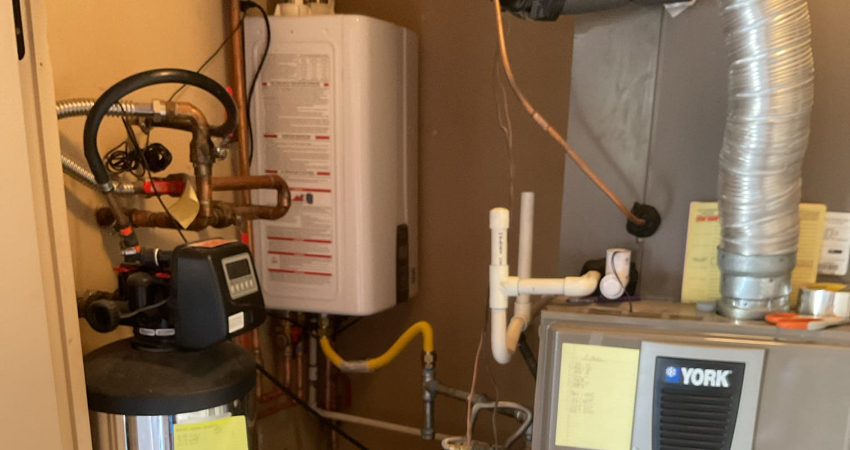
If you’re searching for “water heater installation near me,” you’re probably having problems with your water heater. Maybe your current water heater has worn out; you’re not getting hot water, or there’s a leak. Regardless of the issue, you’re looking for information about water heater installation cost, options, permits, and how long does it take to install a water heater.
Read on to learn everything you need to know to make the right decision.
Why Your Water Heater Choice Matters in Mesa
Your water heater is one of the most energy-intensive appliances in your home. According to the U.S. Department of Energy, water heating makes up roughly 18% of total household energy use. So, the efficiency of your system directly affects your monthly utility bills.
Beyond energy costs, Mesa’s water supply contains elevated mineral levels. This hard water accelerates scale buildup inside tanks, pipes, and heating elements. Over time, that buildup reduces efficiency and can shorten system lifespan, especially if you’re not doing regular maintenance on your unit.
Many Mesa homes have their water heater in a garage, where the summer temps sometimes hit 120°or higher. That high heat takes a toll, too. So, choosing the right system and installing it correctly matters more here than in many other parts of the country.
Understanding Your Options for Hot Water Heaters in Mesa AZ
Tank or tankless? It’s a common question, and there are pros and cons for each, depending on your household’s size, usage patterns, budget, and existing infrastructure.
Traditional Tank Water Heaters
Tank water heaters store and continuously heat water. Residential units typically come in tanks up to 80 gallons, and the water heater installation cost is lower, especially if you’re replacing a current unit with a similar size one. For many Mesa homeowners, a quality tank system remains the most practical and cost-effective solution.
There are two main limitations, though. A tank system can run out of hot water during periods of high use or if it’s undersized for your household. They also don’t last as long as a tankless water heater installation.
Tankless Water Heater Installation
Tankless systems heat water on demand, with no storage tank. So, they are more energy efficient because you’re not losing energy to continuously heat water in the storage tank. When properly sized and installed, they provide continuous hot water regardless of how much demand your household places on the system.
A tankless hot water heater in Mesa, AZ will cost more than a traditional tank, but its lifespan can be nearly twice as long. Gas supply lines, venting requirements, and electrical capacity must all be carefully evaluated before installation begins. In some cases, you may need upgrades to your electrical system or changes to your venting.
| Category | Tank Water Heater | Tankless Water Heater |
| Upfront Cost | Lower purchase and installation cost. | Higher equipment and installation cost. |
| Energy Efficiency | Less efficient due to standby heat loss. | More efficient; heats water only when needed. |
| Hot Water Supply | Limited to tank size; can run out. | Continuous hot water (within flow rate limits). |
| Lifespan | 6-12 years | 15-20 years |
| Maintenance Needs | Periodic flushing to remove sediment. | Annual descaling recommended, especially in hard water areas. |
| Space Requirements | Requires floor space for storage tank. | Compact, wall-mounted design saves space. |
Electric vs. Gas: What Works Best in Mesa?
Both fuel types are available in Mesa, and both can be configured for tank or tankless systems. The right choice depends on your home’s existing infrastructure, your energy costs, and your priorities.
Gas water heaters typically offer faster recovery times and lower operating costs compared to electric models. In a household with high hot water demand, how fast a tank can refill can be a big factor.
Electric systems may be easier to install in homes that lack a gas line, but they can draw significant power during peak use, particularly electric tankless models that require dedicated high-amperage circuits.
Do You Need to Upgrade Electrical for a Tankless Water Heater Installation?
Electric tankless systems draw significant power, often requiring multiple dedicated 40- or 50-amp breakers depending on the unit. Older Mesa homes, particularly those built before the 1990s, may not have sufficient panel capacity to support this demand without an electrical upgrade.
Gas tankless units typically require less electrical demand but may need an upgraded gas line to handle the higher BTU requirements of on-demand heating. A standard residential gas line may be undersized for a whole-home tankless system.
Before you make your decision, have the experienced plumbers at George Brazil do a thorough evaluation of your plumbing system, electrical panel, as lines, and venting to help you make the best decision.
How to Choose the Right Size Water Heater
Sizing a water heater is critical to avoid running out of hot water when you need it. For demand-type water heaters or tankless units, you’ll need to calculate the flow rate and the temperature rise you need. For a tank water heater, you’ll want to think about how much hot water you need at any given time and then compare it to the tank capacity, heating source, and first-hour rating.
What Size Water Heater Do I Need?
When asking, “What size water heater do I need?”, start with these variables:
- Number of people in the household
- Number of simultaneous fixtures in use during peak demand
- Average shower duration and frequency
- Appliance usage patterns
For tank systems, the first-hour rating (FHR) is the most important spec to evaluate. It tells you how much hot water the unit can deliver in the first hour of use, starting with a full tank. This number should meet or exceed your peak demand.
Water Heater Size for a Family of 4
While a family of two might only need a 30–40-gallon tank, the right water heater size for family of 4 is likely 50–60 gallons with a strong first-hour rating. A qualified installer will measure gallons per minute (GPM) required at peak demand and select a unit that’s sized accordingly.
For tankless units, it depends on the maximum flow rate and temperature rise. Arizona’s incoming water temperature is generally warmer than in northern states, which reduces the required temperature rise for tankless systems. This can be an advantage, but undersizing can still result in reduced flow rates during periods of high simultaneous demand.
The team at George Brazil can do the calculations based on your usage patterns to find the right fit for you.
Do You Need a Permit to Install a Tank or Tankless Hot Water Heater in Mesa, AZ?
The City of Mesa requires permits in some cases, and not in others:
- No permit required: For residential replacements of gas and electric water heaters of equal or lesser rating, using a “like for like” model.
- Permit required: For residential replacement of a traditional (storage) gas water heater with a tankless or on-demand gas water heater.
Tankless conversions require inspection to verify proper gas supply, venting, and code compliance. A licensed plumber can handle the permitting and schedule any necessary inspection as part of water heater installation in Mesa, AZ.
How Long Does It Take to Install a Water Heater?
How long it takes to install a water heater depends on what you’re installing but typically takes about a day. Here’s a good rule-of-thumb:
- Like-for-like tank replacements: Two to four hours, including drain-down, disconnect, installation, and fill-up.
- Tankless conversions: Can take a full day and occasionally a second day if gas line upgrades, new venting runs, or electrical panel work are involved.
- Permit inspections: For jobs requiring a permit, a follow-up inspection will need to be scheduled, which may add a day or two to the timeline.
At George Brazil Plumbing & Electrical, we will give you upfront pricing on your water heater installation cost and a timetable for completion before work begins.
Can You Fix a Leaking Water Heater?
Not all leaks mean full replacement. You can do water heater repairs on leaks like:
- Loose inlet/outlet fittings
- Faulty pressure relief valve
- Minor connection issues at supply lines
However, if the tank has corrosion or is failing at the seams, you’ll likely need a new hot water heater installation. Given Mesa’s hard water, tank deterioration often happens faster than you might expect, especially if you’re skipping routine maintenance, flushing, and inspection.
Water Heater Installation Cost in Mesa: What Affects Your Price
Water heater installation cost varies widely in Mesa depending on system type, existing infrastructure, and code requirements.
For tank systems, cost is influenced by:
- Tank size
- Gas or electric configuration
- Expansion tanks for closed systems
- Code updates from replacement
For tankless systems, additional water heater installation costs might include:
- Venting modifications
- Gas line upgrades to meet higher BTU demands
- Electrical panel capacity
- Permitting
If a plumber gives you a quote and doesn’t include these costs, ask questions. At George Brazil, we provide transparent pricing with all fees explained in advance, so you won’t be surprised when it’s time to pay the bill.
Choosing the Right Installer for Water Heater Installation in Mesa AZ
The brand you choose matters. The system type matters. But professional sizing, permit handling, and correct installation matter most. A water heater that is improperly sized, incorrectly vented, or installed without required permits creates problems that outlast the initial savings, from poor performance and higher utility bills to insurance complications and failed inspections at resale.
If you are evaluating “hot water heater Mesa AZ” upgrades or comparing “water heater installation near me” options, George Brazil Plumbing & Electrical provides comprehensive water heater services for Mesa homeowners. Our licensed technicians evaluate your home’s infrastructure, calculate proper sizing for your household’s demand, handle all required permits with the City of Mesa, and ensure your new system is installed safely and correctly for long-term performance.
FAQs—Frequently Asked Questions About Water Heater Installation in Mesa, AZ
How Long Will My Water Heater Last?
Traditional tank systems typically last six to 12 years in Arizona when maintained properly. Tankless systems can last 15–20 years, with routine descaling, in Mesa’s mineral-heavy water environment. What is the best water heater for Arizona?
The best system depends on household size, water hardness tolerance, installation conditions, and long-term maintenance commitment.
What size water heater do I need for my home?
Determining “what size water heater do I need” starts with household size, peak simultaneous fixture usage, and your preference for tank vs. tankless water heater installation.
Should I choose an electric or gas hot water heater in Mesa, AZ?
Gas systems are generally preferred in Mesa for faster recovery times and lower operating costs. Electric systems may be appropriate in homes without gas service or when upgrading to an electric tankless model is part of a broader home electrification plan.
Do tankless water heaters use a lot of electricity?
Electric tankless models can draw significant amperage during operation, while gas tankless systems use less electricity but require an adequate gas supply. However, both use less energy than tank hot water heaters.
From tank replacements to full tankless conversions, we bring the expertise to get your installation right the first time. Contact George Brazil Plumbing & Electrical today to schedule your water heater evaluation.