
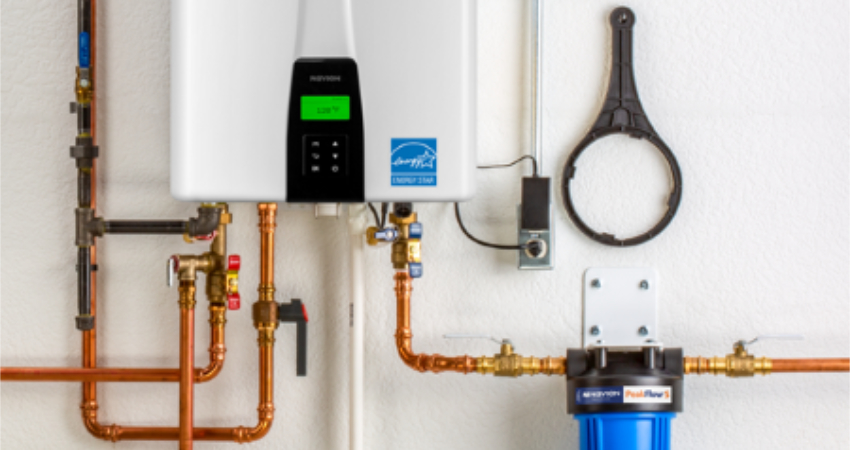
If you’ve ever run out of hot water halfway through a shower, you’ve probably wondered whether there’s a better solution. Many Mesa homeowners are upgrading their older tank systems and going tankless. Tankless water heaters provide hot water, on demand, that doesn’t run out, and they last longer than traditional tank heaters.
In this guide, we’ll explain tankless water heater pros and cons and the best water heater for hard water in Mesa.
Why Your Water Heater Choice Matters in Mesa
Your water heater works harder than most appliances in your home. In fact, heating water accounts for about 18% of your home’s total energy use, so you’ll want a water heater that’s efficient. In Mesa, where summer utility bills are already high due to cooling costs, efficiency becomes even more important.
You also have to account for the hard water we have in this area, which can cause scale and buildup in your plumbing system.
What Is a Tankless Water Heater?
A tankless water heater heats water only when you need it. Instead of storing 40 or 80 gallons in a tank and keeping it hot around the clock, it uses electric heating elements or gas burners to warm water on demand.
These systems are typically wall-mounted and small in size, so there’s no bulky storage tank taking up garage space.
Tankless Water Heater Pros and Cons
Let’s take a look at the advantages and drawbacks you’ll want to consider when thinking about tankless units.
Advantages of Tankless Water Heaters
One of the biggest advantages is continuous hot water. If properly sized, you won’t run out during back-to-back showers or while running the dishwasher and washing machine at the same time. Tankless systems are also designed for greater efficiency.
Because they don’t store hot water, they eliminate standby heat loss. Over time, that can translate into measurable energy savings, using less energy than a traditional tank water heater.
Another benefit is lifespan. Tankless systems often last longer than traditional tank units. With regular maintenance, tankless units like those from Navien can last between 15 and 20 years, nearly double the lifespan of tank water heaters.
Disadvantages of Tankless Water Heaters
The most common concern homeowners have is cost. Tankless systems will cost more to purchase and install. Depending on your home, you may also need gas line upgrades, electrical changes, or venting modifications.
Flow rate limitations are another factor. A tankless unit must be sized correctly to meet peak demand, or you risk low pressure when you’re running multiple taps.
Performance In Mesa’s Hard Water Conditions
Mesa’s groundwater has high levels of dissolved minerals like calcium and magnesium. Those minerals don’t just affect shower doors and faucets; they directly impact water heater performance.
In tank water heaters, sediment settles at the bottom of the tank, reducing efficiency and putting extra stress on heating element. In tankless systems, scale builds inside narrow heat exchanger passages. Because those passages are smaller and more precise, mineral buildup can affect performance more quickly.
Regular flushing and descaling of tankless units are critical in hard water environments. Homeowners who are diligent about annual maintenance often see strong performance. Those who skip maintenance may experience reduced efficiency or units that wear out faster.
When evaluating the best water heater for hard water, the answer depends less on the label “tankless” or “traditional” and more on your commitment to regular maintenance.
Tankless vs. Traditional Tank Water Heater
So, is a tankless or traditional tank water heater right for you? Here’s how the two compare.
| Category | Tankless Water Heater | Traditional Tank Water Heater |
| How It Works | Heats water on demand as it flows through the unit. No storage tank. | Stores and continuously heats 30–80 gallons of water in a tank. |
| Upfront Installation Cost | Higher. May require gas line upgrades, venting changes, or electrical panel improvements. | Lower. Typically, direct replacement if infrastructure is already in place. |
| Operating Efficiency | More energy efficient for many households because it only heats water when needed. | Continuously reheats stored water, increasing standby energy losses. |
| Hot Water Supply | Virtually endless hot water when properly sized. | Limited by tank capacity. Can run out during heavy use. |
| Space Requirements | Compact, wall-mounted design. | Requires floor space for the tank. |
| Lifespan | 15-20 years | 6-12 years |
| Best For | Long-term homeowners, large families, high hot water demand, efficiency-focused buyers. | Budget-conscious homeowners, urgent replacements, smaller households. |
If you’re weighing the tankless water heater pros and cons or wondering which is the best water heater for hard water in your Mesa home, George Brazil Plumbing & Electrical can evaluate your system and help you make the right call with confidence. Schedule a service call today from the Valley’s water heater installation experts.