
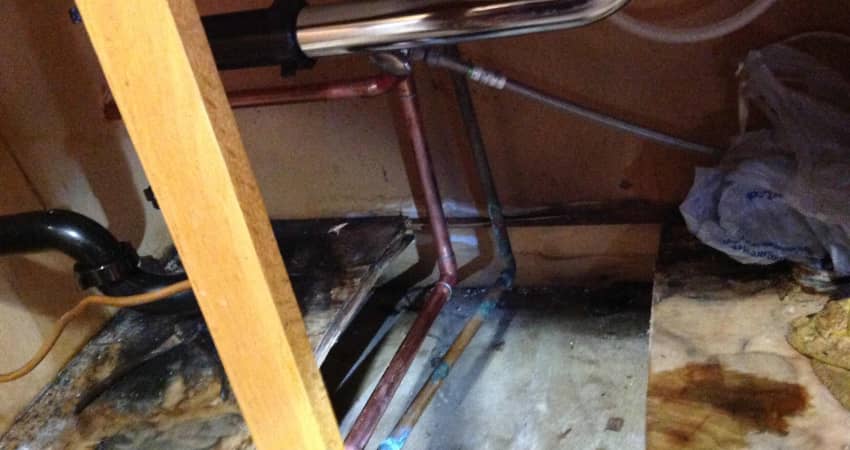
The EPA says the average family can waste 180 gallons per week, or 9,400 gallons annually, from household leaks. That’s bad enough, but if the leak is hidden under a concrete slab, it can cause damage for weeks or months. By the time you notice something off about your water bill, your foundation might be damaged, mold has started growing, floors and walls are cracking, and your plumbing and electrical systems might be damaged. And, the longer you wait to deal with a leak under the slab, the worse it’s going to get.
We’ll explain how slab leaks form, the warning signs of a slab leak you need to know, plumbing slab leak detection methods, your options for repair, and how to find a qualified plumber in Gilbert, AZ to solve your problem.
What Is a Slab Leak?
A slab leak is a water leak in a pipe located inside or under your concrete foundation.
Nearly all Gilbert homes were built on concrete foundation slabs with water lines inside or underneath. When one of the lines cracks, corrodes, or develops a pinhole leak, water can escape under your slab and do serious damage.
Water coming into your home is pressurized, typically between 60 and 80 psi in Gilbert, so when there’s a hole in your pipe, water doesn’t just leak out. It shoots out, enlarging pinhole leaks and eroding the soil under your foundation. It creates pockets where your foundation is no longer sitting on top of solid ground. It also creates pressure against your foundation, which can cause it to snap.
This happens more frequently in your hot water lines. Thermal expansion stretches pipes when the water is hot, which then contract as it cools. Over the years, this expansion and contraction can cause metal fatigue in copper pipes and weakening at the joints. Friction up against the concrete can be abrasive and wear away the pipe walls as well.
Because the pipe is buried, slab leak repair in Gilbert usually begins with plumbing slab leak detection.
Warning Signs of a Slab Leak in Gilbert, AZ
You’ll likely notice a slab leak through indirect signs rather than pools of water. Here are the warning signs that indicate you may have a leak under the slab:
- Unexplained water bill increases: A sudden jump in water use may mean water is escaping somewhere in the plumbing system.
- Warm or hot spots on the floor: A hot water line leak can create noticeably warm areas on tile, laminate, vinyl, or concrete.
- Sound of running water: Hissing, rushing, or running water when fixtures are off can point to a hidden leak.
- Damp flooring or carpet: Moisture may appear near walls, baseboards, cabinets, or room transitions.
- Loose tile or warped flooring: Water below the surface can loosen adhesives or cause flooring to buckle.
- Musty odors: Persistent moisture under flooring or behind trim can create stale smells.
- Low water pressure: A pressurized pipe leak may reduce water pressure at fixtures.
- Meter movement when everything is off: If the meter still turns when the water’s off, water may be leaking somewhere in the system.
How To Detect a Possible Leak Before Calling a Plumber
While you will need an experienced slab leak plumber in Gilbert, AZ to make repairs, there are a few things you can do first to detect a leak.
Turn Off All Water Fixtures and Appliances
Turn off every faucet, shower, toilet, washing machine, dishwasher, refrigerator ice maker, water softener, pool fill line, and irrigation system. Make sure no one is using water during the test.
Check The Water Meter
Look at your water meter after everything is off. If the leak indicator or flow dial continues moving, water is still passing through the system. You can also write down the meter reading, wait a while without using water, and check it again.
Use The Water Meter Isolation Method
Turn off the main house valve, then check the meter again. If the meter continues moving, the leak may be in the exterior service line or another line before water reaches the home. If the meter stops, the leak is more likely inside the home’s plumbing system, which may include a slab leak.
Check Toilets, Faucets, And Visible Fixtures
Not every high-water bill is caused by a slab leak. Check for running toilets, dripping faucets, leaking supply lines, and water heater leaks. If you fix an obvious leak, repeat the meter test.
Listen For Running Water Indoors
At a quiet time, listen near bathrooms, kitchens, laundry rooms, hallways, and water heater areas. Some slab leaks create a faint hissing or rushing sound through flooring or walls.
Look For Hot Spots, Damp Areas, Or Flooring Changes
Walk barefoot across hard flooring and feel for any unusual warm spots. Also look for damp carpet, swollen baseboards, loose tile, bubbling paint, warped flooring, or musty odors.
Compare Yard Wet Spots With Recent Rainfall Totals
A slab leak may show up as wet spot in your yard. Look for areas where the grass is greener than the rest of your lawn, you have muddy areas that aren’t normal, or you have wet spots when it hasn’t rained.
Call A Licensed Plumber for Leak Detection
If the meter test shows water is still flowing even when everything is off, or if you notice several signs of a slab leak, call a plumber ASAP for professional slab leak detection.
How Professional Plumbing Slab Leak Detection Works
Before you cut into a slab, you want to make sure you know exactly where the trouble spot is to limit the mess and damage. Slab leak experts use several advanced tools to find the exact location, such as:
- Electronic listening devices that detect the sound of water escaping pipes
- Infrared cameras to identify temperature variations caused by leaking water
- Moisture meters to detect hidden water accumulation
- Pressure testing to confirm line integrity
- Video camera inspection when accessible
- Tracer gas detection for elusive leaks
These tools are important because the visible symptom is not always directly above the leak. Water can travel along soil channels, cracks, pipe paths, or floors before appearing elsewhere. Accurate detection helps determine the best approach to slab leak repair in Gilbert, AZ.
What Happens If You Ignore a Slab Leak?
Waiting will only make the situation worse. If you ignore a slab leak, you may see:
- Higher water bills: Even a small hidden leak can waste significant water over time.
- Flooring damage: Moisture can loosen tile, soak carpet, warp laminate, or damage flooring adhesives.
- Baseboard and drywall damage: Water can move into trim, cabinets, and lower wall areas.
- Musty odors or mildew concerns: Persistent moisture can create unpleasant smells and indoor air concerns.
- Soil erosion beneath the slab: Escaping water can affect soil that supports the foundation.
- More expensive repairs later: Delays can add flooring, drywall, mitigation, and restoration costs.
Waiting to do slab leak repair in your Gilbert home may causes serious damage, including requiring major repairs to your foundation or structure.
Options for Slab Leak Repair in Gilbert, AZ
Once the leak is confirmed, the next decision is how to fix it, and this is where you want a highly-trained plumber who’s worked with slab leaks before. Not all plumbing companies are equipped to handle repairs, or they may default to one option because it’s the one they know how to do.
You have options, and you should know the pros and cons of each.
Option 1: Direct Spot Repair
A spot repair means accessing the damaged pipe section and repairing or replacing that section. For a slab leak, this may involve removing flooring and opening up your concrete. This option can make sense when the leak is isolated, the pipe is otherwise in good condition, and the damaged section is practical to reach. The tradeoff is disruption. Spot repair might mean jackhammering through your floor, flooring removal, concrete patching, and restoration.
If you have an older home with an aging pipe system, you may patch one place only to spring another leak later, requiring another repair later.
Option 2: Pipe Rerouting
Pipe rerouting bypasses the leaking line and runs a new line through a more accessible path, such as walls, ceilings, attic areas, or another route. You can often eliminate the jackhammering by capping the input and output of the under-slab line and running flexible polyethylene lines through walls and ceilings. While you may need some drywall repair, you get better long-term reliability.
Option 3: Whole-Home Repipe
A whole-home repipe replaces your plumbing infrastructure instead of fixing only one line. This is a larger project, but it may be worth considering if your home has multiple leaks, recurring pinhole leaks, aging copper plumbing, corrosion concerns, or frequent plumbing repairs.
A repipe has a higher upfront cost than a single repair, but it significantly reduces the risk of repeated slab leak repair calls.
How To Decide Which Slab Leak Repair Option Makes Sense
The right slab leak repair option depends on the condition of the plumbing system, the leak history, the leak location, and the full cost of restoring the home after the repair.
- Age and condition of the plumbing system: Older pipes or a history of pinhole leaks may point toward rerouting or repiping instead of a one-time patch.
- First leak or repeat problem: A first-time slab leak may be isolated, while multiple leaks can suggest the system is deteriorating.
- Leak location: A leak under tile, cabinets, showers, or finished living areas may be more disruptive to repair directly, making rerouting a better option.
- Total repair and restoration cost: Flooring, drywall, paint, baseboards, water mitigation, and concrete patching can all affect the true cost of slab leak repair Gilbert homeowners face.
What To Ask Before Hiring a Slab Leak Plumber in Gilbert, AZ
Before approving slab leak repair in Gilbert AZ, ask how the plumber will confirm the leak before opening floors or walls. Ask whether they use acoustic equipment, pressure testing, thermal imaging, or line tracing. If they don’t use these types of tools, they probably aren’t in the business of doing this type of work regularly.
Also ask whether the company is properly licensed and insured in Arizona. Verify their licensing at the Arizona Registrar of Contractors website. Ask for proof of insurance and call the insurance carrier to verify it’s current.
Make sure you understand the cost for plumbing slab leak detection. Once the problem is diagnosed, you should get a full explanation of your items with the costs for any repair and restoration work. Ask why your plumbing professional recommends the option they do and that they’ve done them before.
What You Should Do Right Away If You Suspect a Slab Leak
If you suspect a slab leak, turn off the water if there is active damage, move furniture and valuables away from wet areas, and avoid tearing up floors before professional detection. Then, call the slab detection and repair experts at George Brazil Plumbing & Electrical.
FAQs — Frequently Asked Questions About Slab Leaks and Slab Leak Repair in Gilbert
A slab leak is a water leak in a pipe located underneath or within a concrete slab foundation.
What are the most common signs of a slab leak?
Common signs include unusual water bill increases, warm floors, damp flooring, musty odors, low water pressure, and the sound of running water when fixtures are off.
Can a slab leak damage a foundation?
Yes. A slab leak can affect the soil beneath or around your foundation, and the longer there’s a leak, the more damage it can do.
How does a plumber find a leak under slab flooring?
A plumber may use acoustic listening equipment, pressure testing, thermal imaging, video cameras, and line locating to narrow down the leak before recommending repair.
Is rerouting better than repairing a slab leak?
Rerouting may be better when the leaking line is hard to access, located under finished flooring, or part of a repeated leak pattern.
Should I repipe my whole home after one slab leak?
Not always. A whole-home repipe is usually considered when there are multiple leaks, aging pipes, recurring pinhole leaks, or signs of broader plumbing failure.
If you suspect a slab leak, schedule professional plumbing slab leak detection and get clear options for slab leak repair in Gilbert, AZ. Call the experts at George Brazil Plumbing & Electrical today. We offer same-day service and 24/7 emergency repairs.