It’s more common than you might think. You walk into your bathroom, and something smells rotten. It’s a sewage-type smell, but you can’t tell exactly where it’s coming from. Is it the toilet? The sink? Somewhere else?
It’s frustrating for sure, and not pleasant at all.
Your first step in fixing a sewage smell from a toilet or a sewage smell from a sink is to find the culprit. A sewage smell from a toilet can signal one type of problem, while a sewage smell from a sink drain may point to something completely different. The key here is to figure out if you’re dealing with a single fixture or a bigger issue with your sewer system.
What Is Sewer Gas?
That sewer gas you smell is primarily caused by hydrogen sulfide gas, and it’s detectable by the human nose at extremely low levels. To get scientific for a minute, you can often detect sewer gas between 0.03 and 0.05 parts per million, so you might notice a faint smell before it builds up. That’s a good thing because in heavy concentrations, it can be dangerous.
While faint levels are not typically harmful, they do indicate that sewer gas is escaping somewhere it shouldn’t.
Why Does My Toilet Smell Like Sewage Even After Flushing?
Flushing won’t fix a damaged seal or a problem with your venting.
Failed Wax Ring Seal
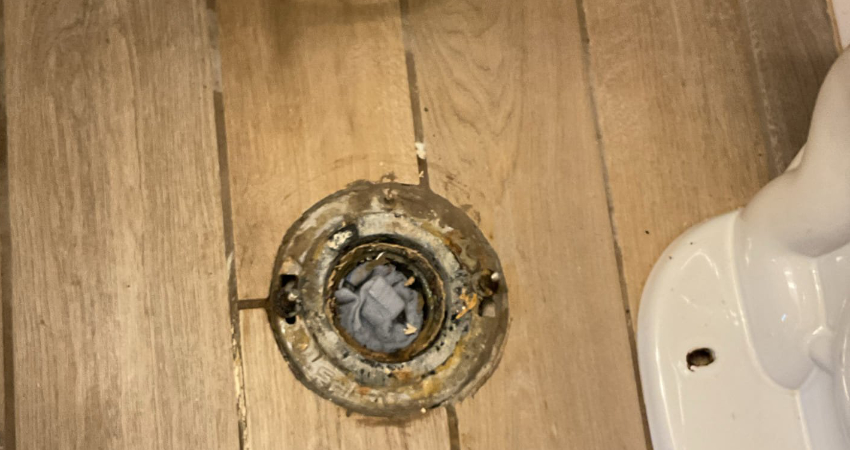
There’s a wax ring at the base of your toilet that creates an airtight seal between the toilet and the drainpipe. If it cracks, shifts, or wears out, sewer gas can escape at floor level.
You may notice:
- Odors are strongest near the toilet base.
- Slight rocking when getting on or off the toilet.
- Moisture or stains around the base.
In Phoenix, sewage smells from a toilet are common. If your home is built on a slab, even minor movement and expansion can wear down seals over time.
Venting Imbalance
If your toilet bubbles, gurgles, or smells stronger during monsoon season, you might have a blocked or damaged vent. Pressure changes in municipal sewer systems during storms can temporarily push gas back into homes with compromised venting.
What Causes a Sewage Smell from the Sink?
Sink-related odors are frequently simpler, but you still want to address them.
Dry P-Trap
The water barrier in the P-trap under your sink can evaporate and let sewer gas pass through your bathroom. This is more common in places where sinks aren’t used as frequently. During the hot summers here in Phoenix, your pipes can dry out in just a week or two and start smelling bad.
Biofilm and Hard Water Buildup
Hard water + soap can create biofilm in drainpipes. When you first turn on the tap, it disturbs that buildup and releases that awful smell. If the smell gets better after you run the faucet for a bit, buildup or evaporation is likely involved.
Overflow Port Bacteria
Most sinks have a small overflow opening near the top of the basin. Bacteria can grow there, too, but often don’t get cleaned.
How to Tell If It’s a Fixture Issue or a Main Sewer Problem
If you can narrow down the smell to one fixture, it’s easier to fix. If it’s a main sewer line issue, it’s a bigger problem. Here’s how to tell the difference.
| Toilet or Sink Issue | Main Sewer Line Concern |
| Odor limited to one toilet or sink | Odor present in multiple drains |
| No slow draining elsewhere in home | Multiple drains slow or gurgling |
| Smell improves after running water | Odor persists despite refilling traps |
| No unusual sounds in other fixtures | Gurgling sounds from toilets or tubs |
| No backups in other areas | Backups occurring in more than one fixture |
If you suspect there’s a sewer line issue, call a professional plumber for an inspection. The situation will not improve until you get it fixed. You should also call if:
- The odor won’t go away or keeps coming back.
- Multiple fixtures are affected.
- Slow drains and gurgling are also present, along with the sewage smell.
- The problem is in more than one bathroom.
Early camera inspection can help identify the problem, especially if it’s coming from under your slab.
If you’re noticing a sewage smell in your bathroom and can’t pinpoint the source, or you suspect there’s a bigger issue, call the professionals at George Brazil Plumbing & Electrical to schedule an evaluation.