
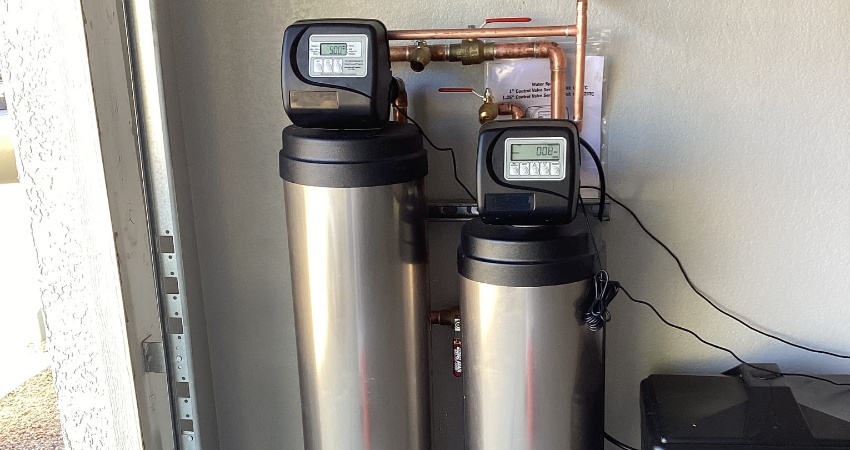
The most effective way to reduce water hardness is with a water softener, which removes dissolved calcium and magnesium. Water conditioners may help control mineral scale without removing hardness, while standard water filters target other water-quality concerns.
If you’re wondering how to reduce water hardness in older Glendale homes, the right choice depends on whether the goal is softer water, less mineral buildup, improved drinking water quality, or all three.
In established neighborhoods such as Arrowhead Ranch and Hillcrest Ranch, choosing appropriate treatment equipment can help protect your plumbing fixtures, water heaters, and appliances from the effects of hard water.
Hard Water Is a Concern in Older Glendale Homes
Glendale’s municipal water supply ranges from moderately hard to very hard. According to the city’s 2025 Water Quality Report, published in 2026, hardness ranges from 5.4 to 18.5 grains per gallon, with an average of 13.8 grains per gallon.
The calcium and magnesium in hard water produces scale when the water evaporates or is heated. You may notice it as:
- White deposits around faucets and showerheads.
- Mineral buildup inside water heaters.
- Spots on glassware and dishes.
- Reduced soap and detergent effectiveness.
- Scale accumulation in appliances that use hot water.
Older Glendale homes may have experienced decades of mineral accumulation, particularly if they have never had water treatment equipment, or even if they have a water treatment system but haven’t been doing regular water filter service or maintenance.
Water Softener vs. Conditioner vs. Filter: What’s the Difference?
Although these systems are sometimes marketed as interchangeable solutions, they use different treatment technologies for how to reduce water hardness, and produce different results.
Water Softeners Remove Hardness Minerals
Traditional salt-based water softeners use ion exchange to remove calcium and magnesium from the water supply. As water passes through a resin bed, hardness minerals are exchanged for sodium or potassium ions. The system periodically regenerates the resin using a salt solution, restoring its ability to remove minerals.
Conventional ion-exchange softeners consume water and salt during regeneration, so proper sizing and efficient regeneration controls can help minimize unnecessary consumption. Water softeners are generally the best choice for homeowners who want to measurably reduce hardness throughout their homes.
Water Conditioners Help Control Scale
A water conditioner for hard water typically focuses on reducing mineral scale rather than removing calcium and magnesium.
Some salt-free systems use template-assisted crystallization, which encourages hardness minerals to form microscopic crystals that are less likely to adhere to plumbing surfaces. These systems generally do not require salt or regeneration, making them attractive to homeowners seeking lower-maintenance alternatives.
However, effectiveness varies by technology and water chemistry. Conditioned water still contains hardness minerals, so homeowners should not expect the same results as a conventional softener.
Water Filters Target Other Water-Quality Concerns
Standard water filtration systems serve a different purpose. Sediment filters capture suspended particles, while activated carbon filters can reduce chlorine, certain contaminants, and unpleasant tastes or odors, depending on their design.
Neither technology typically removes dissolved hardness minerals.
Reverse osmosis systems can remove calcium and magnesium along with other dissolved substances, making them useful for drinking water treatment. However, under-sink RO units generally serve individual faucets rather than providing whole-house softening.
| Feature | Water Softener | Water Conditioner | Standard Water Filter |
| Removes hardness minerals | Yes | Generally no | No |
| Helps control scale | Yes | Depends on technology | Generally no |
| Requires salt | Usually | No | No |
| Regeneration required | Yes, for conventional systems | Generally no | No |
| Primary purpose | Soften water | Manage scale | Remove specific contaminants |
Which Water Treatment Option Is Best for Your Glendale Home?
Choosing the right equipment starts with identifying the water problem you want to solve. Generally:
- Choose a water softener for hard water when mineral scale, reduced soap performance, and recurring appliance deposits are persistent concerns. Softening removes the hardness minerals responsible for these problems.
- Consider a water conditioner when scale control is the primary objective and you prefer equipment that does not require salt or regeneration. Understand that the water will remain chemically hard.
- Choose water filtration when your primary concerns involve sediment, taste, odor, or specific contaminants rather than hardness.
Get Help Choosing Water Treatment for Your Glendale Home
Understanding how to reduce water hardness starts with distinguishing between mineral removal, scale prevention, and filtration. A professional assessment can help determine which approach addresses your home’s water conditions and plumbing needs.
Whether you need a traditional softener, a water conditioner for hard water, or a filtration system, contact George Brazil Plumbing & Electrical to explore water softeners, conditioners, and water filtration solutions for your older Glendale home.