
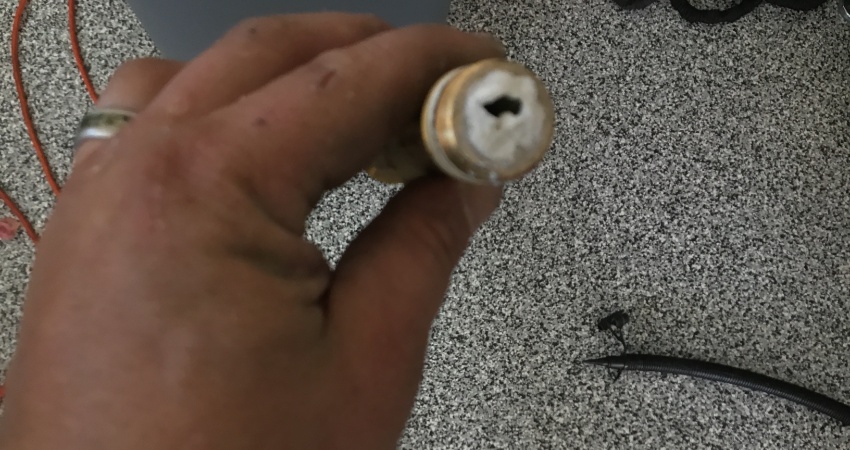
While hardness can vary within pockets in Glendale, if you live in the city limits, your water is likely moderately hard to very hard. As a result, homeowners in ZIP codes 85308 and 85310, including neighborhoods such as Arrowhead Ranch and Hillcrest Ranch, may experience mineral buildup on plumbing fixtures, spots on dishes, and reduced soap effectiveness from this hard water.
Looking up water hardness by zip code provides a useful starting point, but it won’t necessarily tell you the exact hardness level in your home. Fortunately, you can measure hardness yourself using inexpensive testing kits or request professional testing to determine whether water treatment would be beneficial.
How Hard Is Glendale’s Water?
If you live in any of the zip codes in Glendale, your water service is likely provided by the City of Glendale, AZ Utilities:
- 85301
- 85302
- 85303
- 85304
- 85305
- 85306
- 85307
- 85308
- 85309
- 85310
- 85311
- 85312
- 85318
There are some areas within these zip codes that are also served by EPCOR Water in the northern and western sections, but for the most part, the city utilities provide water service.
There isn’t a specific breakdown of water hardness by zip code, but since the water comes from the same sources, you can look to the 2025 Glendale Water Quality Report published in 2026 to see what levels typically are. The report shows that hardness averages 13.8 grains per gallon, ranging from 5.4 to 18.3 grains per gallon (93 to 317 parts per million). That puts the water throughout Glendale clearly in the moderately hard to very hard range according to the US Geological Survey (USGS).
How to Test Water Hardness at Your Home
Learning how to test water hardness is relatively straightforward, and you have a few options, depending on how accurate you want the test to be.
1. Water Hardness Test Strips
Water hardness test strips are inexpensive and widely available at hardware stores and online. To use them, you fill up a clean container with cold tap water, dip the strip according to the manufacturer’s directions, and compare its color with the included chart.
Results typically appear within seconds and indicate hardness in parts per million (ppm) or grains per gallon (gpg). Test strips provide a convenient estimate, although results are generally considered less precise than liquid testing kits.
2. Liquid Drop Test Kits
With liquid drop kits, you collect tap water in a container and add the testing reagent one drop at a time until the sample changes color. The number of drops determines the hardness reading based on the kit’s calibration.
These tests are particularly helpful when adjusting water softener settings or checking whether your existing system is removing hardness effectively.
3. Professional Water Hardness Testing
Professional testing is useful when you are considering a new softener, troubleshooting existing equipment, or evaluating persistent scale buildup. A plumbing professional can measure water hardness and assess whether treatment equipment is functioning properly.
For homes with existing softeners, testing both untreated water and water that has passed through the softener helps check how effectively the system removes hardness minerals.
What Do Your Water Hardness Test Results Mean?
Water hardness is measured in parts per million or grains per gallon. The USGS classifies hardness according to the concentration of dissolved calcium and magnesium.
| Hardness (ppm) | Classification |
| 0–60 | Soft |
| 61–120 | Moderately hard |
| 121–180 | Hard |
| Over 180 | Very hard |
Glendale’s average hardness of 13.8 grains per gallon equals approximately 236 ppm, placing it firmly in the very hard category.
Does Hard Water Mean You Need a Water Softener?
Not necessarily. Calcium and magnesium are naturally occurring minerals, and hardness is primarily a concern for plumbing maintenance, cleaning, and appliance performance.
The city of Glendale specifically says that home water treatment systems are not necessary for safe drinking water while also mentioning that improperly maintained treatment equipment can create water-quality problems. However, homeowners may still benefit from water softening to reduce mineral scale, improve soap performance, and limit deposits inside water-using appliances.
Test Your Glendale Water Before Choosing Treatment
Homeowners in Arrowhead Ranch, Hillcrest Ranch, and surrounding Glendale neighborhoods can use the city data as a reference, but testing provides a clearer picture of conditions at your home. Once you understand how to test water hardness and interpret the results, you can make the best decision about maintaining an existing softener or installing new equipment.
Contact George Brazil Plumbing & Electrical for professional water hardness testing and water treatment solutions tailored to your Glendale home.