
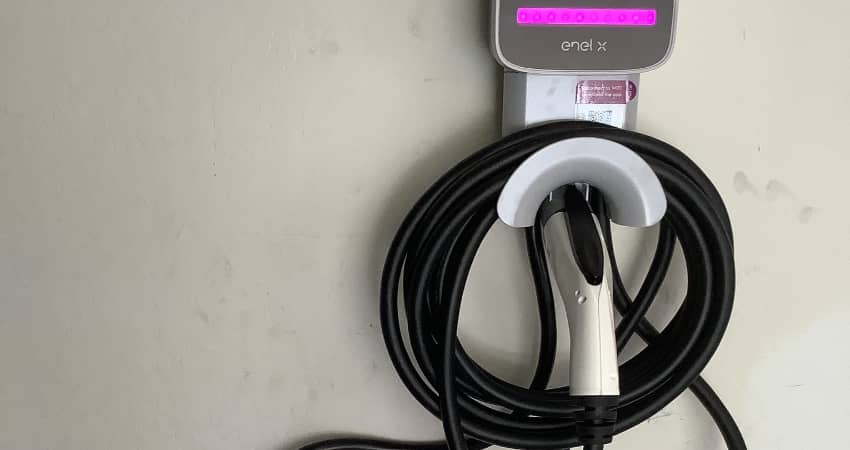
Arizona is set to receive $76.5 million in federal funding to help build EV charging infrastructure statewide as part of the National Electric Vehicle Infrastructure (NEVI) Formula Program. While this funding will help build 69 publicly accessible EV charging stations, there remains a significant shortage of public charging stations for drivers.
For most EV owners, the solution is an EV charger installation at home. It’s more convenient and cost-effective compared to using public chargers. No more hunting down charging locations, hoping there’s one available (and working), and then sitting around waiting while you re-energize. And that problem’s only getting worse. It takes years to build out public charging stations, but EV registrations in Arizona have tripled since 2021. More EVs but no similar increase in public facilities.
Charge Your EV at Home While You Sleep
With a Level 2 EV home charger installation, you can plug in your vehicle before you go to sleep and wake up to a fully charged vehicle in the morning. You get enough power to manage your commute and daily driving needs.
It’s the most practical solution and makes life so much easier than using the Level 1 plug-in that came with your EV.
What Is Level 1 Charging?
Level 1 charging uses a standard 120-volt household outlet. In most cases, you’re already ready to make that work. Plug your EV into an existing socket, and it starts charging right away.
It just takes a long time. For a battery electric vehicle, the US Department of Transportation says it takes 40-50+ hours to charge from empty to 80%. That’s more than two days to charge, and you still might not get to full power. This is rarely practical for homeowners unless they’re only putting a couple of miles on their vehicle each day.
What Is Level 2 Charging?
Level 2 charging uses a dedicated 240-volt circuit, typically a 40-50 amp circuit, that delivers significantly faster charging speeds. Comparatively, you can charge to 80% in 4-10 hours, depending on your vehicle and battery. Hybrid vehicles can charge to full in just a couple of hours.
| Feature | Level 1 Charging | Level 2 Charging |
| Power Source | Standard 120-volt outlet | Dedicated 240-volt circuit |
| Charging Speed | Slow | Much faster |
| Driving Range Added During Charging | About 3–5 miles per hour | About 20–40+ miles per hour |
| Typical Charging Time | May require multiple days | Usually overnight |
| Installation Requirements | Typically, none | Requires an electrician for EV charger installation |
| Best Use Cases | Low daily mileage | Regular commuting and daily driving |
Can I Install a DCFC Fast Charger in My Home?
Direct current fast charging (DCFC) is what public charging stations use; it can recharge your vehicle in 20 minutes to an hour, but it also costs substantially more. Depending on your infrastructure, the cost could be $50,000 or more for a DCFC charger. Site work can easily push total costs into six figures, and even if you want it and can afford it, you may not be able to install one at your home. It requires specialized 480-volt 3-phase power, high-capacity system upgrades, and approval from the local utility company due to potential grid restrictions.
So, a level 2 EV charging installation is the right fit for most EV owners. However, even Level 2 charging systems carry higher electrical loads, so you need a professional EV charger installation electrician to assess your system and electrical panel to ensure it can handle the increased load. In some cases, this requires updating your panel before you can add the charger.
What Is Required for EV Charger Installation?
EV charger service starts with an evaluation of your electric system. EV chargers require a dedicated circuit designed to handle consistent electrical loads over long periods. It doesn’t cycle on and off like most household appliances. Because they operate continuously for hours at times, the wiring, breaker, and electrical panel must all be properly sized for safe operation.
The Toyota Prius hybrid launched in 1997. The Tesla Roadster, Nissan Leaf, and Chevy Bolt came on the scene between 2008 and 2010. The majority of homes in Phoenix were built before the first mainstream EVs came off the production line. So, outside of a few upscale homes in the past few years, most weren’t built with EV charger installation service in mind.
You May Need an Upgrade to Your Electrical Panel
Some homes may have limited breaker space, aging electrical equipment, or already operate near capacity during the peak summer cooling season. Older homes with 100-amp panels or limited breaker space may also require panel upgrades before EV charger installation can be done safely.
Panel upgrades are especially common in homes with:
- Multiple HVAC systems
- Electric water heaters
- Pools or spas
- Heavy appliance usage
Load Calculations Help Prevent Problems
An EV charger installation electrician will perform load calculations to evaluate your total household electrical demand before installation begins. This makes sure your system can handle the extra load and prevents overheating or breaker tripping.
EV Charging Installation in Phoenix and the Weather
Have you noticed it gets hot here? On average, we experience 111 days each year when temperatures reach 100 degrees or more. That puts a heavy demand on the power grid and home electrical systems. When the AC runs constantly, adding an EV home charger puts even greater demand on your system. So, you need a qualified electrician for EV charger installation to make sure your account for peak heat is set up and you have enough capacity.
If you plan to install an outdoor system, you have to account for heat, monsoons, haboobs, and UV exposure. This requires equipment and conduit protection that’s built to be weather-resistant.
Garage Layout and Parking Access Matter
Where you park and how your garage is laid out also make a difference. Ideally, you want a short run from your electrical panel, but your charger must be in a convenient location. An EV charger installation in Phoenix should consider parking orientation, garage access, and cord reach.
Why Professional EV Charger Installation Matters
An EV charger installation in Phoenix is not a do-it-yourself job. It requires a professional electrician to manage the project safely. It’s so much more than just running a new line and installing an outlet.
Professional electricians help ensure:
- Correct breaker sizing
- Proper wiring installation
- Safe grounding
- Code compliance
- Reduced fire risk
Permits And Code Compliance
If you search “EV charger install near me” in Phoenix, the contractors worth hiring will handle permitting and inspections for you rather than leaving that work on your plate. Phoenix, Scottsdale, Mesa, and other communities have specific electrical permitting processes that require site plans and load calculations.
You want an experienced installer to manage this process for you and ensure everything complies with local building codes. It’s safer, and it helps protect your insurance and warranty coverage. If you use an unlicensed contractor or your installation doesn’t meet code, you are at risk. If a fire breaks out, an insurance company may deny your claim. Your manufacturer’s warranty on the charger itself may also be voided.
Improper Installation Can Create Expensive Problems
If something’s not done correctly, you can create significant problems. Often, it costs more to fix the problem than to hire a qualified electrician for EV charger installation in the first place. Some problems are minor; others are safety issues. Improper installation can lead to
- Circuit breakers that keep tripping
- Failed inspections
- Charger malfunctions
- Overheated wiring
- Poor charging performance
Correcting improper installations often costs significantly more than hiring a qualified electrician from the beginning.
Future-proofing Your Home
An experienced installer can also help you prepare for future electrical needs. Many EV owners start with one vehicle and then add another. It’s much cheaper to ensure your electrical system can handle two EVs than to retrofit it later. You may also want to consider other additions you could make in the future, including upgraded AC systems, smart chargers, and more.
With a little planning, you can avoid expensive modifications later.
What Affects EV Charger Installation Costs?
How much an EV charger install near you costs will depend on how much work needs to be done. The chargers themselves cost between $400 and $1,200. Simple installs might run between $1,000 and $2,000, while more complex situations might cost more.
EV charger installation electricians have to take into account:
- Charger location
- Distance from the electrical panel
- Panel upgrades
- Wiring and conduit requirements
- Outdoor installations
- Permit requirements
It’s likely a bit more expensive in older homes, which may require a panel replacement or service upgrade before you can safely install an EV charger.
EV Charger Rebates, Incentives, And Tax Credits In Arizona
When it comes to incentives, the picture’s not so clear. Rebates, incentives, and tax credits change regularly. For years, the federal government and Arizona offered instant rebates on purchasing electric vehicles and chargers. Those programs have expired.
As of 2026, Arizona does not offer a statewide residential EV charger rebate program. Portions of the federal Energy Efficient Home Improvement Tax Credit program that help offset installation costs are also no longer valid. However, you may still qualify for the Alternative Fuel Vehicle Refueling Property Credit when you file your taxes, but the window is short. Equipment must be in service by June 30, 2026.
Utility Programs May Still Offer Savings Opportunities
Your best bet for saving money will likely be through your utility company.
- Salt River Project (SRP) offers a $250 rebate in some cases, plus a $50 sign-up credit and an annual bill credit.
- Arizona Public Service (APS) provides a $25 enrollment bonus and a $5 monthly bill credit when you sign up for its SmartCharge program.
- There may also be opportunities to schedule charging at off-peak times and get discounts on your monthly bill.
There may also be rebates available for electric panel upgrades, depending on income requirements. You can search the Rewiring America website to see eligibility requirements.
How To Choose the Right EV Charger Installation Electrician
Not every contractor electrician regularly installs EV charging systems. You should look for an electrician with experience installing residential EV chargers, rather than just general electrical work.
Before you hire any contractor, you should verify that their company is licensed through the Arizona Registrar of Contractors and that they have the proper insurance coverage in place, including general liability, workers’ comp, and professional liability. In some neighborhoods with HOAs, you may need a Certificate of Insurance (COI) from the installer.
An experienced local electrician for EV charger installation will also know how to navigate the permitting and inspection process.
You also want to make sure you’re working with a company that will be there in the future. Contractors come and go, so finding one that has been around for decades and will still be around if you need them later on is important. A warranty is only good if someone’s still in business to service it.
FAQs — Frequently Asked Questions About EV Charger Installation
Do I need an electrician for EV charger installation?
Residential EV chargers should be professionally installed because they require dedicated circuits, electrical evaluations, permitting, inspections, and code compliance.
Can my current electrical panel support an EV charger?
Some homes can support EV charging installation by adding a circuit to the electrical panel. Others may require panel upgrades or additional electrical work. Ask for a professional evaluation and load calculation to determine capacity.
How long does EV charger installation take?
Many standard installations can be completed within a day, although panel upgrades or permitting requirements might extend project timelines.
Can EV chargers be installed outdoors in Arizona?
Yes, but you’ll need weather-resistant equipment designed to handle Arizona heat, dust, and monsoon conditions. It may also increase your installation costs depending on the distance to your panel, conduit runs, and whether you have access to outside walls, need to bury electrical lines, or have to go underneath driveways.
Are permits required for EV charger installation in Phoenix?
Yes. EV installations in Phoenix and surrounding areas require permits and inspections. Your electrician will coordinate permits and inspections with you to ensure compliance with code.
For safe, code-compliant EV charger installation in the Phoenix area, you can trust the highly trained, experienced EV charger installation electricians at George Brazil Plumbing & Electrical. Call today for a home electrical system evaluation and EV home charger installation.