
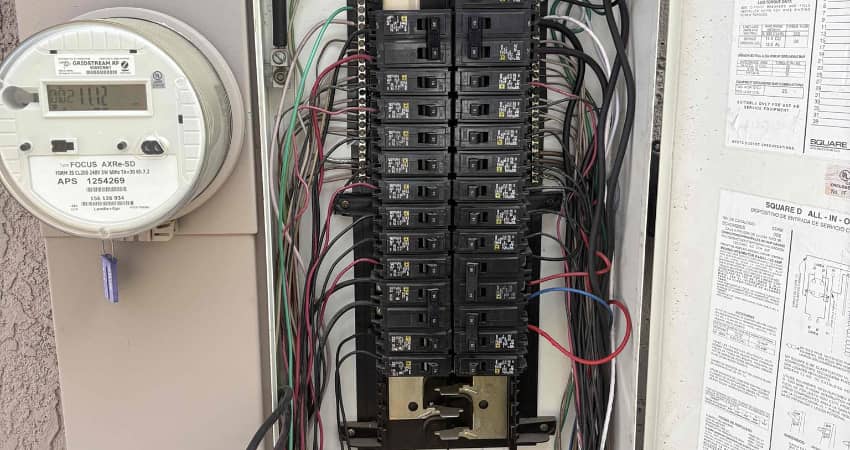
For Sun Lakes homeowners, the most useful electrical upgrades generally fall into a few categories: increasing panel capacity, improving outlet and GFCI protection, adding whole-home surge protection, replacing failing breakers, preparing for standby power, and installing fixtures such as ceiling fans.
Which projects your home actually needs depends on the age and condition of its electrical system, how much electricity you use today, and what equipment you plan to add in the future. An electrical panel upgrade may be important in one home, while another may need only targeted outlet or surge-protection improvements. An experienced electrician in Sun Lakes, AZ can evaluate those differences and help you figure out the best solution for your home.
Electrical Upgrades in Sun Lakes
Homes use electricity differently today than they did even a few decades ago. Larger air-conditioning systems, additional televisions and computers, smart appliances, pool equipment, home-office technology, EV chargers, and other devices can place demands on electrical systems that were designed for a much simpler household load.
That does not mean every older home needs a complete overhaul. An electrical system can remain reliable for decades when it is properly installed and maintained. The more important questions are whether the system is in good condition, whether it provides enough capacity, and whether it includes the protection expected in a modern home.
For Sun Lakes homeowners, that makes a professional electrical evaluation especially useful when planning renovations, adding major appliances, experiencing recurring electrical problems, or simply trying to determine which improvements deserve priority.
Here are some of the most common electrical upgrades that require an electrician in Sun Lakes, AZ.
Electrical Panel Upgrades: When More Capacity Makes Sense
The electrical panel distributes power throughout your home and houses the circuit breakers that protect individual circuits. As electrical demand grows, the panel can become one of the first places where limitations become apparent.
Common reasons to consider an electrical panel upgrade include:
A panel with no remaining breaker spaces
- EV charger installation
- New HVAC equipment
- Adding a pool or spa
- Major remodeling projects
- New electrical loads
A panel replacement and a service upgrade are not always the same thing. In some homes, the panel itself can be replaced while the existing electrical service remains unchanged. In others, increasing capacity may also require changes to service conductors, grounding, meter equipment, or other components.
The scope of the project can vary significantly depending on the existing electrical system and the amount of power your household needs. An electrician can perform a load calculation and inspect the equipment before determining whether the panel, the service, or both need attention.
Breaker Problems: When a Trip Is More Than an Inconvenience
Circuit breakers are designed to shut off power when electrical current exceeds safe limits or when certain faults occur. A breaker trip can therefore be a sign that the protective device is doing exactly what it should.
Overloaded circuits are a common cause. A circuit serving several high-wattage appliances, for example, may trip when too much equipment operates at once. Short circuits, ground faults, appliance problems, or damaged wiring can also trigger a breaker.
Wondering how to tell if a breaker is bad? Look at the pattern rather than assuming a trip means the breaker has failed. A breaker that repeatedly trips under a known heavy load may be responding correctly to an overloaded circuit.
A potentially defective breaker may refuse to stay reset even after appliances are unplugged, feel unusually hot, make abnormal buzzing sounds, or show visible signs of damage. However, some of those symptoms can also result from wiring or connection problems. That is why diagnosing how to tell if a breaker is bad usually requires evaluating the circuit as well as the breaker itself.
Repeatedly resetting the same breaker without determining the cause can conceal a potentially important electrical problem. If the trip becomes frequent or is accompanied by heat, burning odors, sparking, or discoloration, the affected circuit should be professionally inspected.
GFCI Outlet Installation and Outlet Safety
Ground-fault circuit interrupters are designed to reduce the risk of electrical shock by shutting off power rapidly when they detect current traveling along an unintended path.
That makes GFCI outlet installation particularly important in areas where electricity and moisture may come together. NFPA’s National Electrical Code is clear that GFCIs should be installed anywhere where moisture may contact electricity, including:
- Bathrooms
- Garages
- Crawl spaces
- Outdoor areas
- Kitchens
- Basements
In fact, GFCI outlet installation should be done anywhere where you might experience water near power.
Newer homes will almost always be built to satisfy current codes, but older homes may not have GFCIs installed everywhere they’re needed.
Older homes can present another issue. Some houses were originally wired with two-conductor cable that did not include the equipment grounding conductor used in newer systems. In other situations, a three-prong receptacle may have been installed even though there is no functional ground behind it.
Receptacles should be inspected when plugs no longer fit securely, the outlet or faceplate becomes warm, discoloration or scorching appears, or the outlet frequently loses power.
Whole-Home Surge Protection for Arizona Conditions
Modern appliances increasingly contain circuit boards and sensitive electronic controls. Air-conditioning equipment, refrigerators, washing machines, televisions, computers, smart-home equipment, and many other devices can all be vulnerable to sudden voltage spikes.
That is where whole-home surge protector installation can add another layer of electrical protection.
How does a whole-home surge protector work? A surge protector is installed at or near the main electrical panel and responds when incoming voltage rises beyond normal levels. It diverts excess surge energy away from household circuits, helping reduce the voltage that reaches connected equipment.
A surge protector cannot guarantee that every appliance will survive every electrical event. Extremely powerful surges can exceed the capacity of protective equipment. But I can save you from having to replace your expensive appliances from a power surge and reduce the risk of damage from many common voltage spikes.
Arizona’s weather makes that worth considering. The National Weather Service says Arizona recorded just over 200,000 lightning strikes during the 2025 monsoon season. And, lightning does not have to strike your house directly to create a surge. Nearby strikes can affect utility infrastructure and electrical lines. You can also see a big surge after your power goes out and it’s restored.
This is one reason how does a whole-home surge protector work becomes a practical question rather than simply a technical one. The device protects at the electrical system level instead of relying solely on individual plug-in protectors for selected electronics.
However, the scope of whole-home surge protector installation can vary depending on the available breaker space, the surge device selected, and whether other electrical modifications are necessary, such as an electrical panel upgrade.
Standby Generators for Outage Protection
A permanently installed standby generator provides a different type of protection. Instead of protecting equipment from a voltage surge, it supplies electricity when utility power is unavailable.
Standby generators are installed outside the home and connected to the electrical system through a transfer switch. When utility power fails, an automatic standby system can detect the outage, start the generator, and transfer selected electrical loads to generator power. The appropriate generator depends largely on what you want to continue operating. Essential-load systems may support refrigeration, lighting, internet equipment, selected outlets, and a few other priorities. Larger systems can support additional appliances and HVAC equipment.
In Arizona, air conditioning can have a major effect on generator sizing. Central AC systems represent significant electrical loads and can require additional starting power when compressors turn on. Homes with multiple HVAC systems may need additional capacity or load-management equipment.
The standby generator installation cost can vary substantially because every home’s requirements differ. Generator capacity, transfer-switch configuration, electrical modifications, fuel connection, site conditions, permitting, and the distance between equipment can all affect the scope of installation. Rather than relying on a generic price, homeowners should base the project on the electrical loads they actually want to support.
Generator sizing matters for whole-home surge protector installation, impacting reliability as well as budget. An undersized generator may overload when several major loads operate together, while unnecessarily oversizing the system can increase equipment and operating requirements.
The standby generator installation cost should therefore be evaluated only after determining your home’s actual backup-power needs and installation requirements.
Ceiling Fan Installation for Arizona Homes
Ceiling fans can provide practical comfort benefits in Arizona by improving air circulation and helping you feel cooler whether you have air conditioning or not.
Ceiling fan installation is straightforward when the room already contains suitable wiring, controls, and a fan-rated electrical box. In other situations, the project may require new wiring, a different box, wall controls, or modifications for ceiling height and fixture weight.
One important consideration is support. An electrical box designed only for a lightweight ceiling fixture may not be rated for the movement and weight of a ceiling fan. Installing the fan on an appropriate support system helps prevent loosening, vibration, or structural problems.
Ceiling fan installation can also provide an opportunity to add integrated lighting or updated controls, depending on the room and existing electrical configuration.
Which Electrical Upgrades Should You Prioritize?
Electrical projects are easier to prioritize when they are divided into safety, capacity, and convenience.
Safety Comes First
Potential warning signs should receive the highest priority. These include burning odors, scorching, sparking, overheated receptacles, unusual buzzing, visible panel damage, or breakers that repeatedly trip without an obvious explanation.
These symptoms can point to damaged equipment, loose connections, overloaded wiring, or another electrical fault that warrants professional evaluation.
Capacity Comes Next
If the electrical system is safe but no longer has enough capacity, the next priority is planning for current and future loads. A full panel, an EV charger, replacement HVAC system, pool equipment, workshop, or remodeling project may all require additional circuits or greater overall electrical capacity.
Planning these projects together can help avoid making one improvement today only to discover that another upgrade is needed soon afterward.
Protection and Convenience Follow
Once immediate safety and capacity concerns are addressed, homeowners can consider improvements that increase protection, resilience, or comfort.
Whole-home surge protection can help protect appliances and electronics. A standby generator can maintain selected systems during outages. GFCI improvements can add shock protection where required, while ceiling fans and additional outlets can make rooms more practical and comfortable.
What to Expect From an Electrical Inspection
An electrical inspection can help separate necessary work from optional improvements. An electrician can evaluate your main panel, service capacity, breakers, grounding and bonding, outlet condition, GFCI protection, available circuit space, and signs of overheating or previous improper modifications.
It is also helpful to discuss future plans. Tell the electrician if you expect to add an EV charger, remodel a kitchen, replace HVAC equipment, install a pool or spa, add a generator, or increase other electrical loads. That information allows the electrician to evaluate the system not only for today’s needs, but also for projects that may change the home’s electrical demand in the coming years.
FAQs — Frequently Asked Questions About Common Electrical Upgrades in Arizona
How do I know if my electrical panel needs to be upgraded?
You may need an upgrade if the panel is full, breakers trip frequently, or you are adding major electrical loads such as an EV charger, HVAC system, pool, or spa.
Do older homes need GFCI outlets added?
Possibly. Older homes may not have GFCI protection in all locations where current electrical codes require it, particularly around kitchens, bathrooms, garages, and outdoor areas.
Is a whole-home surge protector worth it in Arizona?
It can be. Arizona lightning, utility disturbances, and power restoration after outages can create voltage surges that may damage appliances and electronics.
Can I replace a bad circuit breaker myself?
Breaker problems should generally be evaluated by a qualified electrician because repeated tripping can indicate wiring, overload, connection, or equipment problems rather than a defective breaker alone.
Should I upgrade my electrical system before adding an EV charger or new HVAC system?
An electrician should first evaluate your available panel capacity and electrical load. Some homes have sufficient capacity, while others may need a new circuit, panel modifications, or a service upgrade.
Choosing an Electrician in Sun Lakes, AZ
When selecting an electrician in Sun Lakes, AZ, look for an electrical company that is licensed and bonded and has significant experience with residential panel and service work.
Contact George Brazil Plumbing & Electrical to have a licensed electrician evaluate your Sun Lakes home’s electrical system or handle any of your electrical needs.