
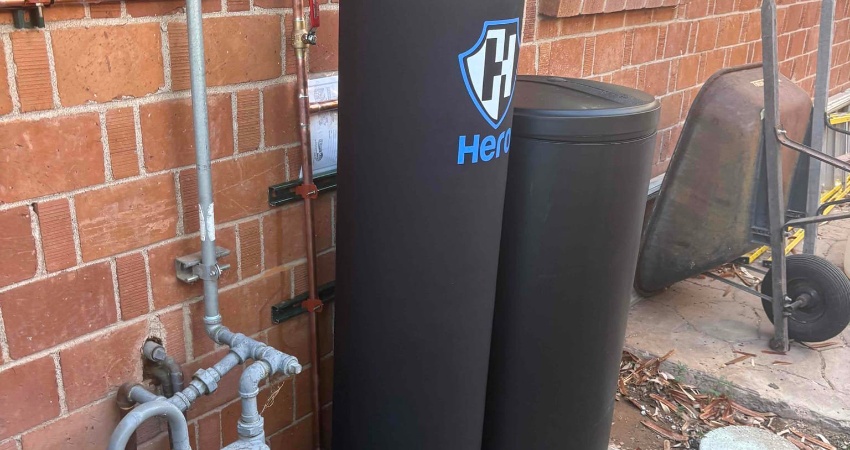
The best whole house water filter for Scottsdale city water is one that addresses your specific water treatment goals, maintains adequate flow throughout your home, and has independently verified filtration performance. For most Scottsdale households, that means evaluating chlorine-reduction capability, filtration media, sediment protection, system capacity, and maintenance requirements rather than relying on brand rankings or marketing claims.
Scottsdale already treats municipal water to meet federal drinking water standards set by the Environmental Protection Agency. The best whole-house water filtration system provides an additional layer of treatment for homeowners who want to improve water quality at every faucet.
What Scottsdale Homeowners Should Know About City Water
Scottsdale’s drinking water comes from a combination of surface water and groundwater sources. The city operates treatment facilities and monitors water quality throughout its distribution system.
Scottsdale Water publishes an annual Water Quality Report detailing its water sources, treatment processes, and testing results. These reports provide a useful starting point for determining which substances a home filtration system should address.
Because Scottsdale uses chlorine for disinfection, carbon filtration is a common consideration for homeowners who want to reduce chlorine taste and odor. However, not every filtration system removes the same substances. Water hardness, for example, requires a different treatment approach than chlorine reduction.
Five Criteria for Choosing the Best Whole House Water Filtration System
Instead of comparing products based on advertised features alone, evaluate how well each system meets the following requirements.
1. Filtration Media and Chlorine Reduction
Activated carbon is commonly used in residential filtration systems to reduce chlorine, taste, and odor. Two common configurations include granular activated carbon (GAC) and carbon block filters. Both can provide effective treatment when properly designed, although performance depends on contact time, flow rate, media quality, and system capacity.
For Scottsdale municipal water, look for documented chlorine-reduction performance rather than assuming every carbon filter delivers equivalent results.
The Centers for Disease Control and Prevention (CDC) recommends checking a filter’s specific contaminant-reduction claims. A system designed to improve taste and odor may not remove contaminants such as lead or certain chemicals.
2. Flow Rate for Your Household
The best whole-house water filter will deliver enough water to support multiple fixtures operating at the same time. This becomes particularly important in larger North Scottsdale homes, where several bathrooms, showers, and water-using appliances might be using water simultaneously.
Flow rates are typically measured in gallons per minute (GPM). A system with insufficient capacity can cause noticeable pressure drops during periods of high demand.
When evaluating equipment, consider:
- Number of bathrooms and frequently used fixtures
- Peak simultaneous water demand
- Manufacturer-rated flow capacity
- Pressure loss through the filtration system
The goal is to maintain comfortable water pressure while providing sufficient contact time for effective filtration.
3. Sediment Pre-Filtration
A sediment pre-filter captures particles such as sand, dirt, and other suspended material before water reaches the primary filtration media.
Although Scottsdale’s municipal water undergoes treatment before distribution, sediment can occasionally enter household plumbing through distribution-system maintenance or other disturbances. A properly selected sediment filter helps protect downstream filtration components and may extend their service life.
However, finer filtration is not automatically better. Very small filter openings can restrict water flow and require more frequent replacement. Choose sediment filtration based on actual water conditions and the manufacturer’s requirements.
4. Independent Certifications
Third-party certification of the best whole house water filter standards provides stronger evidence of filtration performance than manufacturer advertising alone.
Two standards are particularly relevant:
- NSF/ANSI 42: Addresses aesthetic concerns, including chlorine taste and odor reduction.
- NSF/ANSI 53: Covers reduction claims for contaminants with potential health effects.
5. Bypass Valves and Maintenance Requirements
A good whole-house filtration installation should include a practical way to service the equipment. A bypass valve allows water to flow around the filtration system during maintenance or replacement. This can prevent unnecessary interruptions to household water service.
Homeowners should also compare service intervals. Some systems use replaceable cartridges, while others rely on larger media tanks that require periodic media replacement. Evaluate the manufacturer’s rated service life, replacement procedures, availability of components, and maintenance requirements.
Does Whole-House Filtration Remove Scottsdale’s Hard Water Minerals?
Most conventional whole-house carbon filters do not remove the calcium and magnesium responsible for water hardness. If hardness reduction is a priority, homeowners generally need a water softener. Filtration and softening can also be combined when homeowners want both chlorine reduction and hardness management.
George Brazil Plumbing & Electrical can help you evaluate your home to find the best whole-house filtration system options and choose a properly sized system that meets your water quality needs and household demands. Schedule one of our friendly, experienced water filtration experts today for a free in-home consultation.