
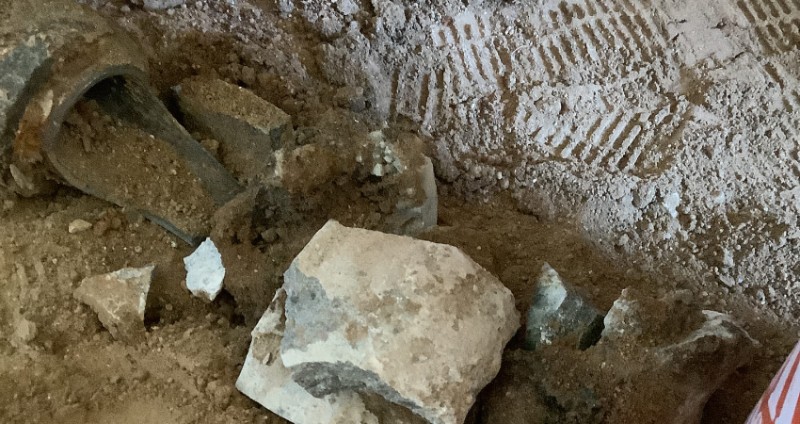
A collapsed sewer line means a section of pipe has lost its structural integrity and can no longer reliably carry wastewater from your home. A partial collapse may severely restrict flow, while a complete collapse can stop it altogether. If that happens in your North Central Phoenix home, you may experience sewage backups and be unable to use toilets, showers, sinks, or appliances normally until collapsed sewer line repair is completed.
So, what happens next? The first priority is limiting additional wastewater. Then, a plumber needs to determine where the failure occurred, how much pipe is damaged, and what it will take to restore your sewer system.
First: Stop Using Water in the Home
If sewage is backing up or you have reason to suspect a major sewer failure, minimize water use until a plumber can evaluate the problem. That means avoiding flushing toilets, taking showers or baths, running the dishwasher, doing laundry, or sending large amounts of water down any drain.
Everything you send down a drain eventually has to travel through your main sewer line. If that line is completely obstructed, the wastewater has nowhere to go. Continuing to use water can send more sewage back through the drains in the home or out into your yard, undermining your landscaping or foundation.
If wastewater has already backed up into your home, avoid direct contact with it. Sewage can contain bacteria and other contaminants.
Next: Determine Whether the Line Is Actually Collapsed
A severe sewer backup doesn’t automatically mean a pipe has collapsed. A major obstruction or other pipe damage can cause similar problems.
A sewer camera inspection can help identify what’s happening underground. A plumber inserts a flexible, waterproof camera into the sewer line to examine the interior of the pipe. The inspection may reveal where the pipe has failed, how much of it is damaged, and the condition of the surrounding line. If the pipe has collapsed completely and the camera cannot travel beyond that point, additional diagnostic work may be necessary to pinpoint the problem and determine its extent.
Knowing the location is particularly important because it determines where crews may need to access the sewer line.
Why Do Sewer Lines Collapse?
Sewer lines generally don’t collapse without an underlying problem. In older North Central Phoenix homes, several factors can contribute.
Aging Pipe Materials
Older homes may have sewer lines that have been underground for decades. Cast iron can corrode and weaken over time, while clay can crack, shift, or separate at its joints. As these materials deteriorate, they can eventually lose the strength needed to withstand the surrounding soil and normal stresses placed on the pipe.
Soil Movement and Pipe Support
Underground pipes depend on the surrounding soil for support. Soil movement, settling, or erosion can change those conditions. A pipe that shifts out of alignment or loses adequate support may begin to crack or sag, particularly if the pipe has already weakened with age, leading to collapsed sewer line repair.
Tree Root Intrusion
Tree roots can also exploit existing cracks and joints, worsening a pipe. Eventually, part of the line may no longer be able to maintain its shape or structural integrity.
What Happens During Collapsed Sewer Line Repair?
Once the problem is diagnosed, the next steps depend on the location and extent of the failure.
The Damaged Section Is Located
Inspection and diagnostic findings allow the plumber to identify where work needs to occur and the collapsed sewer line repair cost. Sewer laterals can run beneath yards, landscaping, patios, sidewalks, driveways, and even streets in some cases that are still your responsibility.
Crews Access the Failed Pipe
A collapsed section generally requires excavation so crews can reach the failed pipe. How much digging is necessary depends on the length of the damaged section, its depth, and what’s above it.
Accessing a relatively shallow pipe beneath an open area of the yard can be significantly different from reaching a deep sewer line beneath concrete and significantly impacts the collapsed sewer line repair cost.
The Damaged Pipe Is Removed and Replaced
Unlike an ordinary blockage, a severely collapsed pipe cannot simply be cleared to restore normal operation. The failed material needs to be removed and the affected section replaced.
During the work, plumbers can also evaluate the rest of your sewer line. If the surrounding sewer line remains structurally sound, the project may be limited to the failed area. If deterioration extends farther, additional work may be appropriate.
Flow Is Restored and the Area Is Repaired
After the replacement pipe is installed and connected, the system can be checked to make sure wastewater flows properly. Excavated areas are then backfilled. Depending on where the sewer line runs, landscaping, concrete, or other surfaces may also require restoration.
Does a Collapse Mean the Entire Sewer Line Must Be Replaced?
Not necessarily. A sewer line can fail in one location while the pipe on either side remains structurally sound. In that situation, replacing the failed section may solve the problem.
The situation changes when an inspection shows extensive corrosion, cracking, deterioration, or multiple areas of failure. Replacing one section while leaving several other severely deteriorated areas could simply postpone another repair.
What Determines Collapsed Sewer Line Repair Cost?
The price depends heavily on the amount of work required to reach and replace the damaged pipe, including:
- Length of the collapsed pipe
- Depth of the sewer line
- Location of the failure
- Accessibility
- Existing pipe material
- Condition of adjacent sections
- Amount of excavation required
- Landscaping, concrete, or other surfaces that require restoration
If a sewer failure has brought your North Central Phoenix home to a standstill, call George Brazil Plumbing & Electrical to find the collapse, restore your sewer line, and get your plumbing working properly again. We offer emergency and same-day service with both traditional and trenchless repair methods.