
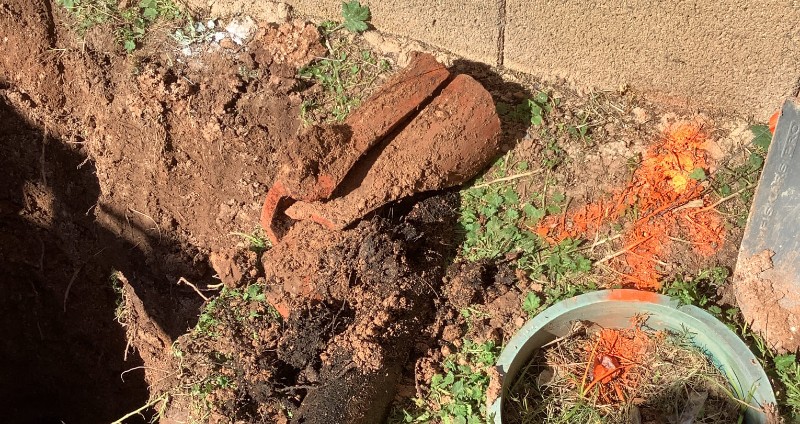
North Central Phoenix has something many newer Valley neighborhoods don’t. There are decades-old homes shaded by large, mature trees. That combination creates character above ground, but it can also create trouble below it. Older clay and cast-iron sewer lines may develop cracks, corrosion, or separated joints, while established trees have extensive root systems constantly searching for water.
Put the two together and North Central Phoenix can be particularly vulnerable to root intrusion. That’s also why sewer line maintenance becomes more important when you have older plumbing surrounded by mature landscaping.
North Central Phoenix Grew Around Water
The mature landscape found throughout North Central Phoenix didn’t happen by accident. The area’s history is closely connected to the Valley’s extensive canal system.
Salt River Valley canals have supported life in our area for centuries. In the late 1800s and early 1900s, settlers expanded irrigation systems that supported agriculture and ultimately helped shape the Phoenix metropolitan area.
North Central Phoenix includes areas that developed from agricultural and estate properties where irrigation made it possible to grow substantial vegetation despite the desert climate. Over many decades, those irrigated landscapes developed into neighborhoods known for mature shade trees.
That’s significantly different from many newer Valley developments built with younger trees and more water-conscious desert landscaping.
Decades of Irrigation Created a Mature Urban Forest
Drive through North Central Phoenix, and you’ll find ash, olive, citrus, eucalyptus, ficus, and other mature trees that can provide expansive shade. Underground, these trees require extensive root systems to anchor themselves and obtain the water and nutrients they need.
That doesn’t mean having a large tree automatically puts your sewer line in danger, but it can lead to tree root sewer line repair costs.
Sewer Lines Attract Tree Roots
Roots naturally grow toward areas where favorable moisture conditions exist. An aging residential sewer line can provide exactly that opportunity. Sewer pipes also continuously carry wastewater containing water and organic material, so if an old pipe develops a crack, separated joint, or another opening, roots may find their way inside.
Roots typically don’t simply punch through a healthy, intact sewer pipe. Instead, they take advantage of weaknesses that already exist. At first, only tiny roots may penetrate the opening. Once inside, however, they have access to a consistent source of moisture. The roots can expand and begin catching toilet paper, grease, and other material moving through the sewer. Over time, what began as a tiny intrusion can become a significant problem.
Older Sewer Pipes Increase the Risk
North Central Phoenix’s mature trees are only part of the story. Many homes also have plumbing systems that have been underground for decades. Older clay sewer pipes can crack, shift, or separate at their joints. Cast iron can corrode and deteriorate with age. Soil movement may also affect pipe alignment and connections.
Each defect can create an opportunity for roots.
This is why cutting down a tree isn’t necessarily the answer to a recurring sewer problem. If the pipe has an opening, fixing the condition of the sewer line is an important part of preventing the problem from continuing.
Root Intrusion Often Starts Small
Root problems can develop gradually rather than producing an immediate sewer backup.
The progression often looks something like this:
Small pipe opening → fine roots enter → roots expand → debris collects → wastewater flow narrows → recurring clogs → pipe damage may worsen.
That explains why homeowners can sometimes do basic sewer line maintenance and think the problem has been solved, only for the same symptoms to return. Clearing an obstruction may restore wastewater flow, but it doesn’t necessarily repair the opening that allowed roots inside. If the underlying pipe remains damaged, roots may eventually return.
As the intrusion becomes more extensive or contributes to additional pipe damage, the scope of work can increase. That’s one reason tree root sewer line repair cost depends heavily on how early the problem is identified and the condition of the pipe when it is inspected.
Recurring main-line clogs, multiple slow drains, or repeated sewer backups are reasons to investigate what’s happening rather than continually treating each occurrence as an isolated clog. A sewer camera inspection can help determine whether roots, pipe deterioration, or another condition is responsible.
When Roots Become a Repair Problem
Finding roots inside a sewer line doesn’t automatically tell you what repair is required.
A plumber needs to evaluate factors such as:
- Extent of root growth
- Location of the intrusion
- Pipe material
- Structural condition
- Length of damaged pipe
- Accessibility
These factors also affect tree root sewer line repair cost. A small area of damage in an accessible location is a very different project from extensive root intrusion involving a badly deteriorated sewer line.
For homeowners with mature trees and older plumbing, sewer line maintenance should focus on the routine inspection, cleaning, and care of the sewer pipes. If you suspect a problem, schedule a service call as soon as possible.
Protect the mature landscape that makes North Central Phoenix distinctive by having George Brazil Plumbing & Electrical find the source of recurring sewer problems and recommend the right repair for your home. Schedule sewer line repair service today.