
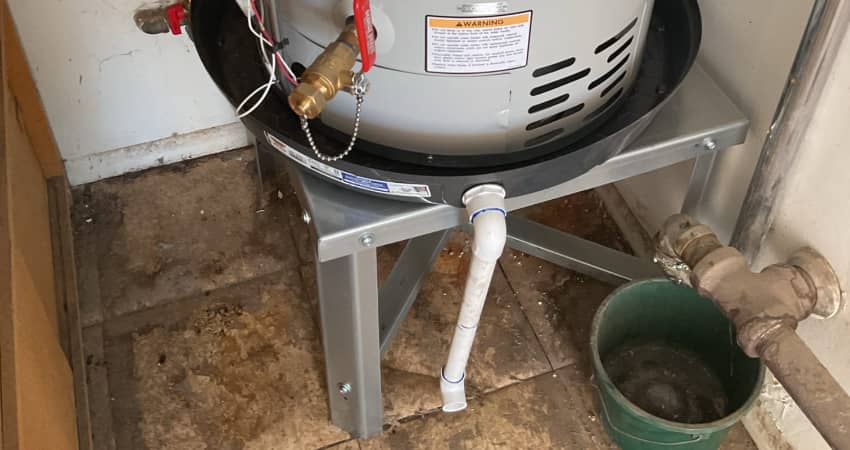
Some of the most common signs your gas water heater is failing include:
- Inconsistent hot water
- Unusual noises coming from your water heater
- Rusty or discolored water
- Leaks around the tank
- Repeat repairs
Whether the better choice is repair or replacement depends on what is actually failing, how old the unit is, and the overall condition of the tank.
For Scottsdale homeowners, including those in McDowell Mountain Ranch, catching these warning signs early can make it easier to evaluate options before the water heater stops working completely or develops a serious leak.
Your Water Is Not Getting Hot Enough
A gas water heater not producing hot water does not always mean the entire system has failed. Several problems can interrupt or reduce heating, including a faulty ignition system, pilot-light issue, burner problem, thermostat failure, or malfunctioning gas control valve. Some of these components can be repaired or replaced without replacing the entire water heater.
You may also notice that the water gets warm, but never quite reaches its usual temperature. That can point to a control or burner issue, but it can also happen when the system is struggling to transfer heat efficiently.
If the tank itself is still in good condition and the water heater is not near the end of its expected service life, repairing a specific component may make sense.
You Hear Rumbling, Popping, or Banging
Unusual sounds coming from a storage water heater can indicate sediment buildup. Minerals in the water can settle at the bottom of the tank over time. When the burner heats the water, trapped water around those deposits can create popping, cracking, or rumbling noises.
This is common in Scottsdale where the water is very hard, and full of the minerals that form scale. While the water’s safe to drink, it can cause buildup in your water heater. So, persistent or increasingly loud noises deserve attention. Heavy buildup can affect heat transfer and put additional stress on an aging system.
Hot Water Looks Rusty or Discolored
If rusty or brownish water appears only when you run the hot water, the water heater may be contributing to the problem. Internal tank corrosion or deterioration of the anode rod can sometimes cause discoloration.
A failing anode rod may be replaceable, but corrosion affecting the tank itself is much more serious. Once the tank structure has deteriorated, replacement is usually the safer long-term solution.
One note here: If both hot and cold water appear discolored, the issue may instead be elsewhere in the plumbing system or water supply.
Water Is Leaking Around the Tank
If you see water leaking, don’t ignore it. Some leaks come from valves, fittings, drain connections, or plumbing lines attached to the unit. Depending on the cause, these can sometimes be repaired. A leaking storage tank is different. If the tank itself has cracked or corroded through, patching it is generally not a practical repair. Replacement is usually necessary.
Small leaks can also be deceptive. You might not notice a slow drip in a garage or utility area for some time, especially if the water evaporates quickly or drains away. McDowell Mountain Ranch homeowners should check around older water heaters periodically rather than waiting for a large puddle to appear.
Your Hot Water Runs Out Faster Than It Used To
A gradual decline in hot-water capacity can also indicate a developing problem. Sediment can reduce the amount of usable space inside a storage tank. Burner issues can slow recovery time, while thermostat problems may keep the unit from maintaining the correct temperature.
Household changes matter. too. If more people are using hot water than before, the water heater may simply be undersized for current demand. But if usage has not changed and a system that once performed well now runs out of hot water quickly, it is worth having the unit inspected.
Repair or Replace? What Matters Most
It’s always a tough decision for homeowners. How do you decide when it’s time to replace a hot water heater versus repairing it?
Age of the Water Heater
An isolated repair on a relatively new unit may make sense. The same repair becomes less attractive when the water heater is already near the end of its normal service life. Older systems are also more likely to develop additional problems after one component is repaired.
Type of Failure
Some problems are clearly more repairable than others. A failed thermostat, control valve, ignition component, or external fitting may be a reasonable repair. Tank leaks, severe corrosion, and structural deterioration generally point toward replacement.
Repair History
If you have already repaired several components and new problems continue to appear, replacement may provide better reliability than continuing to fix an aging system one issue at a time.
Overall Performance
Temperature fluctuations, slow recovery, unusual noises, frequent shutdowns, and recurring repairs together may be signs your gas water heater is failing beyond one isolated component. A gas water heater not producing hot water may involve a straightforward repair, but when loss of hot water appears alongside leaks, corrosion, or repeated failures, replacement may be the more practical option.
Contact George Brazil Plumbing & Electrical for water heater service. You’ll get an honest evaluation, upfront pricing, and professional service.