
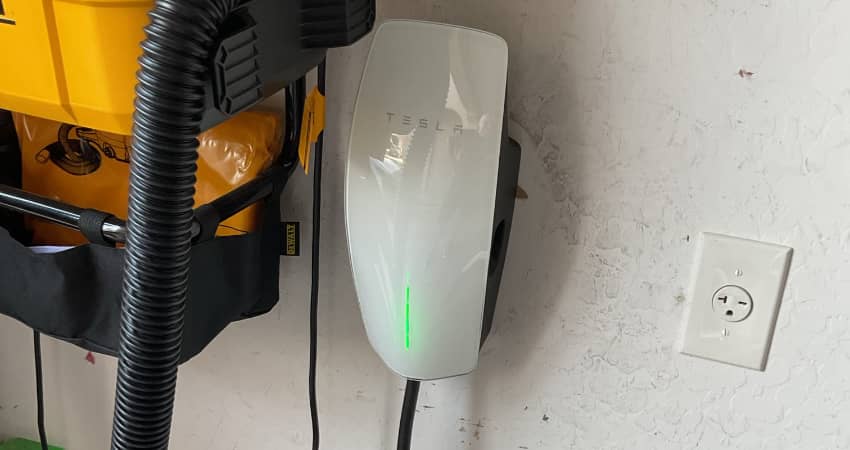
When you’re hiring an electrician to install an EV charger, they’ll do a thorough evaluation of your home’s electrical system to determine what’s needed. In many cases, this means electrical panel upgrades, but not always. According to the EPA, homes with at least 200-amp electrical service and two empty spaces for a double-pole breaker will likely have enough capacity.
However, panel size and open breaker spaces do not tell the whole story. A certified electrician for EV charging installation must perform a formal load calculation to determine whether the electrical system can safely accommodate the charger.
Level 2 Charging Places a Significant Load on Your Home
A Level 2 EV charger operates on a dedicated 240-volt circuit. Depending on the charger and vehicle, it may draw power continuously for several hours while replenishing the battery.
Because EV charging is considered a continuous electrical load, the circuit must be sized appropriately. For example, a 40-amp Level 2 charger generally requires a dedicated 50-amp circuit. That can represent a substantial addition to a home already powering air conditioning, electric water heating, cooking, pool pumps, and other large appliances.
What Is an Electrical Load Calculation?
A load calculation estimates the maximum amount of electricity the home may require under normal operating conditions. An electrician to install an EV charger will document your home’s size and major electrical loads, then compare the calculated demand with the capacity of the electrical service.
The assessment may include:
- Central air conditioners and heat pumps
- Electric water heaters
- Electric ranges, ovens, and dryers
- Pool pumps, spas, and pool heaters
- Workshop or garage equipment
- Solar or battery-storage equipment
- Existing high-amperage circuits
- The EV charger’s output
This step is particularly important in Scottsdale, where air-conditioning systems can account for a large portion of electrical demand during hot weather. A panel that appears to have room for another breaker may still be operating close to its safe capacity.
Signs You May Need a Panel or Service Upgrade
Older Scottsdale homes are more likely to have 100-amp or 125-amp service, although the home’s age alone does not determine whether an upgrade is necessary. Some newer homes may also have limited capacity because of pools, electric appliances, additions, or other equipment installed after construction.
A panel or service upgrade may be recommended when:
- The load calculation exceeds the service capacity.
- The panel has no safe way to accommodate another circuit.
- The equipment is damaged, obsolete, or improperly modified.
- The panel is not rated for the proposed charger load.
- The service conductors or meter equipment are undersized.
- The home is already experiencing overheating or recurring electrical problems.
- A larger charger would place the home too close to its capacity limit.
A Full Panel Upgrade Is Not the Only Option
Insufficient capacity does not always mean replacing the entire panel and upgrading the utility service. A certified electrician for EV charging installation may identify a less extensive solution based on the home, vehicle, and driving routine.
One option might be installing a lower-amperage Level 2 charger. A charger operating at a lower output will charge more slowly, but it can still be much faster than a standard Level 1 outlet.
Another option is a Smart Load Management Switch (EVEMS) or load-management system. This equipment monitors household electrical demand and reduces or pauses EV charging when other major appliances are operating. Charging resumes when capacity becomes available.
An electrician may also be able to reorganize circuits, install approved tandem breakers where permitted, replace an undersized panel without increasing service capacity, or add a subpanel. These options create physical breaker space, but they do not increase the total amount of electricity available to the home. The load calculation still determines whether the charger can be added safely.
Choosing the Right Charger Size
Many homeowners assume the most powerful available charger is automatically the best choice. In practice, charger output should reflect your vehicle’s capabilities, the home’s electrical capacity, and the amount of driving range that must be restored overnight.
A vehicle can accept only as much AC charging power as its onboard charger allows, so installing higher-capacity equipment will not shorten charging time when the vehicle’s limit is lower. A moderately sized charger may meet your daily needs while avoiding expensive electrical upgrades.
Homeowners should choose the charger only after the electrical evaluation. Buying equipment first can leave you with a unit that is oversized for the home or incompatible with the available circuit.
Start With a Professional Electrical Evaluation
The only reliable way to determine whether your Scottsdale home needs an upgrade is to inspect the panel and complete a load calculation. The evaluation should also consider the wiring route, charger location, vehicle requirements, permitting, and plans for additional EVs or electric appliances.
George Brazil Plumbing & Electrical can evaluate your electrical capacity and recommend an appropriate charging solution. Contact us to schedule an assessment with an experienced electrician to install an EV charger safely and in compliance with Scottsdale electrical codes.