
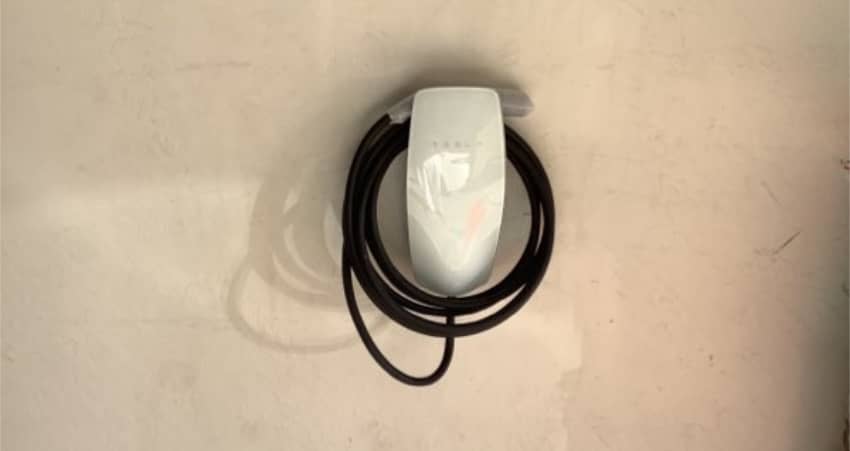
The average cost to install a home EV charger in Arizona is $2,063. However, that figure does not include panel upgrades or other major electrical work. Your total could be lower for a straightforward installation near the electrical panel or considerably higher if your home needs long wiring runs, trenching, load-management equipment, or a service-panel upgrade.
A Level 2 charger uses a 240-volt circuit, similar to the power supplied to an electric dryer or oven. It can typically add about 25 to 40 miles of driving range per charging hour, making it much faster than charging through a standard 120-volt outlet.
Here is what Scottsdale homeowners should include when budgeting for an EV home charger installation in 2026.
Level 2 Charging Equipment
The charger itself is only one part of the total cost. The EPA estimates that home charging equipment generally costs between $400 and $1,000, depending on its power rating and features.
A basic unit may simply deliver power to the vehicle. More expensive smart chargers can connect to Wi-Fi, schedule charging during lower-cost hours, track electricity use, restrict unauthorized access, and coordinate charging with other household electrical loads.
Before purchasing a charger, confirm that it is compatible with your vehicle, rated for the intended indoor or outdoor location, and certified by a nationally recognized testing laboratory. You should also check utility rebate requirements because some programs apply only to approved smart-charger models.
Electrician Labor and Installation
Most homes need a new dedicated 240-volt circuit for Level 2 charging. The cost of hiring an electrician to install an EV charger depends heavily on where the charger will be mounted in relation to the electrical panel.
A short, accessible wiring path may keep the project relatively simple. Costs increase when the electrician must route wiring through finished walls, ceilings, attics, crawl spaces, or detached garages.
The electrician may need to install:
- A properly sized circuit breaker
- Dedicated wiring and conduit
- A NEMA outlet or hardwired connection
- Ground-fault protection where required
- An exterior-rated enclosure for outdoor installations
- Mounting hardware and equipment
A hardwired charger is permanently connected to the electrical system. A plug-in charger connects to a dedicated 240-volt outlet, commonly a EV-rated NEMA 14-50 receptacle, which is a heavy-duty 50-amp electrical outlet. The price difference may be relatively small, so the decision should be based on charger requirements, placement, portability, and local electrical codes.
Wiring Distance and Charger Location
Distance from the electrical panel is often one of the largest cost variables. Copper wiring sized for continuous EV home charger installations can be expensive, and longer runs require more material and labor.
Installation may cost more when the charger is:
- On the opposite side of the house from the panel
- In a detached garage or carport
- Mounted outside and exposed to Arizona weather
- Separated from the panel by finished living areas
- Installed where underground trenching is required
Choosing a charging location near the panel can sometimes reduce the project cost significantly. However, the charger must still be positioned so the cable can reach the vehicle safely without being stretched across a walkway or driveway.
Electrical Capacity and Panel Upgrades
Not every home needs a new electrical panel. According to the EPA, a home with at least 200-amp electrical service and two available breaker spaces will likely have enough capacity for Level 2 charging. Homes that do not meet those conditions require a closer load-capacity evaluation, but they do not automatically require a full panel upgrade.
An electrician can perform a load calculation that accounts for the home’s air conditioning, water heater, range, dryer, pool equipment, and other major electrical loads.
When capacity is limited, potential solutions include:
- Installing a lower-amperage Level 2 charger
- Consolidating compatible circuits to create panel space
- Adding a subpanel
- Installing a load-management system
- Upgrading the electrical panel or utility service
A load-management device can temporarily reduce EV charging when the home’s electrical demand is high. In some homes, this may be less expensive and disruptive than replacing the entire panel.
Permits and Additional Work
Your electrician will identify the permits and inspections required in your city, and include them in your quote. In Scottsdale, a stand-alone home charger permit may cost between $85 and $125. Panel upgrades could make that fee go up to between $150 and $250.
Other possible expenses include drywall repair, concrete work, trenching, surge protection, utility coordination, or replacement of outdated electrical components discovered during the inspection.
Get an Installation Quote Based on Your Home
The most reliable estimate requires an onsite evaluation. An electrician to install an EV charger will examine the panel, complete a load calculation, measure the wiring route, review the charger’s specifications, and determine whether permits or electrical upgrades are necessary.
George Brazil Plumbing & Electrical can evaluate your home’s electrical system and provide a clear estimate for safe, code-compliant Level 2 charger installation. Contact us to schedule an EV charging consultation for your Arizona home.