
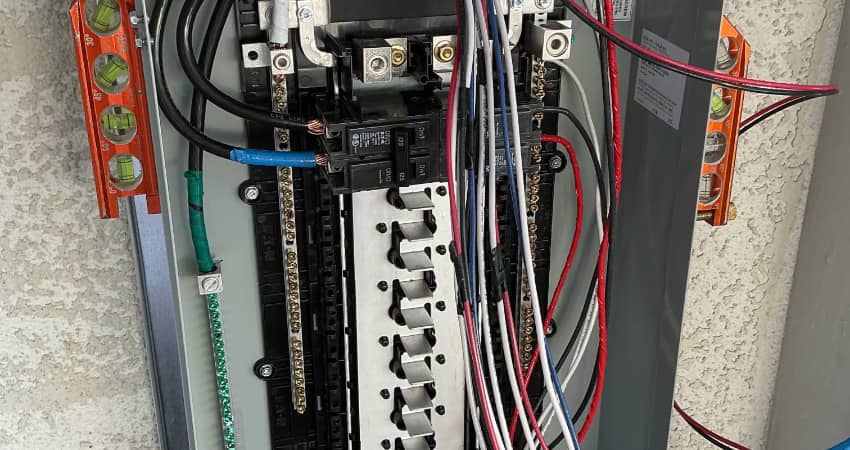
When your electrical panel is working properly, you probably don’t give it a second thought. Flip a switch, and the lights turn on. Run your washing machine or dryer, and it works properly. Your air conditioning keeps your home cool on our hot summer days.
But when you hit that switch, and your lights flicker, a breaker trips, or you smell a burning smell, you’ll notice. Not only might your power be interrupted, but there are safety concerns to worry about. According to the National Fire Protection Association, home electrical fires account for approximately 13% of all home structure fires and 18% of home fire deaths annually.
Even if everything’s working properly, you may still need an electrical panel upgrade. If you’re adding a new HVAC system, pool or spa, EV charger, or new appliances, you’ll need to make sure you have the capacity. Panel upgrades are also common in older homes, especially if you have certain types of panels already in place.
Whether you are searching for an electrical panel upgrade near me, worrying about outdated equipment in your home, or planning on adding new electrical panel capacity, here’s everything you need to know.
What Does an Electrical Panel Do?
Your electrical panel acts as the control center for your home’s electrical system. It distributes electricity from the utility company throughout your home and uses breakers to protect your circuits from overloads and electrical faults. When a circuit draws too much power, the breaker shuts off electricity to help prevent overheating, fire, or damage to your wiring.
Your panel works silently but handles a heavy electrical load, especially in the Chandler area. Temperatures here top 100 degrees an average of more than 100 days each year. Your air conditioning system runs almost nonstop for a third of the year. You may also be running:
- Pool and outdoor electrical equipment
- EV chargers
- Smart home systems
- Multiple televisions and computers
- Home office equipment
- Large kitchen appliances
- Garage refrigerator or freezer
Many older electrical panels were simply not designed to support this level of electrical demand.
Signs Your Home May Need an Electrical Panel Upgrade
Before you have a major failure, your electrical system will likely start to show a few warning signs. Here’s what to look for that might indicate you need an electrical panel upgrade.
Frequent Breaker Trips
When a circuit breaker trips, it’s doing its job. It’s designed to shut off to avoid circuits from overheating or malfunctioning. So, if a breaker trips once in a while, it’s not necessarily an issue. But if it happens frequently, especially soon after resetting, you might need a panel upgrade. The same goes if it trips and locks up, preventing you from resetting it.
Flickering Or Dimming Lights
Does your light flicker or dim when appliances are turned on? That might be a sign you don’t have enough electrical capacity to power everything, or you need to add capacity.
Warm Breakers, Buzzing, Or Burning Smells
Electrical panels should never feel excessively hot, produce burning odors or buzzing sounds, or show scorch marks. These symptoms may indicate overheating, loose connections, or electrical arcing. Have an electrician take a look at this right away to avoid a potential safety issue. Don’t mess with it yourself, as these situations can result in electrocution, fire, explosions, and severe injury.
Heavy Use of Extension Cords or Power Strips
If you’re relying heavily on power strips and extension cords for daily use, you might have an issue. When they become permanent fixtures throughout your home, you may need more circuits or capacity to meet demand.
Limited Space for Additional Circuits
Many older panels simply run out of available breaker space. If you add additional power-hungry appliances, EV chargers, pools, or spas, or upgrade your HVAC system, you may need to upgrade your electrical panel.
Older Or Recalled Electrical Panels
The average home in Chandler is 38 years old, and much of what’s here was built in the 80s, 90s, and 2000s. Since the average lifespan of an electrical panel is 25 to 40 years, many homes are reaching the end of their service life. While panels may work properly for decades longer, it’s a good idea to get a safety check if you have one of the older ones.
Some older electrical panel brands have also developed reputations for reliability or safety concerns, including:
- Federal Pacific Electric (FPE) Stab-Lok
- Zinsco
- Pushmatic
- Challenger
A new type of panel, the Schneider Square™ D QO™ Plug-on-Neutral Load Centers, was also recalled in 2022 because of thermal burn and fire hazards.
If you have any of these panels, you may need a new electrical panel.
Cost of Electrical Panel Upgrades in Chandler
If you need an electrical panel upgrade near you, the scope of the work and your home’s current wiring condition will determine the cost. Typically, here’s a range of what you can expect to pay for panel upgrades.
| Upgrade Type | Typical Chandler Cost Range |
| Basic panel replacement | $1,000–$3,000 |
| 100-amp to 200-amp upgrade | $2,500–$5,500 |
| 200-amp panel with added circuits | $4,000–$7,000+ |
| Meter relocation or service upgrades | $5,000–$10,000+ |
Some projects involve relatively straightforward panel replacements, while others uncover older wiring, grounding issues, or insufficient electrical capacity that increase the total cost. Permit costs also vary depending on the size of the project.
What Affects the Cost of Electrical Panel Services
Our electrical panel services cover everything from straightforward replacements to full 100-to-200-amp service upgrades, including permit handling, inspections, and utility coordination with APS or SRP. There are several key factors that will influence the cost, including:
- Home age: Older homes often require additional electrical modernization work.
- Wiring condition: Aging or damaged wiring may need updates during the project.
- Permit requirements: Permits and inspections add to project costs.
- Utility coordination: APS or SRP disconnect-and-reconnect scheduling can affect labor and timelines.
- Panel location: Difficult-to-access panels increase labor complexity.
- Additional circuits: EV chargers, HVAC systems, and home additions may require new circuits.
- Code compliance updates: Modern NEC requirements may trigger additional upgrades.
Older Chandler Homes Often Cost More to Upgrade
Panel upgrades in older homes typically require more work to meet current code requirements. It’s common to require:
- Grounding upgrades
- Additional circuits
- Wiring corrections
- Service capacity increases
- Breaker replacements
- Modern code compliance updates
100-Amp Vs. 200-Amp Electrical Panels
Many older homes still operate on 100-amp service, while newer homes increasingly use 200-amp service because of higher electrical demand.
When A 100-Amp Panel May No Longer Be Enough
If you’re adding higher-power equipment like a heavy-duty HVAC system or EV charger, you’ll likely exceed the practical limits of older 100-amp systems.
Many Chandler Homes Upgrade To 200 Amp Service
Many homeowners upgrade their panel to 200-amp service when they add this type of equipment and to future-proof their home in case they want to add more appliances later. When you upgrade an electrical panel to 200-amp service, you get additional capacity for more circuits and more reliable performance during heavy electrical demand.
Do You Need a Permit For An Electrical Panel Upgrade?
Yes, you do. Electrical panel upgrades require permits and inspections throughout Chandler and throughout Arizona. When you hire an electrician, they will handle the permitting process for you and help schedule inspections.
In Chandler, the process typically involves:
- Detailing project scope
- Site plan and wiring diagram
- Submitting permits to the city
- Inspection after the project is finished.
These steps help verify that the installation meets current electrical safety standards.
Chandler Permit Costs to Upgrade an Electrical Panel
Chandler uses a fee schedule based on the total value of the work, with the cost for panel upgrades typically between $50–$200. The city also has an electronic plan review process that typically approves plans within 72 hours if all the paperwork is completed properly.
APS And SRP Utility Coordination
Electrical panel upgrades also require coordination with Salt River Project (SRP) or Arizona Public Service (APS), depending on which utility company serves your home in Chandler. They will handle temporarily disconnecting your power and reconnecting it after the work is done.
EV Chargers and HVAC Systems Are Driving More Panel Upgrades
Two of the biggest reasons homeowners need electrical panel upgrades are EV charging and HVAC upgrades.
EV Chargers Require Significant Electrical Capacity
Level 2 EV charger installation requires dedicated 240-volt circuits and places a substantial continuous load on your residential electrical systems. If you have a battery-electric vehicle, it can take between 4 and 10 hours to fully charge.
Many older panels don’t have enough available capacity to safely support EV charging equipment. In most cases, you’ll want to upgrade to 200-amp service.
Arizona HVAC Systems Place Heavy Strain on Electrical Panels
Larger modern HVAC systems, heat pumps, and upgraded cooling equipment often require more electrical capacity than older homes can safely provide. Often, upgrading or replacing your AC system also requires a panel upgrade, especially if you’re running near capacity now.
Modern Electrical Codes Have Become More Complex
Electrical panel upgrades must comply with National Electrical Code (NEC) NFPA 70 requirements. There is an extensive list of code requirements, and they continue to evolve as homes add more technology and increased electrical demand.
Many homeowners underestimate how technical these requirements have become. Even small mistakes involving grounding, breaker compatibility, conductor sizing, or panel configuration can create code violations or safety hazards. 2026 upgrades have added to the list, so when you upgrade an electrical panel, you may also need to update other areas to remain compliant.
New code additions include:
- Expanded GFCI protection requirements for garages, outdoor outlets, HVAC systems, and accessory buildings.
- Additional AFCI protection requirements in living spaces and bedrooms.
- Updated EV charger requirements that increase the need for 200-amp service and more detailed load calculations.
- Emergency disconnect requirements may require exterior disconnect equipment for some homes.
- Updated HVAC-related electrical protection rules affecting breaker sizing and panel configurations.
So, you may start out expecting a panel swap, only to find that modern code compliance requires additional work before your home will pass inspection.
Electrical Panel Upgrades Are Not DIY Projects
Electrical panels involve direct interaction with high-voltage electrical service, grounding systems, utility connections, and evolving code requirements. Besides serious safety issues, if everything isn’t done right and to code, you might fail an inspection and have to pay to get the work done properly, which means starting the project over and more downtime.
You can damage appliances or HVAC. You can void manufacturer warranties. You can create problems with your homeowner’s insurance. If a panel you installed caused a fire, your claim might be denied. Without certification, you may run into problems if you ever want to sell your home.
What Happens During an Electrical Panel Upgrade?
Electrical panel upgrades start with an inspection by a qualified electrician, who will perform load calculations to right-size your electrical system, evaluate your current wiring, and plan for the capacity you need.
Your electrician will coordinate with the city for permits and the utility company to disconnect power to your home. Installation day generally includes:
- Temporary power shutdown
- Removal of the old panel
- New panel installation
- Grounding and bonding updates
- Circuit labeling
- Any additional updates elsewhere to pass code inspection.
Once installation is complete, inspectors verify code compliance before final approval. Afterward, the utility company will reconnect the power.
When Should You Consider a New Electrical Panel?
Homeowners should consider a new electrical panel when:
- Breakers trip repeatedly
- Lights flicker regularly
- The home lacks enough circuits
- EV charging is being added
- HVAC systems are upgraded
- Older or recalled panel brands are present
- Electrical capacity no longer supports household demand
FAQs — Frequently Asked Questions About Electrical Panel Services
How much does an electrical panel upgrade cost in Chandler?
An electrical panel upgrade in Chandler typically ranges from about $1,000 to more than $10,000, depending on the size of the upgrade, permit requirements, wiring condition, and whether additional electrical work is needed.
Do I need to upgrade from 100-amp to 200-amp service?
Many homeowners upgrade to 200-amp service when adding EV chargers, larger HVAC systems, home additions, workshops, pools, or modern kitchen appliances. A professional load calculation can determine whether your home needs additional electrical capacity.
Do I need a permit for electrical panel upgrades?
Yes. The city requires permits and inspections to certify code compliance.
How long does a panel upgrade take?
The installation is typically completed in one day, but permit approval, utility coordination with APS or SRP, and inspections can extend the overall timeline.
Can I do an electrical panel upgrade myself?
Panel upgrades involve high-voltage electrical service, permits, inspections, grounding requirements, and utility coordination. Mistakes can cause fires and electrocution. It’s not a DIY project. You need a highly-trained electrician.
For safe, code-compliant electrical panel upgrades and electrical panel services in Chandler, contact the highly trained electricians at George Brazil Plumbing & Electrical.