
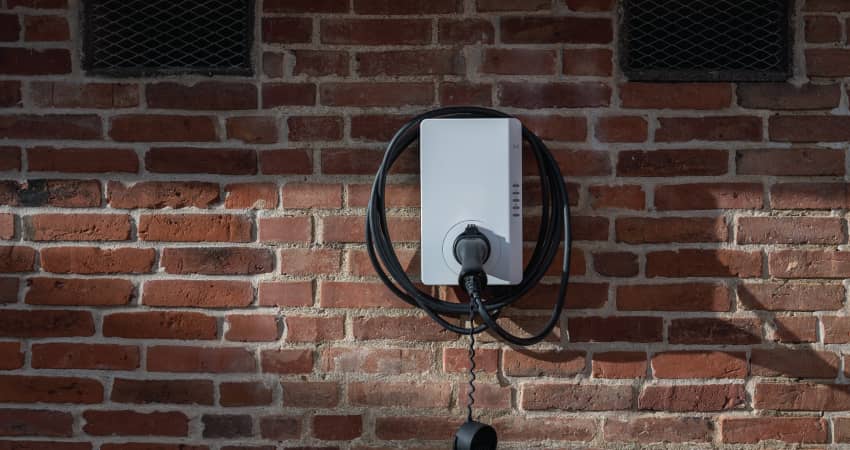
While Mesa has a large number of public charging points (about 250 within a 10-mile radius), installing an electric vehicle charger at home makes charging your EV much more convenient. That said, EV charger installation is not a simple plug-and-play project. In Mesa, there are technical, safety, and EV charger installation requirements that must be met.
What Are Level 1, Level 2, and Level 3 EV Chargers?
Most EVs come with a charging cable that you plug into a standard 120-volt outlet, but these charge extremely slowly. These Level 1 chargers might work for top-offs, but not for regular daily charging needs.
Most Mesa homeowners opt for a Level 2 charger, which require a 240-volt circuit, the same voltage you use for other appliance like a clothes dryer or electric oven.
Level 3 chargers are generally reserved for businesses and public charging stations. They use direct current (DC) to charge even faster but are considerably more expensive with major infrastructure upgrades needed that can cost $50,000 or more.
| LEVEL 1 CHARGERS | LEVEL 2 CHARGERS | LEVEL 3 CHARGERS |
| 3-5 miles of range per hour of charging | 5 to 60 miles or range per hour of charging | Fully charge most EVs in less than an hour |
When considering how to install an EV charger at home, level 2 chargers are the most popular type as you can fully charge most EVs overnight while parked in your garage.
EV Charger Installation Requirements
As long as you have the right electrical infrastructure, you can plug your EV directly into an existing outlet. However, this may place additional demands on your electrical panel capacity, which may require an upgrade. For Level 2 charges, you typically need 30 to 60 amps of dedicated capacity, depending on the charger model and vehicle.
Many older Mesa homes still operate on 100-amp panels, which may already be near capacity due to air conditioning systems, dryers, pool equipment, or other high-demand appliances. In these cases, a panel upgrade may be required before an EV charger can be safely installed.
Highly trained electricians will do load calculations to determine whether the existing panel can handle the additional demand without overloading circuits. This is a critical step because installing a charger without enough capacity increases fire risk and potential code violations.
240-Volt Circuit and Dedicated Breaker Requirements
A Level 2 EV charger requires a dedicated 240-volt circuit. This means the charger must be on its own breaker and cannot share power with other appliances or outlets, in compliance with the National Electrical Code requirements. They must also be installed with the right gauge wire, breaker size, and conduit for compliance and safety.
Distance From Electrical Panel to Garage and Why It Matters
The physical distance between your electrical panel and the charging location has a direct impact on the complexity of the installation and your costs. Longer distances require additional wiring, conduit, and labor. Attached garages typically offer the most straightforward installations. But if you have a detached garage or outside parking area, you might need longer conduit runs, trenching, or subpanels.
During a professional assessment, electricians will evaluate the routing options to minimize disruption while maintaining code compliance and safety.
HOA and Community Restrictions
You will want to make sure there aren’t any restrictions if you live in a planned development or your neighborhood has an HOA. Some communities require prior approval before installation and mandate EV charger placement, exterior conduit visibility, or shared electrical infrastructure. While Arizona generally supports homeowners’ rights to install EV chargers, compliance with community standards is still required.
How to Install an EV Charger at Home
As you can see,EV charger installation involves more than choosing a charger and mounting it on the wall. Professional installation is a must to protect your home, your vehicle, and your investment. A properly installed EV charger delivers reliable charging while meeting all safety and regulatory standards.
In Mesa, trust the experienced electricians at George Brazil Plumbing & Electrical. Our team handles electrical evaluations, panel upgrades, permits, and professional installation from start to finish. Schedule your appointment today.