
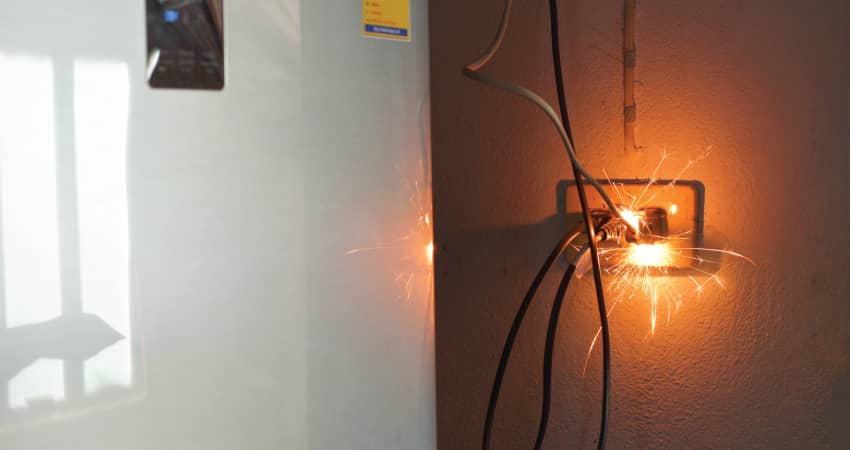
A tiny spark when plugging something in can catch anyone off guard. It might be just a quick flash or a bit more. Should you worry?
We’ll explain why do plugs spark and when you should bring in a licensed electrician to check it out.
Why Do Plugs Spark in the First Place?
A spark can indicate a serious problem, but it doesn’t always mean something is wrong. When you go to plug something in, the prongs on your plug complete the circuit to send power to your device. There can be a brief, small electrical arc that’s created when you plug it in.
Normal Electrical Load Transfer
If a device is already turned on when you plug it in, electricity rushes into the circuit the moment the prongs make contact. That instant surge (called inrush current) can cause a brief spark. Vacuums, blenders, and appliances with switches commonly do this.
Devices With Motors or Heating Elements
Tools, hair dryers, and countertop appliances require a burst of power to start up. When you plug them in, that energy jump may be visible as a small spark. It is typically quick and harmless.
Stored Energy in Power Supplies
Chargers, laptops, TVs, and other electronics may contain capacitors that discharge when connecting to power. This can cause a small pop or flicker at the outlet.
Are Sparks Dangerous?
A spark alone does not always mean danger, but if you are unsure whether the spark is normal or a sign of a failing outlet, it is always best to call a professional for peace of mind. And, there are some situations that indicate there may be a serious safety issue, such as:
- Loose or worn outlets: When outlets cannot grip a plug tightly, electricity jumps between loose metal connections, increasing the risk of burning or fire.
- Corroded or damaged contacts: Outdoor or garage outlets exposed to moisture can corrode, creating resistance and irregular arcing.
- Overloaded circuits: Too many appliances on one circuit strain the system, increasing the chance of sparks when plugging something in.
- Faulty cords or plugs: Bent prongs, cracked insulation, or frayed wiring can cause visible sparks and should be taken out of service immediately.
- Internal wiring problems: Loose wiring, poor DIY connections, or aging copper behind the wall can cause arcing that may come with buzzing, heat, or a burning smell (even if you don’t see a spark).
The size, frequency, and color of the spark can help determine whether it is harmless or hazardous.
| Sparks That Are Usually Normal | Sparks That Are Dangerous |
| Very smallQuick flashBlue or whiteOnly happen when plugging in high-demand devices | Large or bright yellow flashesSparks that recur every time you plug something inBuzzing, heat, or burning odorsScorch marks around the outlet |
Outdoor outlets face the harshest conditions from the weather. You may or may not see sparking, but you may see GFCIs trip. Why does your outdoor GFCI keep tripping? It’s likely because of moisture, corrosion, or faulty equipment that causes your GFCI to trip. GFCIs are built for safety and they trip to avoid causing serious problems. If it takes more than a single reset, it’s a warning sign.
Not every spark causes a trip, but sparks combined with a breaker or GFCI trip usually indicate a real hazard. If you keep wondering why does my outdoor GFCI keep tripping and notice sparks too, that is a clear sign to stop using the outlet and call an electrician.
How to Reduce or Prevent Plug Sparks
Most spark risks are preventable with just a few simple steps:
1. Plug in Devices While They Are Switched Off
This reduces the inrush current and minimizes visible sparking.
2. Replace Loose or Worn Outlets
If the plug wiggles or falls out easily, the outlet is unsafe and needs to be replaced.
3. Stop Using Damaged Cords
Do not attempt to repair a frayed or melted cord. Replace the device or have the cord professionally repaired.
4. Add Dedicated Circuits for High-Demand Tools
Garage workshops, home gyms, or heavy-duty appliances often need their own circuits to avoid overload.
5. Weatherproof Outdoor Outlets
Use in-use covers and WR-rated GFCIs to protect against moisture and dust.
When to Call a Professional
Call in the licensed, experienced electricians at George Brazil Plumbing & Electrical whenever you’re worried. We’ll figure out whether there is an issue and fix it the same day in most cases. Give us a call immediately if you see:
- Sparks from the same outlet more than once
- Bright yellow or large flashes
- Burning smells, buzzing, or heat
- Scorch marks near the outlet
- Outdoor outlets that trip repeatedly
- Sparks paired with flickering lights or breaker trips
- An outlet that feels loose, cracked, or worn
A licensed electrician can determine whether that spark is harmless or a sign of a failing outlet, damaged wiring, or a hidden fire hazard. They can also replace outlets safely, upgrade circuits, or weatherproof outdoor connections to prevent future problems.
Even a quick flash can be a warning that something behind the wall is failing. If your outlets spark, your outdoor GFCI keeps tripping, or something just does not feel right, let a George Brazil electrician take a look. Our team has protected Tempe homes for decades with professional electrical work that keeps families safe and gives homeowners peace of mind. Call today to request service.