
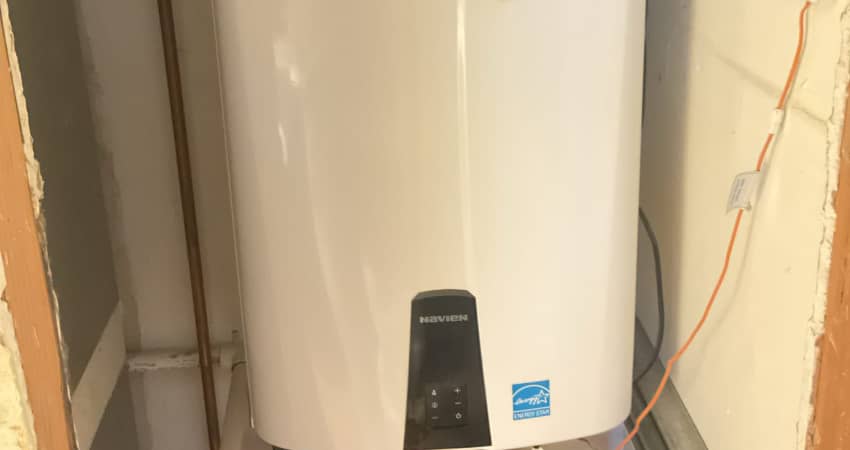
If you are comparing water heater options, one major difference is longevity. Here’s the quick answer to your questions:
How long does a traditional tank water heater last?
Traditional tank water heaters typically last between 8 and 12 years with routine maintenance.
How long do tankless water heaters last?
Tankless water heaters generally last 20 years or more because their parts are easily replaced and they suffer less corrosion.
How long do gas water heaters last?
Gas water heaters typically have a lifespan of 8 to 12 years for standard tank models, while gas tankless units can last up to 20 years.
Those are only general estimates, however. Water quality, maintenance, installation, household demand, and equipment condition can all affect actual lifespan. For Scottsdale homeowners, including those in McDowell Mountain Ranch, understanding these differences can help when deciding whether to repair an aging unit or replace it.
How Long Do Tankless Water Heaters Last?
Gas tankless water heaters typically have one of the longest expected lifespans among common residential water-heating systems. According to ENERGY STAR, tankless gas water heaters can have a life expectancy of more than 20 years. That compares favorably with traditional gas storage water heaters, which generally have shorter expected service lives.
One reason is the difference in design. A tankless unit does not store dozens of gallons of water inside a large steel tank. Storage tanks can eventually deteriorate from corrosion and repeated exposure to heated water, while tankless systems avoid that particular failure point.
How Long Do Gas Water Heaters Last?
A traditional gas storage water heater commonly provides around 8 to 12 years of service for conventional storage models, although some units fail sooner and others continue operating far longer. The storage tank itself often becomes the limiting factor. Over time, minerals and sediment can collect inside the tank. Internal corrosion can also develop as the system ages.
Storage water heaters repeatedly heat and maintain a tank full of water, which subjects the equipment to ongoing heating cycles. Components such as burners, gas valves, thermostats, and anode rods can also wear or deteriorate over time.
Age alone does not mean a gas water heater must immediately be replaced, but an older unit with recurring problems deserves closer attention.
What Affects Water Heater Lifespan in Scottsdale?
Two identical water heaters installed in different homes may not last the same amount of time. Several factors influence how quickly equipment wears.
Water Quality
Minerals in the water can accumulate inside both tank and tankless systems. In a conventional storage water heater, sediment often settles at the bottom of the tank. Heavy accumulation can reduce efficiency and contribute to operating problems.
Tankless systems can develop mineral scale inside the heat exchanger. Periodic descaling may be recommended to help preserve water flow and heat-transfer performance.
Maintenance
Routine maintenance can make a significant difference in how well a water heater performs as it ages.
A conventional tank may need periodic flushing to reduce sediment buildup, along with inspection of components such as the anode rod and pressure-relief valve. Tankless units require flushing or descaling and inspection of filters, burners, and other components depending on the manufacturer and water conditions.
Maintenance does not guarantee a particular lifespan, but neglect can contribute to premature wear.
Installation Quality
A water heater should be properly sized and installed for the specific home. Incorrect gas supply, improper venting, inadequate electrical connections, or poor system sizing can cause performance problems and unnecessary equipment stress.
This is particularly important when converting a McDowell Mountain Ranch home from a storage tank to tankless. The existing plumbing, gas line, venting, and electrical system may need to be evaluated before installation.
Household Usage
A two-person household that uses relatively little hot water may place less demand on a system than a larger family running multiple showers and appliances throughout the day. High demand does not automatically mean a water heater will fail early, but greater operating time can contribute to component wear over many years.
Signs Your Gas Water Heater May Be Nearing the End
An older water heater does not always give a clear warning before failing, but several symptoms may suggest it needs professional attention. Watch for:
- Rust-colored or discolored hot water
- Inconsistent temperatures
- Reduced hot-water capacity
- Unusual noises
- Repeated repairs.
For storage-tank models, water collecting around the base of the tank is especially important. A leaking tank usually means corrosion has set in and the tank needs replacement.
Age becomes more meaningful when it appears alongside these symptoms. A 12-year-old gas water heater that operates reliably may not need immediate replacement, while a similar-age unit with leaks and recurring problems may be reaching the end of its useful life.
Should You Replace an Older Tank with Tankless?
For some Scottsdale homeowners, replacing an aging gas tank with a tankless system can make sense, particularly when longer potential equipment life and on-demand hot water are priorities.
A tankless system may be attractive if you expect to remain in the home for many years, want to eliminate the storage tank, or need a system designed to provide continuous hot water when properly sized.
Traditional gas storage water heaters still have advantages, including a straightforward design and, in many homes, simpler replacement using the existing setup. Installation requirements can also affect the decision. Switching to tankless may involve changes to gas supply, venting, electrical connections, or other components depending on the property.
Ultimately, how long do gas water heaters last and how long do tankless water heaters last are useful starting points, but equipment age should be considered alongside condition, maintenance history, household demand, and the home’s existing infrastructure.
George Brazil Plumbing & Electrical can inspect your Scottsdale water heater and help you compare tankless and traditional replacement options for your home. Call us today to schedule an in-home evaluation.