
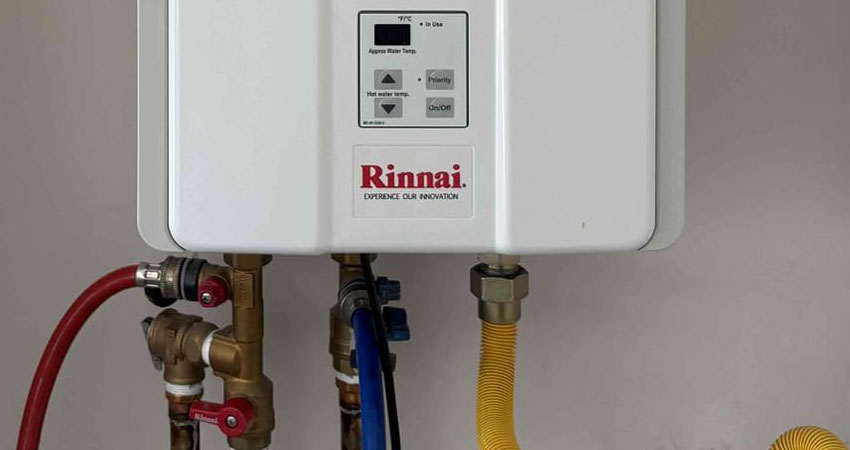
Ever run out of hot water or wait half an hour after someone else takes a shower? Tankless water heaters can provide nearly endless hot water. Tankless water heaters in Scottsdale can also last up to 20 years when properly maintained. These are just a few of the reasons more Scottsdale families are upgrading to tankless units.
While there’s a higher upfront cost compared to a traditional tank water heater, getting tankless water heater installation near you can save you money in the long-run and lower your energy costs. But are tankless water heaters the right choice for your home? We’ll compare the types of water heaters in the Phoenix area, including a water heater efficiency comparison chart to help you decide.
What Is a Tankless Water Heater and How Does It Work?
A tankless water heater heats water only when you turn on the tap. So, water is not sitting in tank and being constantly heated. A tankless system works on demand, heating the incoming water when you need it. This eliminates standby heat loss, and you don’t run out of hot water as long as you have the right size unit. Undersized units can struggle to meet demand.
Tankless vs Tank Water Heaters: Pros and Cons
Arizona can be tough on water heaters. The water around the Phoenix area is classified as hard to very hard, meaning there’s a high mineral count. Minerals in your water system can deposit scale when they settle, damaging your equipment. The high ambient temperatures can also diminish performance, especially if you have a hybrid water heater.
Let’s look at the pros and cons of each.
Advantages of Tankless Water Heaters
Tankless systems offer benefits that appeal to homeowners focused on long-term value and convenience. These include:
- Endless hot water for properly sized systems
- Longer lifespan than tank water heaters
- Reduced standby energy loss
- Space savings in garages and utility rooms
Disadvantages of Tankless Water Heaters
Despite their benefits, there are some tradeoffs, including:
- Higher upfront installation cost
- Electrical or gas upgrades may be required
- Performance depends on correct sizing and fuel availability
Advantages of Traditional Tank Water Heaters
Tank systems are still common, especially because of their lower cost. Advantages include:
- Lower initial equipment and installation cost
- Straightforward replacement in existing setups
Disadvantages of Traditional Tank Water Heaters
However, there are limitations, such as:
- Hot water limited by tank size
- Shorter lifespan in Arizona from hard water and extreme heat
- Higher long-term energy costs
How do the best water heater installations stack up in other areas? This comparison can help.
| Feature | Tank Water Heater | Tankless Water Heater |
| Hot water supply | Limited by tank size | Continuous with proper sizing |
| Energy efficiency | Lower due to standby loss | Higher with on-demand heating |
| Lifespan in Arizona | 6–10 years | 20+ years |
| Space required | Large footprint | Compact wall-mounted |
| Upfront cost | Lower | Higher |
| Long-term value | Moderate | High |
What Is the Difference Between Tankless and Hybrid Water Heaters?
Hybrid water heaters have a tank but work differently from traditional gas or electric tank water heaters. They extract heat from the air and move it into the tank to heat the water, using electricity as a backup to reach the right temperature. In Scottsdale, hybrid systems benefit from high ambient temperatures but can struggle when it’s very hot outside.
Water Heater Efficiency Comparison Chart
The best water heater installation will take into account your home size, typical water use, and your personal preferences, so whether you’re considering a hybrid water heater vs. gas or electric tankless unit vs. a standard electric tank, here’s how they stack up for efficiency.
| Feature | Standard Tank | Tankless | Hybrid |
| Uniform Energy Factor (UEF) | $0.90 – 0.95 | $0.80 – 0.97 | $3.3 – 4.5+ |
| Energy Savings | Baseline | $24% – 34% savings for low-use households | $60% – 75%$ savings |
| Hot Water Delivery | Limited by tank size | Endless (on demand) | Limited by tank size |
| Standby Heat Loss | High (constant heating) | None | Low with insulated tank |
| Annual Operating Cost | $450 – $600 | $150 – $300 | $100 – $150 |
| Upfront Cost (Installed) | Low | High | Medium |
| Lifespan | 6-10 years | 20+ years | 10 – 15 years |
SOURCES: Energy.gov: Purchasing Energy-Efficient Residential Water Heaters, Tankless or Demand-Type Water Heaters, and Energystar.gov: Save More with ENERGY STAR Gas Tankless Water Heaters
Proper Tankless Water Heater Sizing for Scottsdale Homes
Correct sizing is the single most important factor in deciding whether a tankless water heater delivers the comfort and performance you want. Often, complaints about tankless water heaters in Phoenix are not the result of the equipment, but that they were undersized during installation.
Traditional tank water heaters are sized primarily by storage capacity. As long as the tank is big enough, hot water is available until it runs out. Tankless water heaters are sized by flow rate and temperature rise. The system must be capable of heating incoming water fast enough to meet demand across multiple fixtures at the same time.
This makes sizing more technical and far less forgiving than the type of tank system.
What Happens If a Tankless Water Heater Is Undersized
When a tankless system is too small for your home, you can experience fluctuating temperatures, reduced water pressure, or lukewarm water if more than one tap is turned on. A shower might get a little cooler when your washing machine or dishwasher is running. So, even though you’re expecting endless hot water, an undersized system might struggle to deliver.
In some case, an undersized system will cycle constantly trying to keep up, putting additional stress on components, which can shorten its lifespan.
Problems Caused by Oversizing a Tankless System
An oversized tankless water heater system can also be a problem. You might get higher installation costs, need additional venting for gas units, and require upgrades for your electrical system without any real additional benefit. At the same time, oversized systems can short-cycle under light demand, which reduces efficiency.
Proper sizing balances capacity with real household demand.
Online Calculators Often Fall Short
If you’re looking for an online tankless water heater sizing chart or relying on the manufacturer’s recommendations, be careful. While they may give you a rough idea, they don’t take into account your usage or your plumbing or electrical infrastructure. This is especially true for older homes in the Phoenix area, which may need additional upgrades to plumbing or electrical capacity upgrades to meet current standards and code requirements.
Professional Sizing Prevents Performance Problems
Professional sizing starts with a full evaluation of your home. This includes:
- Measuring fixture flow rates
- Focusing on your specific usage needs
- Reviewing plumbing infrastructure
- Evaluating your gas or electrical capacity
- Anticipating future needs
Tankless water heater sizing is not just about math, though. It requires understanding how Scottsdale homes are built, how the Arizona climate affects performance, and how local codes and infrastructure influence installation options.
George Brazil’s experienced team will evaluate your entire system and not just the water heater capacity. This ensures your tankless water heater is properly sized, safely installed, and capable of delivering consistent hot water under real conditions. You can contact the highly trained plumbers at George Brazil Plumbing & Electrical for an evaluation and a tankless water heater installation near you to make sure you get the right fit.
Installation Requirements for Tankless Water Heaters in Scottsdale
Getting tankless water heater installation near you also requires right-sizing your electrical capacity, gas line and venting, and managing the permitting process.
Electrical Requirements
Electric tankless systems require multiple dedicated circuits and sufficient panel capacity. Many homes need panel upgrades before installation, especially in homes built before 2000.
Gas Line and Venting Requirements
Gas systems often require upsized gas lines, new venting, and proper combustion air management to meet current codes.
Permits and Inspections
Scottsdale and most other communities require permits to install or replace a water heater. If you need to upgrade your electrical system, a permit is also required. After the work is done, you’ll also need a professional inspection to ensure the job’s done right and everything complies with state and local building codes.
Tax Credits, Rebates, and Incentives for Scottsdale Homeowners
While you may be able to claim a water heater installation on your 2025 taxes, the tax credits under the federal program ended on December 31, 2025. Arizona’s Home Electrification and Appliance Rebate (HEAR) program offers some incentives up to $1,750 for Energy Star-certified heat pump water heaters for low-income and moderate-income households.
In Scottsdale:
- SRP customers may qualify for a rebate of up to $500 on Energy Star heat pump water heaters.
- APS customers may qualify for a $200 rebate with the installation of a water heater timer.
You can often stack these incentives to increase your potential rebate. Check with your George Brazil technician to see what options are available for your situation.
How Long Do Water Heaters Last in Arizona?
Another question we get asked regularly is how long do water heaters last in Arizona. Nationally, gas and electric water tank heaters last about 10 years. In Arizona, however, the hard water and extreme temperatures often reduce this lifespan to between six and 10 years.
When Should I Replace My Water Heater?
Some families wait until their water heater fails and there’s no more hot water. However, this increases your risk of leaks and potentially dangerous conditions. So when should you replace your water heater?
Age is one of the strongest indicators. As a water heater approaches end of life, the internal components begin to deteriorate even if the system appears to be working normally. Performance issues often follow, including inconsistent water temperatures or reduced hot water supply during routine use.
Other indicators that it may be time for replacement include:
- Rising energy bills can also signal that a water heater is struggling.
- Sediment buildup and worn components force your system to work harder to deliver the same results, increasing operating costs.
- Corrosion, moisture around the unit, water heater leaking from the top or elsewhere
- Frequent repairs or repeated shutdowns
At that point, replacement is often more practical than continuing to invest in short-term fixes that don’t fix the underlying problem.
Maintenance Requirements for Tankless Water Heaters in Arizona
You can make your water heater last longer with regular maintenance. This is especially important in Arizona due to our hard water. Annual descaling through tank flushing can prevent mineral buildup from damaging your water heater or plumbing.
Regular maintenance also includes safety and performance checks to make sure your unit is operating properly.
Can I Install a Tankless Water Heater Myself?
Don’t make the mistake of trying to install a tankless water heater yourself. There’s a lot that can go wrong. Tankless systems may involve electrical, gas, and venting. Done wrong, these can be dangerous. Failing to meet code requirements or even just DIY repair can cost you warranty coverage or homeowner’s insurance claims.
Professional installation ensures you get the right fit for your home and the job is done to code. This ensures consistent performance and a safe installation.
FAQs—Frequently Asked Questions About Water Heater Installation and Repair in Scottsdale
How long does tankless water heater installation take?
Most installations take one to two days, depending on electrical or gas upgrades.
How long do water heaters last in Arizona?
Tank systems typically last 6 to 10 years, while tankless systems often exceed 20 years if you get regular maintenance.
Why is my water heater leaking from the top?
Top leaks are usually caused by loose or corroded water connections, a failing anode rod port, or moisture from an expansion tank.
What’s the difference between a hybrid water heater vs. gas?
Hybrid water heaters use heat-pump technology for higher efficiency and are significantly more energy-efficient than gas. However, gas units will heat faster and recover more quickly.
What maintenance does a tankless water heater need?
In Scottsdale, you need to get the filter cleaned, and the tank flushed and checked for performance and safety at least once a year.
If you are considering tankless water heater installation in Scottsdale, George Brazil Plumbing & Electrical can evaluate your home, size the system correctly, and ensure a safe, code-compliant installation that delivers reliable hot water for years to come. Call for service today and never run out of hot water again.