
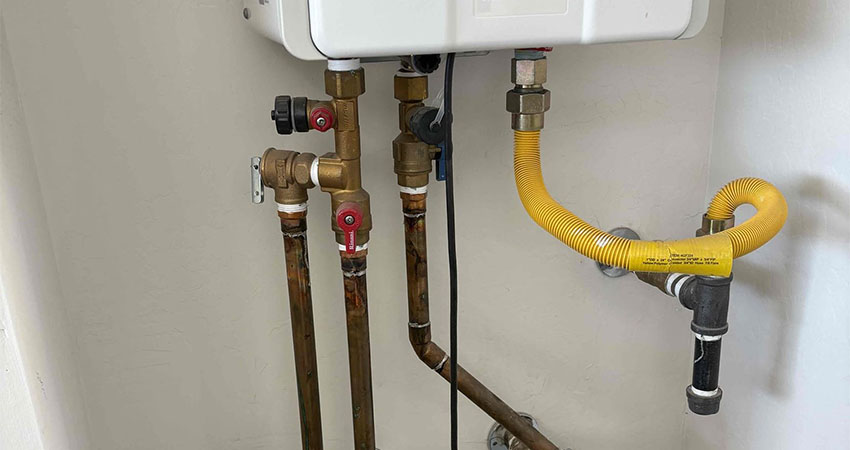
The climate in Arizona can be rough on your water heater system. The extreme heat, hard water, and year-round demand can shorten the life of water heaters well below what most manufacturers advertise.
It can be frustrating to homeowners who look at national statistics, which often puts the lifespan of a tank water heater at between 10 and 12 years. Mineral-heavy water and high temps often reduce the average water heater lifespan in Arizona to six to nine years. By comparison, tankless water heaters don’t store water, so the minerals in hard water don’t settle in the tank. Properly maintained, tankless units can last 15-20 years or longer.
How Arizona’s Extreme Heat Impacts Water Heaters
Arizona’s climate places constant stress on water heater components, even when your system is not actively in the heating process.
Hot temperatures can accelerate wear on seals, valves, electronics, and insulation. Components dry out faster; expansion and contraction occur more frequently, and protective materials break down sooner than they would in milder climates.
Does Hard Water Damage Water Heaters?
Hard water is one of the most damaging factors affecting water heater lifespan, and the water throughout the state is considered hard water, containing higher levels of dissolved minerals such as calcium and magnesium. Scottsdale’s water is classified as very hard, with mineral levels that often exceed 15 to 20 grains per gallon.
As water heats, minerals settle inside the tank. This sediment layer insulates heating elements and forces the system to work harder. Your unit may need higher temps to heat water, or components may corrode. This can shorten your water heater’s lifespan in Arizona.
Warning Signs: When to Replace Your Water Heater
Water heaters don’t typically stop working without showing warning signs, so keeping an eye on your unit and having it professionally serviced annually can help keep it working.
However, if you notice any of these warning signs, it may be time for a replacement:
- Inconsistent or insufficient hot water: Fluctuating temperatures or frequent cold water in your flow often indicate failing heating elements or heavy sediment buildup.
- Rising energy bills: A water heater that is working harder to overcome scale and wear will consume more energy without delivering better performance.
- Rumbling or popping noises: These sounds are usually caused by hardened mineral sediment trapping water at the bottom of the tank and overheating.
- Discolored or rusty water: Brown or reddish water coming from hot taps can signal tank corrosion or a deteriorating anode rod.
- Visible corrosion or moisture: Rust, pooling water, or dampness around the base of the unit often points to internal tank failure.
- Frequent repairs: Repeated service calls within a short period usually indicate the system is nearing the end of its useful life.
- Age of the water heater: Units approaching or exceeding Arizona’s typical lifespan of six to nine years for tank systems are more likely to fail unexpectedly.
Leaks should also be a big concern and require immediate repair to prevent damage. Leaks may require simple repairs, such as a seal or joint, or they may be an indicator of a bigger problem that leads to replacement, such as a tank that’s rusted out.
Preventive Maintenance That Extends Water Heater Lifespan in Arizona
A few maintenance tips can keep your unit working properly for longer.
Flushing Your Tank or Tankless unit
Regular tank flushing removes mineral buildup before it hardens and damages internal components. In Scottsdale, annual flushing is often recommended due to water hardness.
Anode Rod Inspections
Anode rods attract corrosive minerals and protect the tank lining. However, in hard water environments, anode rods wear out faster, so they need to be inspected more frequently.
Professional Tune-Ups and Inspections
Professional inspections will ensure everything is working correctly, flush your system to get rid of sediment, and identify any signs of failing parts. This can keep your unit working optimally and help you plan replacements before a breakdown occurs.
Inspections typically include a thorough evaluation of your unit and cleaning, along with:
- Testing the temperature and pressure relief valve for tank water heaters
- Checking and adjusting the thermostat for comfort and energy efficiency
- Inspecting for leaks, corrosion, or wear
- Ventilation and safety checks for gas units
Planning Ahead for Water Heater Replacement in Arizona
Regular maintenance can keep your unit working efficiently and last longer, and knowing when to replace a water heater can help you plan.
Schedule service with George Brazil Plumbing & Electrical today for maintenance, repair, or replacement before your water heater fails. We offer same-day service, upfront pricing, and friendly service from an experienced team of highly trained professionals.