
In Mesa, we have very hard water. It’s just a fact of life, and it’s been that way for more than a hundred years as the water we use winds its way through mineral-rich soil before it heads to your local water system for treatment. Much of it begins as surface water from the Colorado River through the Central Arizona Project and from the Salt River Project. A smaller portion comes from wells.
By the time it reaches your home in Mesa, the water contains a high level of dissolved calcium and magnesium. Mesa actually has two distinct water zones that determine exactly how severe your hard water issues might be. If you live in the City Zone, your water primarily comes from surface water (Salt River Project and Central Arizona Project), averaging 12 to 15 grains per gallon. If you live in Mesa’s Eastern Zone, your water relies heavily on groundwater wells, pushing hardness levels up to an extreme 17 to 22 grains per gallon. To put that in perspective, the national average is just 6 to 8 GPG, meaning Eastern Mesa homeowners deal with water that is nearly triple the national average.
The water is safe to use and drink, but those minerals can be tough on plumbing systems. A study by the Water Quality Research Foundation (WQRF) found that hard water can reduce efficiency in gas water heaters by up to 24% and increase operating costs of tankless units by up to 40%. Softened water can also dramatically decrease the amount of detergent you need in washing machines by removing the calcium that reduces lathering.
Hard Water Is a Whole-Home Issue
When water is heated or evaporates, it leaves behind these minerals. You might see white scale on your faucet, showerheads, or glass shower door. Spots may show on glasses or in the water tank for your coffee maker. These are just some of the visible signs, but what you can’t see is that the same thing is happening inside your pipes and appliances.
In a water heater, minerals can settle as sediment or form scale on internal parts. In a washing machine, hard water can make detergent less effective. Around sinks and showers, mineral deposits can build up quickly and make fixtures harder to clean.
Because hard water moves through your entire plumbing system, this mineral buildup gets worse over time and requires regular maintenance to keep the water flowing and equipment working.
Water softener installation in Mesa is a whole-house solution. By treating the water before it goes into your appliances, you remove the calcium and magnesium in the water that creates scale.
How Hard Water Affects a Mesa Water Heater
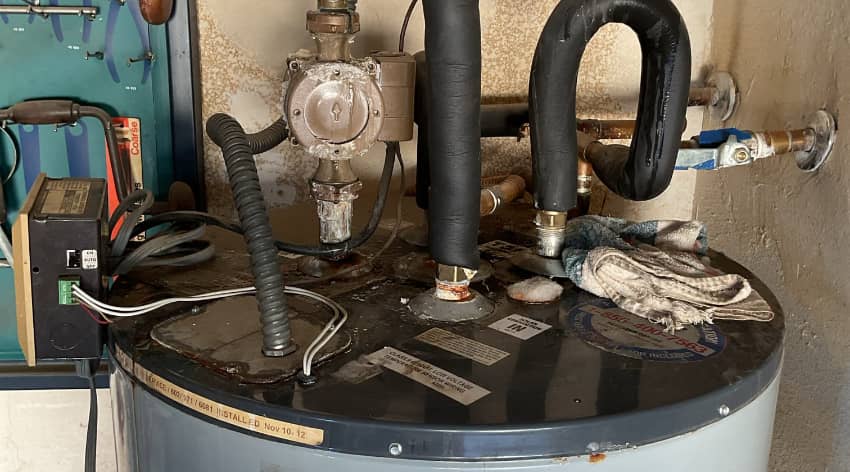
Your Mesa water heater is one of the systems most affected by hard water because heating water causes the dissolved minerals to separate more quickly. In a tank-style water heater, those minerals settle at the bottom of the tank as sediment. Over time, this can cause several problems as the water heater has to work harder to heat the same amount of water. You might notice:
- Longer recovery times
- Hot water running out more quickly
- Overheating
- Component failure
- Leaks and cracks
You may hear the early warning signs, like popping and rumbling sounds from the tank. When there’s a layer of sediment, heat and steam push through the sediment before it can heat the water.
Hard water can also add scale and reduce heat transfer. In a tankless water heater installation in Mesa, AZ, this can damage the heat exchanger.
Routine maintenance is key, flushing the tank or decaling your tankless water heater at least once a year to get rid of the mineral buildup.
Water Heater Repair in Mesa
Hard water and scale aren’t the only reasons you may need water heater repair in Mesa. If you are seeing any of these problems, it’s time to call for service:
- Inconsistent hot water
- Rusty or discolored water
- Leaks
- Repeated breaker trips
- Unit that keeps shutting off
What’s the lifespan of a water heater installation in Mesa? With regular maintenance, tank models last between eight and 12 years while tankless units often last 15 to 20 years or longer. Still, your water heater may need some work along the way. Regular maintenance helps keep your unit working as long as possible, and many problems are repairable rather than requiring a full replacement.
Water Heater Installation in Mesa: When A New Unit Makes Sense
At some point, repair may no longer be the best option. Whether you have a traditional tank or tankless water heater installation in Mesa, if you’re seeing repeated repairs, leaks, or poor performance from an older model, you may need a replacement. Your best strategy is to get a professional diagnosis from a qualified plumber, who can explain your options and the costs.
You can find high-quality tank water heaters from top-tier suppliers like Bradford White or tankless water heaters from Navien at affordable prices. The experts at George Brazil can help you find the right fit for your home.
How Often Should I Flush or Descale My Water Heater?
If your Mesa water heater has not been flushed or descaled in years, it may already have mineral buildup affecting performance. In general, you should flush the tank at least once a year and descale your tankless water heater annually. If you have hard water and do not have a water softener in Mesa, AZ, getting service every six months is recommended.
Turning Hard Water Into Soft Water
Water softener installation in Mesa can remove the calcium and magnesium from the water and reduce the hardness. One of the big benefits is that it’s a whole-house solution. As hard water comes into your home, the water softener treats it before it goes into your appliances and internal pipes. This can dramatically reduce the amount of scale buildup and extend the life of your appliances and plumbing system.
How Does a Water Softener Work?
When hard water comes into your home, it has dissolved minerals. Your water softener in Mesa, AZ uses small resin beads that attract these particles and remove them from the water. So, when the water comes out the other side, the calcium and magnesium are mostly gone. The system then uses brine from the salt in the tank during a regeneration process, which clears the minerals off of the resin beads and flushes them out of the system.
With a water softener installation in Mesa, you’ll reduce scale and turn hard water into soft water. You’ll notice the difference almost immediately. Water will feel a little silkier. Soap will lather better. Laundry will feel less stiff. And you can get rid of soap scum on shower walls or glasses.
Water Softener Repair in Mesa: Signs Your System Needs Service
Even a high-quality water softener can stop working correctly over time. Here are a few warning signs that may let you know you need water softener repair in Mesa:
- Your salt levels don’t change
- Standing water in the brine tanks
- Salt bridges forms a hard crust over the water
- Salt mushing produces sludge at the bottom of the tank
- System stops regenerating
- Hard water symptoms return
A softener can look normal from the outside while failing to soften properly. For example, a brine tank may look full because a salt bridge has formed, but the salt may not actually be dissolving. If brine is not created and pulled through the system, the resin cannot recharge correctly.
If you’re having problems with your water softener in Mesa, AZ, call George Brazil Plumbing & Electrical to diagnose the problem.
Water Softener vs. Reverse Osmosis System?
You may have heard about reverse osmosis (RO) systems, and these can be effective to filter water to improve taste and quality. A reverse osmosis system installation in Mesa purifies water and removes nearly all contaminants by filtering the water though a semipermeable membrane. However, it doesn’t solve the hard water problem.
Mesa uses chloramines (chlorine mixed with ammonia) to disinfect its water supply. Chloramines leave what people often describe as a “municipal taste and smell.” Refrigerator or pitcher filters cannot effectively remove it. A reverse osmosis system is specifically designed to strip these out. It also helps remove that metallic taste you may have.
Many families choose to do a water softener installation in Mesa and add a small RO system on the kitchen sink. However, there are also whole-house RO systems available.
If you’re interested in a reverse osmosis system installation in Mesa, get in touch with the team at George Brazil to discuss your options.
Building A Hard-Water Protection Plan for Your Mesa Home
If drinking water taste is the main concern, RO may be the right solution. If you’re tackling the hard water problem, a water softener is the likely solution.
However, even the best systems need regular maintenance and may require repairs from time to time. They also depend on correct installation:
- A water heater must be properly sized, connected, vented, and configured.
- A tankless unit must be selected for the home’s flow rate and maintained for hard water.
- A water softener must be sized and programmed for household use and local hardness.
- An RO system must be installed correctly to deliver reliable drinking water.
George Brazil’s plumbing professionals can inspect your water heater, water softener, tankless system, or RO system or help you find the right installation for your Mesa home.
Why Safe City Water Still Needs a Home Water Softener
For those in Mesa who get their water through Salt River Project, did you know that your water travels more than 150 miles from its source before it gets to your home? Through rivers, canals, soil, and pipes, the water flows, is treated to make sure it’s safe, and then sent on to your home.
That long journey gathers minerals along the way. While your water system treats the water to make it safe, it does not remove all hardness minerals. Calcium and magnesium can still affect fixtures, water heaters, appliances, and plumbing systems after the water reaches your home.
A water softener can remove the minerals that make your water hard and give you softer water for your entire home.
FAQs — Frequently Asked Questions About Hard Water in Mesa
Is Mesa water considered hard water?
Yes. Mesa water is considered very hard because it contains a high level of dissolved calcium and magnesium minerals.
Can hard water damage a water heater?
Hard water can create sediment in tank water heaters and scale in tankless water heaters, which can reduce efficiency and contribute to repair issues over time.
Do I need a water softener in Mesa?
A water softener can help if you have hard water symptoms such as scale buildup, spots on dishes, soap that does not lather well, or mineral buildup affecting appliances.
Is a reverse osmosis system the same as a water softener?
No. A water softener helps reduce hardness minerals throughout the home, while a reverse osmosis system is usually used to improve drinking and cooking water at one faucet.
How often should a tankless water heater be descaled in Mesa?
Many Mesa homes benefit from annual tankless water heater descaling, though homes with heavy hot water use or very hard water symptoms may need service more often.
Why is my water softener not using salt?
A water softener may stop using salt because of a salt bridge, salt mushing, a clogged brine line, incorrect settings, a control valve issue, or bypass mode.
When should I call for water heater repair in Mesa?
Call for service if your water heater makes rumbling noises, leaks, runs out of hot water quickly, shuts off repeatedly, or produces rusty or inconsistent hot water.
If Mesa hard water is affecting your water heater, fixtures, appliances, or drinking water, call George Brazil Plumbing & Electrical today. We provide same-day service, 24/7 emergency response, and highly trained technicians to handle all of your plumbing needs.