
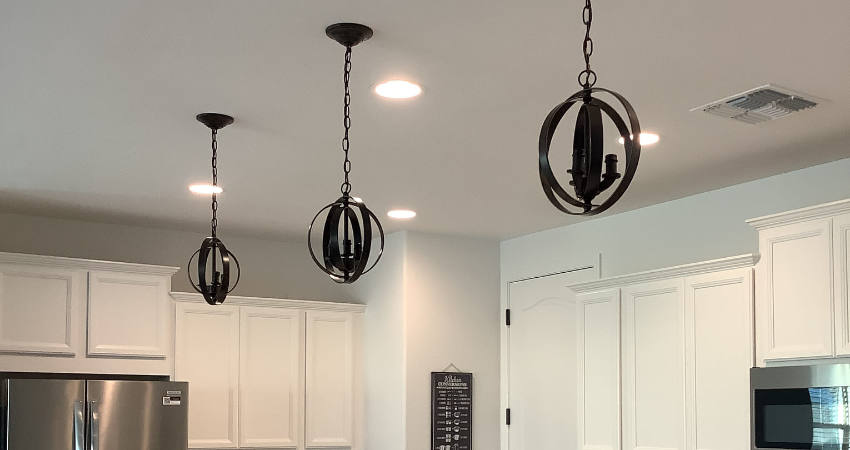
If you’re not sleeping, the kitchen is typically the most used space in your home, and lighting makes a big difference. However, many homes in Scottsdale were built without kitchen recessed lighting or were notoriously underlit.
It’s frustrating when you have outdated fixtures that don’t provide enough light in the right places, especially when you’re doing food prep or cooking. Recessed lighting is one of the most effective ways to fix this, transforming how your kitchen looks, functions, and feels.
Kitchen Lighting Matters More Than You Think
Lighting plays a direct role in how safe and functional your kitchen is, and poor lighting is more than just a nuisance. The National Institute for Occupational Safety and Health (NIOSH) says a common source of kitchen injuries is poor task lighting.
Beyond safety, lighting also affects how your kitchen looks. Even your high-end finishes can appear dull or uneven under poor lighting. On the other hand, well-designed lighting makes surfaces, colors, and textures stand out.
Why Kitchen Recessed Lighting Works So Well
Instead of relying on a single overhead light, recessed lights distribute illumination evenly across the room and solve one of the biggest problems in kitchens: shadows. Traditional fixtures often leave dark areas, especially when you are standing at a counter or working near cabinets. Recessed lighting fills in those gaps, creating consistent light throughout your kitchen.
It also offers a cleaner, more modern appearance. Without fixtures hanging down, your kitchen feels more open.
Where to Place Recessed Lighting in a Kitchen
Placement is one of the most important parts of the process, whether you’re installing new lights or changing out recessed lighting.
Over Counters and Prep Areas
Lights should be placed to light up the countertop directly, not behind you. When positioned correctly, they eliminate shadows even when your body blocks overhead light.
Over Kitchen Islands
Kitchen islands often serve multiple purposes, from food prep to dining and gathering. Recessed kitchen lights can provide consistent illumination across the surface.
Over Your Sink and Stove
You need high visibility in these areas. Proper lighting over the sink and stove improves safety and makes everyday tasks easier.
Around Your Kitchen
Perimeter lighting helps fill in the rest of the room and ensures there are no dark corners. This creates balanced, even lighting to make your entire kitchen feel brighter.
Pairing Recessed Lighting With Under Cabinet Lighting and Custom LED Lighting
Recessed lighting delivers the even, overall illumination a kitchen needs, but it works even better when paired with targeted fixtures. Under cabinet lighting fills in the shadows that overhead fixtures can cast on your countertops, which is especially helpful during food prep and cooking. A thin LED strip or hardwired under cabinet light along the bottom of your upper cabinets brightens the work surface directly in front of you without adding glare.
Custom LED lighting gives you even more flexibility. Dimmable LED fixtures, accent lighting inside glass cabinets, toe-kick lighting, and tunable color temperature options let you tailor the look and feel of your kitchen to match the time of day or the task at hand. Together, recessed lighting, under cabinet lighting, and custom LED lighting create a layered setup that is both functional for everyday use and attractive when you are entertaining.
Common Mistakes When Planning Kitchen Recessed Lighting
Many Scottsdale homeowners run into issues because of how the lighting is planned. Lights placed too far apart leave noticeable dark spots, while lights placed too close together can make the room feel overly bright and harsh. Finding the right balance is key.
Another mistake is ignoring how cabinets and layout affect light. If fixtures are placed too close to the center of the room, they can actually create shadows on countertops instead of eliminating them.
You also want balance. The best recessed kitchen light combines general lighting with focused task lighting for key spaces.
Choosing the Right Recessed Lighting for Your Kitchen
The type of light you choose also makes a difference.
Color Temperature
Kitchens benefit from a neutral to slightly cool color temperature, typically between 3000K and 4000K. This range provides enough light for tasks while still maintaining a comfortable feel.
Brightness
Adequate brightness is essential, especially in work areas. Kitchens generally require more lumens than living spaces to ensure better visibility.
Beam Angle
Beam angle determines how light spreads. Wider beams are ideal for general lighting, while narrower beams can be used to highlight a specific area like a sink or island. Choosing the right combination helps create even coverage without glare or shadows.
Does Kitchen Lighting Increase Home Value?
Kitchen upgrades consistently rank among the most valuable improvements homeowners can make. Kitchen updates, including lighting improvements, deliver some of the highest returns among remodeling projects. Buyers notice lighting (or lack thereof) immediately, and a well-lit kitchen often feels newer, cleaner, and more move-in ready.
Even relatively small changes, like upgrading or changing out recessed lighting, can impact your home’s value.
Get Professional Kitchen Recessed Lighting Installation
When it comes to recessed kitchen lighting, experience matters. With more than 2,800 five-star reviews and more than 35 years serving the Phoenix metro area, George Brazil Plumbing & Electrical understands how to design lighting solutions that work for real homes and real homeowners. Our highly trained electricians focus on safety and long-term performance, ensuring your kitchen lighting upgrade delivers the results you expect.
Upgrade your kitchen recessed lighting with a professionally designed layout and expert installation from George Brazil’s highly trained electricians. Schedule an evaluation today.