
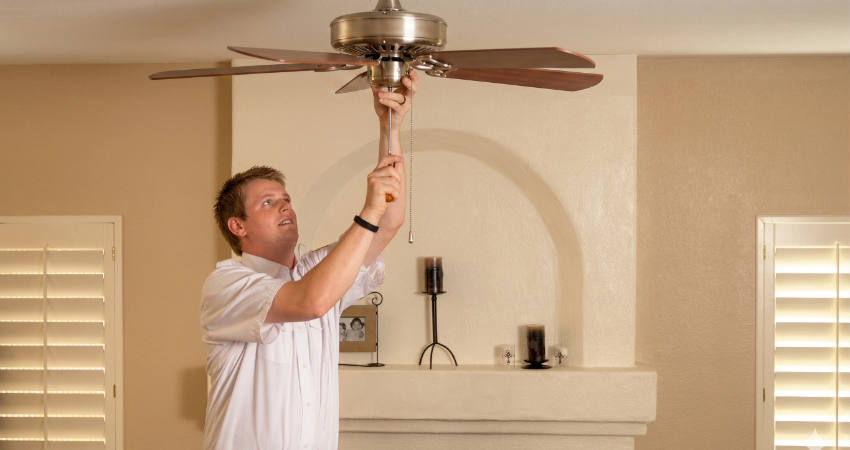
Ceiling fans are one of the most popular upgrades, especially in Scottsdale, to improve air flow during the hot summer months. Ceiling fan installations are relatively affordable and can make a big difference in how your room feels.
However, installing a ceiling fan isn’t as easy as it might look. If you want a safe, reliable solution, you’ll want an electrician trained on ceiling fan installation.
Ceiling Fans Are a Smart Upgrade for Your Home
Ceiling fans do more than just circulate air. They help regulate temperature, reduce strain on your air conditioning system, and improve overall comfort.
According to the U.S. Department of Energy, using ceiling fans allows homeowners to raise their thermostat settings by about 4°F without sacrificing comfort. That can mean significantly lower energy bills during Arizona summers.
Ceiling fan installation also makes sense during the winter. Reversing the fan direction can help redistribute warm air that rises to the ceiling, making you warmer at lower temps.
Ceiling Fan Installation Is Not Always a Simple Swap
One of the biggest misconceptions about ceiling fan installation is that it is just a matter of swapping out a light fixture. That may be true in some cases, but not always.
Ceiling fans are heavier than most light fixtures, and they move when in use. To be safe, they must be mounted to an electrical box, rated for ceiling fans, that is designed to support both weight and motion. Standard electrical boxes are not built for this and can loosen over time.
Wiring can also be more complex. Some fans have separate controls for the fan and light, which may require additional wiring or switches.
When You Can Install a Ceiling Fan Yourself
If there is already a fan-rated electrical box in place, the wiring is properly configured, and you are replacing an existing fan with a similar model, the job is usually straightforward. In these cases, installation mainly involves mounting the new fan, connecting wires correctly, and securing all components.
Avoid These Mistakes
However, even in these scenarios, attention to detail is critical. Mistakes during ceiling fan installation can cause performance or safety concerns from:
- Installing the fan on a standard electrical box
- Improper mounting that leads to wobbling or instability
- Incorrect wiring connections that cause flickering or malfunction
- Poor placement, such as mounting too close to walls or too low for the space
- Unbalanced blades, which lead to noise and uneven operation
When You Should Call an Electrician for Ceiling Fan Installation
If your home does not currently have a ceiling fixture where you want the fan installed, you’ll need to run new wiring. This means cutting into the ceiling, running wires, and making sure your electrical circuits can safely handle the additional load.
Even if you have a fixture in place, if the electrical box isn’t rated for a fan, you need separate controls on the wall for the fan and light, or if you have high ceilings, it’s best to call an electrician for ceiling fans.
In older homes, this is even more important, as electrical systems may not be designed to handle the load or be wired properly.
Safety Is Critical
Improper ceiling fan installation can create serious safety concerns. A poorly secured fan might loosen over time and fall, tearing out your electrical box or ceiling. Incorrect wiring can lead to overheating, short circuits, and even fire.
According to the Electrical Safety Foundation International, nearly 51,000 home electrical fires occur every year in the United States, resulting in an estimated $1.3 billion in property damage, along with hundreds of deaths and injuries.
What an Electrician Does During Ceiling Fan Installation
When you have a professional electrician handle ceiling fan installation, they’ll start by inspecting your existing electrical box and replacing it if needed. They’ll make sure the mounting bracket is secure and capable of supporting both the weight and movement of the fan.
They also verify wiring connections, confirm the circuit can handle the load, and install or adjust switches as needed. Once the fan is installed, they will test it, check for wobble, and make any needed adjustments to ensure it’s working properly.
Choosing the Right Ceiling Fan for Your Space
Selecting the right fan is just as important as installing it correctly.
Fan size should match the room:
- Larger rooms need wider blades
- Smaller rooms benefit from compact models
- Low ceilings may require flush-mounts
- Higher ceilings may need a downrod to position the fan at the right height
Schedule ceiling fan installation with George Brazil’s highly trained electricians. We offer same-day installation and a 100% satisfaction guarantee.