Drain problems rarely appear overnight. Most of the time, you see a few warning signs and ignore them. Maybe a sink drains a little slower. There’s water pooling in your shower. Toilets don’t flush waste all the way down or you’re reaching for the plunger a bit too often. It may just seem like a nuisance, but these frustrations can turn into a major plumbing problem.
These issues are more common in Peoria homes than in some other parts of the country. We’ve got what’s affectionately called “extremely hard water” throughout the area. Over time, the high mineral content in the water causes buildup in your pipes. While the water’s safe to drink, it can narrow your pipes and clog the line. The shifting desert soil doesn’t help either. Older infrastructure can shift, sag, or crack, and those darn tree roots can invade your pipes and trap debris.
There are plenty of older homes in our area, some dating back to the 1920s and earlier. That might mean your home has clay or cast-iron piping. Cast iron drain pipes get clogged more frequently as they age due to internal corrosion and scaling that catches hair, grease, and debris. A cast iron drain pipe clogged with heavy scaling may drain slowly, even when there’s no obvious blockage is present.
If your drain line is clogged, it may also just be from normal everyday use. Hair, soap residue, food waste, and grease can all contribute.
Common Signs You Need Clogged Drain Cleaning Service
A clog in one sink or toilet might just need a little TLC. Using hot water, an enzyme-based cleaner, or baking soda and vinegar can often clear kitchen sinks. A clogged toilet may just need a plunger. But there are some situations where you need a clogged drain plumber. In fact, many larger plumbing problems show up first as clogs, so you can think of them as an early warning system.
Here’s what to look for and why these may be indicators of a larger plumbing problem.
Slow Drains Throughout the House
If one sink or shower is draining slowly, you might have an isolated clogged line. But if you’re seeing multiple slow drains throughout your home, it may be a restriction somewhere in your main sewer line which will eventually affect anything connected to your problems. a larger sewer line restriction.
So if you see showers draining slowly, sinks backing up more frequently, and tubs taking longer to empty, you might need clogged drain cleaning service.
Frequent Toilet Clogs
Understanding what clogs toilet plumbing in Peoria homes, whether it’s flushable wipes that don’t break down, too much paper, hard water buildup, or a partially blocked sewer line, helps you spot the difference between a one-off problem and something bigger. Clogs in toilets happen. Typically, a plunger can clear them. If it doesn’t or your toilets clog repeatedly, you might have a partially blocked drain line.
Gurgling or Bubbling Sounds
You may actually hear the problem first. Gurgling usually occurs when trapped air moves through drain lines that are clogged or restricted. You may also hear a bubbling noise after you flush your toilet or run another fixture nearby.
It may not sound like a big deal, but it might be. Bubbling and gurgling sounds often indicate a developer sewer line issue or pipes that need cleaning.
Sewage Odors Indoors or Outdoors
You know that nasty sewage odor when you smell it. Toilets have trapways built into them to prevent this. Sinks have P-traps underneath to prevent sewer gases from backing up. When you smell that awful odor, it means wastewater is not flowing properly through your plumbing system or bacteria are building up in the pipes. It may also mean your plumbing vents are clogged. So, when you flush a toilet, it can suck the water out of the P-trap under your sink and break the seal, letting the gas creep into your home.
Sometimes, it just means the P-trap has dried out, so running water can get rid of it. If that doesn’t work, it might be a bigger issue. Sewer odors near bathrooms, laundry rooms, or kitchens might mean there’s an issue like a crack in your vent pipe, a wax ring under your toilet that’s failed, or structural damage to your sewer line that goes beyond just a drain line that’s clogged.
If you experience sewer smells outside, especially near sewer lines or cleanouts, you’ll also want to get a professional plumber to check it out.
Water Backing Up Into Tubs or Showers
If you see water backing up into your shower or tub after flushing a toilet is one of the clearest signs of a sewer line issue. When the main drain line is clogged or restricted, wastewater looks for the lowest available exit point inside your home. That’s typically your tub or shower floor, especially on lower levels of your home.
Standing Water Around Floor Drains
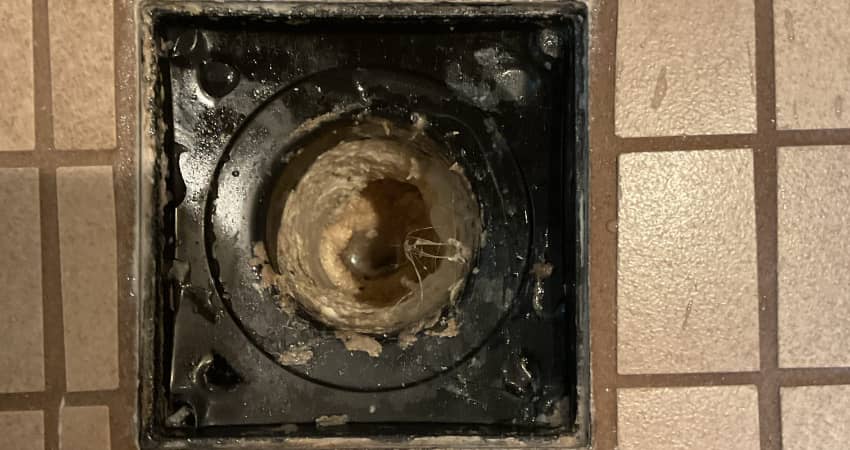
Standing water near garage drains, laundry rooms, or utility areas may also indicate a partially blocked sewer line beneath the home.
What Causes a Drain Line to Become Clogged?
Different types of clogs require different approaches to drain unclogging.
Hair and Soap Scum
Hair, soap scum, and toothpaste are common culprits in bathrooms. This sticks to pipes and traps more debris, creating bacteria that forms that black gunk you find, called biofilm. Biofilm is actually a living colony of bacteria that feasts on the organic material you send down the drain and can also cause a sewage-type smell. Over time, buildup thickens, and water flow gets more challenging.
Grease and Food Waste
Kitchen sink clogs often develop when grease, oils, and food particles harden inside pipes. Even garbage disposals don’t always prevent buildup from forming over time.
Flushable Wipes and Paper Products
You wouldn’t believe how many clogs in toilets are caused by flushable wipes. The package may say flushable, but that doesn’t mean it’s a good idea. They simply don’t break down quickly and they can snag inside pipes, especially if there’s already mineral deposits or corrosion that causes cast iron drain pipe to get clogged.
Flushable wipes remain one of the leading causes of sewer and toilet clogs. Unlike toilet paper, wipes do not break down quickly and often snag inside pipes. It’s a big enough problem that many municipal systems are trying to spread the word as their systems weren’t designed to handle these. Here’s how one state agency put it: “Wipes may be labeled ‘flushable,”’ but they don’t degrade in the system. Flushing them is like flushing a handkerchief or other item made of cloth.”
You should also avoid flushing paper towels, hygiene products, and excessive amounts of toilet paper.
Tree Root Intrusion
It’s the job of a tree root to spread out and find water and mineral sources. So, they love the stuff flowing inside your sewer pipes. Tiny cracks will attract tree roots and once they get inside, they can cause real damage. They’ll trap debris and keep growing until they eventually break your pipes.
Cast Iron Drain Pipes Clogged With Scale
Older cast iron pipes typically have a lifespan of between 50 and 100 years. That’s the good news. The bad news is that many systems still in use are past their expiration date. Even when they are working properly, cast iron pipes often develop thick corrosion and scaling inside and can trap debris. Pipe openings get smaller over time and typically require professional cleanout.
In severe cases, the pipe opening becomes dramatically smaller over time.
This type of buildup may require professional cleaning equipment rather than basic DIY methods.
Main Sewer Line Blockages
When your main sewer line becomes clogged, multiple drains throughout the home are usually affected at the same time. The culprit might be a long-term build up of minerals from hard water, grease, tree roots, or a collapsed pipe.
In Arizona, the soil shifts constantly. Over time, this movement can cause pipes to sag or collapse. Monsoon storms don’t do us any favors either. The heavy rains can saturate the soil and cause it to move as well. The pressure changes during these storms can also force debris into the lines or cause aged sewer pipes to buckle under the shifting weight of the earth.
Drain Unclogging Methods: What Actually Works?
There are some drain unclogging methods you can try.
Plungers
Plungers work best on shallow clogs near toilets, sinks, or tubs. Don’t plunge aggressively, though. A good seal is more important than strength. You need the proper suction to loosen a clog without damaging pipes.
Drain Snakes
Hand snakes and augers work well for hair clogs and localized buildup. They physically remove debris rather than attempting to dissolve it. For hair clogs, you can find thin plastic tools at the hardware store for less than ten dollars that can help get tangled hair out.
Enzyme Drain Cleaners
Enzyme drain cleaners break down organic material. While they work more slowly than chemical cleaners, they are much gentler on your pipes.
In fact, plumbers don’t recommend chemical drain cleaners for several reasons:
- They don’t always clear the clog.
- They may push harden grease or organic material farther down the pipe.
- They may damage your plumbing system because the generate intense heat, which can soften PCV pipes or crack metal pipes.
- If the water doesn’t drain, but mixes with chemicals, it can irritate your eyes or skin.
Chemical exposure also creates risks for plumbers working on the drain afterward.
Hydro Jetting
Hydro jetting uses high-pressure water up to 4,000 PSI to clean the interior pipe walls. It’s effective for removing grease, sludge, mineral buildup, and even some roots. It’s often used for clogged drain cleaning service when the blockage is severe or recurring.
DIY Drain Cleaning vs. Professional Drain Cleaning
Some small clogs can be handled safely at home, while larger plumbing issues usually require professional equipment.
| DIY Methods | Professional Drain Cleaning |
| Temporary relief | Full blockage removal |
| Limited reach | Deep pipe cleaning |
| Basic household tools | Camera inspections and hydro jetting |
| May miss sewer damage | Identifies root causes |
| Risk of pipe damage | Safer for aging plumbing |
When DIY Methods Are Usually Safe
Minor shower or sink clogs caused by visible hair buildup can often be handled with simple tools or plunging.
When Professional Service Is the Better Option
You need a professional clogged drain plumber when:
- DIY methods stop working.
- Multiple drains are affected.
- Sewage odors are present.
- Toilets continue backing up.
- Water backs into tubs or showers.
- Main sewer line symptoms appear.
A professional plumber can evaluate your plumbing system and diagnose the problem, whether it’s a basic clog or something more serious. This might include a sewer camera inspection to find the exact cause and location of the problem. This is especially effective for main sewer line problems that may be under your slab and buried in your yard. Rather than digging, a sewer camera inspection can pinpoint the source and help plumbers recommend the most efficient solution.
FAQs — Frequently Asked Questions About Drain Line Clogs
Why does my drain keep clogging?
We know it’s frustrating. Recurring clogs usually mean there’s buildup in your pipes that’s restricting flow. It won’t get better unless your drain pipes are professionally cleaned.
Can hard water clog drains?
Yes. The minerals in hard water gradually collect inside pipes and narrow the drain opening over time, making clogs more likely. All throughout the greater Phoenix area, we have hard water.
What are the signs of a main sewer line clog?
Common signs include multiple slow drains, toilets gurgling, sewage odors, water backing into tubs or showers, and recurring backups throughout the home.
Is hydro jetting safe for older pipes?
Hydro jetting can be safe for many older pipes when performed after a professional inspection. A sewer camera inspection usually helps determine whether your plumbing system can safely handle high-pressure cleaning.
For professional clogged drain cleaning service in Peoria, contact George Brazil Plumbing & Electrical. We offer same-day service, transparent, upfront pricing, and an industry-leading warranty on all of our plumbing work.