
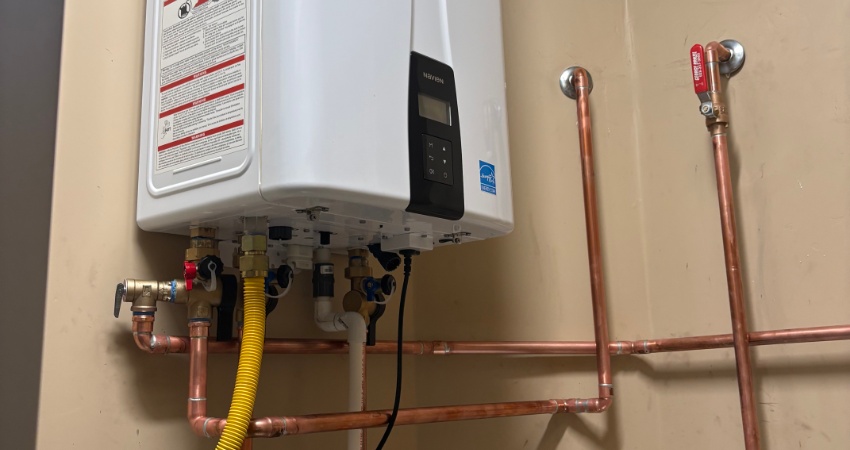
A hot water recirculating pump can significantly reduce the time it takes for hot water to reach your faucets and showers, even in a single-level home. While tankless water heaters heat water on demand, that heated water still needs to travel through your plumbing.
In Sun City, Sun City Grand, and Surprise, many single-story homes have floor plans with bathrooms and kitchens located far from the water heater. Recirculation can make hot water available much sooner without leaving the faucet running.
Why Does Hot Water Take So Long in a Single-Level Home?
The distance between your water heater and the faucet matters more than the number of floors in your home. When you turn off a hot water faucet, water stays inside the pipes. Over time, that water naturally cools off. So, the next time you turn on the faucet, the cool water must flow out before any heated water arrives.
In a larger single-story home, hot water may travel through lengthy horizontal pipe runs to reach distant bathrooms or kitchens. These long runs can create surprisingly long waits. Tankless water heaters don’t eliminate this problem. While they heat on demand, they cannot instantly deliver hot water through pipes that contain cooled water.
How Does a Hot Water Recirculating Pump Work?
A recirculating pump for a tankless water heater moves heated water through your plumbing regularly so it reaches distant fixtures more quickly.
Instead of allowing cooled water to sit in the hot water lines until someone opens a faucet, the pump circulates water back toward the heater through a return path.
Different systems control when circulation occurs:
- Timers: The pump operates during scheduled periods, such as mornings and evenings.
- Temperature sensors: The system monitors water temperature and activates circulation when needed.
- Smart controls: Compatible systems may use programmable schedules or other automated features.
Even with recirculation, however, there can be a slight delay while the system warms the pipes or delivers water from the circulation loop to the faucet.
Options for Recirculating Pump for Tankless Water Heaters
There are several ways to add hot water recirculation to a tankless water heater installation, depending on your equipment and plumbing configuration.
Tankless Water Heaters With Built-In Recirculation
Some tankless water heaters include integrated circulation pumps and controls. These models eliminate the need for a separate external pump, although they may still require additional plumbing components or separate return path.
Built-in recirculation can simplify installation when replacing an older water heater, particularly if the home already has a dedicated return line. However, not every tankless model supports recirculation, and built-in pumps differ in capabilities.
External Recirculating Pumps
An external pump can often be added to provide recirculation with an existing tankless heater. This arrangement may be appropriate when the heater supports external circulation equipment or when replacing a separate pump already installed in the home.
Dedicated Return Lines vs. Crossover Valves
A dedicated return line carries water back to the heater through separate plumbing, providing a defined circulation path without using the cold-water supply line. Some systems instead use a crossover valve installed near a fixture some distance from the water heater. These systems temporarily route water through the cold-water line until hot water reaches the valve.
Crossover systems can avoid installing a separate return line, but they may cause temporarily warm water at cold-water faucets.
Can You Add a Recirculating Pump to an Existing Tankless Water Heater?
Possibly. The answer depends on your heater model, plumbing layout, and available controls. Some tankless units are designed to operate with compatible external pumps. Others have specific restrictions or may not support recirculation at all.
Before installing a recirculating pump for tankless water heater systems, a plumber will evaluate:
- Manufacturer specifications and pump compatibility.
- Whether the home has a dedicated return line.
- Distance between the water heater and distant fixtures.
- Available electrical connections and control options.
- Whether the proposed configuration meets installation requirements.
Is Hot Water Recirculation Worth It in a Sun City or Surprise Home?
If you’re frustrated by long waits for hot water, a recirculating pump for tankless water heater systems can be a smart upgrade, delivering:
- Faster hot water delivery: Less time waiting at distant bathrooms and kitchen sinks.
- Reduced water waste: Less cooled water runs down the drain while waiting.
- Improved convenience: Especially helpful for homeowners who prefer not to stand waiting at a sink or shower.
- Better comfort: More predictable hot water availability throughout larger single-level homes.
However, recirculation also has trade-offs. Installation adds expense, pumps consume electricity, and circulating water does lose some heat as it travels through your pipes. Continuous circulation can increase energy consumption, particularly when pipes are poorly insulated.
For homes in Sun City, The Grand, and Surprise, the best solution depends on your existing heater, plumbing layout, and how frequently hot water is needed throughout your home.
Enjoy faster hot water delivery throughout your single-story home by asking George Brazil Plumbing & Electrical about recirculation solutions designed for your tankless water heater.