
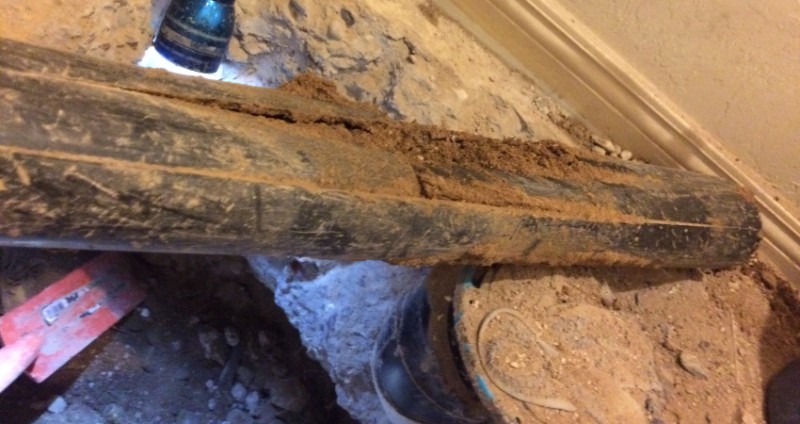
About a quarter of the homes in Moon Valley were built in the 1960s, which means sewer lines are about 60 years old. If they are clay pipes, they are already past the typical lifespan. Cast iron may last a little longer, typically between 50 and 75 years.
Age alone doesn’t mean your sewer line has failed. However, when a 60-year-old plumbing system starts producing recurring clogs, slow drains, or backups, you need to consider whether you’re dealing with more than an ordinary blockage. The challenge is figuring out what’s actually happening underground, whether you have a broken clay sewer pipe or a damaged cast-iron pipe.
What Happens to Sewer Pipes After 60 Years?
Clay and cast iron can both last for decades, but they develop different problems as they age.
Clay Pipes Can Crack, Shift, and Separate
Clay sewer pipes are rigid. Decades of soil movement can contribute to cracking, shifting, and separation at pipe joints. Once openings develop, soil or roots may get into the line and interfere with wastewater flow.
You may first notice a broken clay sewer pipe from symptoms that look like an ordinary clog. As the damage progresses, however, those problems can become more frequent.
Cast Iron Deteriorates Differently
Cast iron doesn’t typically develop the same joint problems as clay. Instead, corrosion and deterioration can gradually affect the pipe. The insides become rough, making it easier for waste to collect and restrict flow. Overtime, this can weaken the pipe itself.
You can’t see any of this from your kitchen or bathroom, which is why the pattern of plumbing problems becomes important.
Five Signs an Old Sewer Line May Be Failing
A single clogged sink doesn’t necessarily indicate a sewer-line problem. Multiple or recurring symptoms deserve more attention, particularly in an older Moon Valley home.
1. The Same Clogs Keep Coming Back
Clearing a clog should solve the problem if the obstruction was the only issue. If you’re repeatedly calling a plumber for the same problem, something farther down the line may be contributing to it.
2. Several Drains Slow Down at Once
One slow bathroom sink may have a clog near that fixture. If toilets, showers, tubs, and sinks start draining slowly around the same time, the problem may require cast-iron or clay tile sewer line repair.
3. Toilets Gurgle When You Use Other Fixtures
Water moving through a restricted sewer line can affect air pressure within the plumbing system. That may produce bubbling or gurgling sounds from a toilet when you run a sink, take a shower, or use another fixture.
4. Wastewater Backs Up Into a Tub or Shower
When wastewater can’t move freely through the main line, it may appear at a low drain opening, such as a bathtub or shower. A sewage backup can expose your home to contaminated wastewater and indicates that your drainage system needs prompt attention.
5. Problems Return After the Drain Is Cleared
Clearing an obstruction can get water moving again. It can’t repair a cracked pipe, separated joint, or deteriorating cast iron. If your plumbing works normally for a while and then the same problems return, the underlying pipe deserves a closer look.
Mature Moon Valley Trees Add Another Risk
Older homes aren’t the only characteristic of Moon Valley that matters. Mature landscaping can create additional challenges. Phoenix’s 2026 Design Standards Manual recommends at least a six-to-10-foot separation between trees to establish root barriers. In an established neighborhood like Moon Valley, however, trees and underground infrastructure may already be much closer together.
Tree roots seek moisture, and an aging sewer line can provide an opportunity. Roots can enter existing cracks, separated joints, and other openings. Once inside, they can grow and catch waste moving through the pipe, gradually restricting flow.
A Camera Inspection Can Show Whether the Pipe Is Actually Failing
A sewer camera inspection provides a direct look inside the line. A technician inserts a flexible, waterproof camera into the sewer system and examines the pipe from the inside.
Depending on the condition of the line, the inspection may reveal:
- Cracks
- Separated or offset joints
- Corrosion and deterioration
- Root intrusion
- Standing water
- Collapsed or damaged pipe sections
Just as importantly, the camera can help show how extensive the problem is. There’s a big difference between one damaged joint and deterioration running through a substantial portion of an old sewer line.
Does an Old Sewer Line Automatically Need Replacement?
No. A 1960s Moon Valley home could have an original sewer line that is still working fine. Another home built the same year (or even decades later) could have significant deterioration. Soil conditions, previous repairs, landscaping, pipe material, and other factors can all affect what happens underground.
If an inspection identifies damage limited to one area, clay tile sewer line repair may be sufficient. More widespread deterioration may require more extensive work.
If your Moon Valley home has recurring drain or sewer problems, contact George Brazil Plumbing & Electrical for a camera inspection to identify the problem and determine what repairs your sewer line needs.