
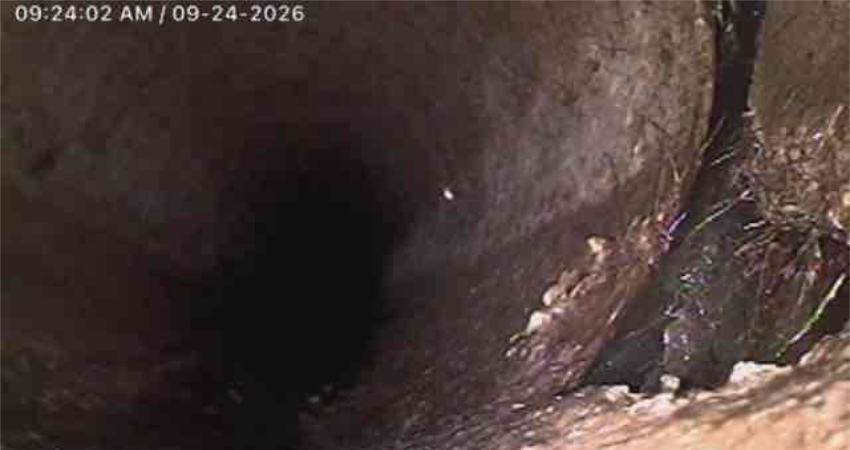
A main line clean out gives a plumber direct access to your sewer line. A camera inspection provides a view of what’s happening inside the pipe. Together, they can help locate an obstruction, identify pipe damage, and determine why an East Mesa home’s sewer keeps having problems.
What Is a Sewer Cleanout?
A sewer cleanout is a capped pipe connected to the home’s drainage system. You’ll typically find it at ground level close to where sewer lines enter your house. It’s typically white or black and may be right at surface level or slightly above. It’s often underneath your landscaping.
The name can cause some confusion. A cleanout doesn’t actually clean anything by itself. Instead, it provides an access point that a plumber can use to inspect or service the sewer line.
What Does a Main Line Cleanout Let a Plumber Do?
Think of the process in three stages:
- Access: The plumber opens the main line clean out to reach the sewer piping.
- Service: If an obstruction is present, appropriate drain-cleaning equipment can be used to clean out the sewer line.
- Verification: A camera can be inserted through the cleanout to examine the pipe and investigate why the problem occurred.
How Does a Sewer Camera Inspection Work?
A sewer camera is a small waterproof camera attached to a flexible cable, which is fed into the sewer while the plumber views the interior of the pipe on a monitor. Depending on conditions inside the line, an inspection may reveal:
- Tree roots entering the pipe
- Cracks or damaged areas
- Separated or offset joints
- Accumulated debris
- Corrosion or deterioration
- Sagging or low sections
- Other obstructions
The location and condition of the problem can then help guide the next step.
How Long Does a Sewer Camera Inspection Take?
A typical sewer camera inspection takes about 30 to 60 minutes to complete, depending on how easily accessible your main line cleanout is and the overall length of the pipe. If severe blockages or heavy buildup slow down access, the process may take slightly longer to ensure a thorough view.
What Can a Sewer Camera Tell You?
A camera inspection provides useful evidence, but it isn’t an X-ray of the entire sewer system. It can show visible conditions inside portions of the pipe the camera can reach. It may also help pinpoint where an obstruction, damaged joint, root intrusion, or other visible defect is located.
There are limitations, however. A camera may not be able to pass a severe blockage or collapsed section. Standing water and heavy buildup can also interfere with visibility. That’s one reason plumbers sometimes need to clean out the sewer line before completing a useful camera inspection. Removing accumulated material can expose pipe surfaces that couldn’t previously be seen.
A typical sequence may look like this:
Establish access → Clear the obstruction → Inspect the pipe
→ Identify the condition → Determine the next step
Does a Camera Inspection Clear the Line?
No, a sewer camera inspection is strictly a diagnostic tool designed to view and locate problems inside your pipe, not clear them. If standing water or heavy debris blocks the camera’s path, a plumber may need to first use drain cleaning or hydro jetting to clear the obstruction before completing the inspection.
When Should You Consider a Sewer Camera Inspection?
Not every routine drain clog requires a camera. It becomes more useful when there’s reason to investigate the condition of the main sewer line itself. That might include:
- A sewer that has clogged repeatedly
- A recently cleared line that is already causing problems again
- Suspected root intrusion
- Concerns about deterioration or structural damage.
An inspection can also provide additional information before a homeowner makes decisions about significant sewer work. Instead of choosing a solution based only on symptoms, you have evidence about what’s actually happening inside the pipe.
The evidence can also help if you need to file insurance claims or for real estate transactions. You can generally get a copy of the video.
Find the Problem Before Choosing the Solution
Different sewer conditions require different responses. An isolated obstruction may only need to be cleared. Roots may need to be removed and their entry point investigated. A damaged section of pipe may require repair, while more extensive deterioration can present different options.
A cleanout and camera inspection help replace guesswork with information about the sewer’s actual condition.
If your East Mesa home has recurring sewer problems, contact George Brazil Plumbing & Electrical for professional sewer service and help determining what’s really happening inside the line.