
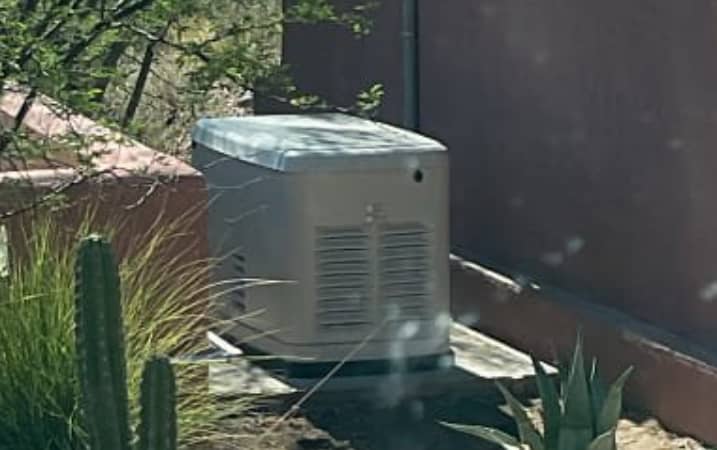
APS and SRP rank among the country’s most reliable large electric utilities, but even a dependable grid experiences outages. SRP’s most recent Grid Performance Report shows that customers averaged 58.8 minutes of sustained interruptions annually. If an outage occurs during extreme heat, overnight, or while you are away, those lost minutes can become a significant problem.
A permanently installed Generac generator in Gilbert, AZ can automatically restore power to your home. However, choosing the right system requires more than selecting a generator from a catalog. You must consider capacity, air-conditioning loads, fuel supply, installation costs, transfer equipment, local requirements, and long-term service.
Here’s what you need to know about Generac standby generators and how to search for Generac dealers near me.
How Does a Generac Home Generator Work?
A standby generator is permanently installed outside your home and connected to natural gas or propane. It works with an automatic transfer switch that monitors the utility supply, so that when the system detects a qualifying outage, the generator starts automatically. The transfer switch disconnects the home from the utility grid before connecting the approved circuits to generator power. That separation prevents electricity from flowing backward onto utility lines, which can be dangerous.
Once utility service returns and remains stable, the switch reconnects the home to the grid. The generator completes a short cooldown cycle, shuts down, and returns to standby mode. This automatic sequence shows the difference between a Generac standby generator and a portable generator. Portable equipment normally requires manual setup, refueling, extension cords, and safe outdoor placement. A standby system can respond even when no one is home.
Essential-Circuit Backup Versus Whole-House Coverage
Before comparing generator models, decide what you want powered during an outage.
Essential-circuit coverage prioritizes the equipment needed for safety, communication, and basic comfort. That may include:
- Refrigerators and freezers
- Selected lights and outlets
- Internet and charging equipment
- Security or medical devices
- Garage-door openers
- One air-conditioning system
- Essential kitchen circuits
This approach can reduce the generator capacity and installation cost because nonessential loads remain off.
A Generac whole house generator supports a broader portion of the electrical system. Depending on its capacity, it may power central cooling, cooking appliances, laundry equipment, pool pumps, water heaters, and other circuits.
However, whole-house does not necessarily mean every appliance can operate at the same time without limits. If your Gilbert home has two air conditioners, an electric range, an electric dryer, pool equipment, and EV charging simultaneously, it can create substantial demand. The size of your Generac home generator will dictate how much load you need, and load-management controls can be installed that delay lower-priority equipment so critical loads remain available.
What Size Generator Does a Gilbert Home Need?
Generator sizing should be based on the home’s electrical demand, not square footage alone. Two houses of similar size may require very different systems depending on their appliances, HVAC equipment, and fuel sources. So, you will want to work with Generac generator installers near you who can accurately evaluate your needs and recommend the right option.
The calculation must take into account how many watts you need to power your appliances and also for start-up.
Powering Your Equipment
In the industry, this is known as running watts, the electricity equipment consumes during normal operation. You need additional power when a motor or compressor turns on, known as starting watts. Refrigerators, pool pumps, well pumps, and air conditioners may briefly require considerably more power at startup than while running. A generator must support the continuous household load while retaining enough capacity for these surges.
That is why an electrician should inspect your electrical panel, identify the equipment being backed up, and calculate both running and starting demands.
Air Conditioning Can Determine Generator Size
Your AC requires a significant electrical load. A Generac dealer near you will need to right-size your generator based on your HVAC system, including:
- System voltage and amperage
- Compressor startup requirements
- Equipment efficiency
- Number and size of cooling systems
- Whether soft-start equipment is compatible
- Other appliances expected to run concurrently
A properly configured Generac generator in Gilbert, AZ will keep your AC running even when the power from the utility company goes out.
Common Residential Capacity Ranges
This chart can give you a general idea of what type of capacity is needed. Look at this as a rough estimate; you need a professional load calculation and evaluation to determine the right solution for your home.
Generator Capacity | Application |
|---|---|
10–14 kW | Essential circuits and selected larger loads |
16–20 kW | Broader coverage that may include central air conditioning |
22–24 kW | Many household loads with energy management |
26–28 kW | Higher-demand homes and larger HVAC requirements |
Generators rated between 8 kW and 40 kW make up 47.7% of the home standby generator market, but what you need may vary. The right Generac whole house generator may look different for you. It isn’t automatically the largest model available, either. Oversizing can add unnecessary equipment and drive up your costs, while under-sizing can result in overloads or insufficient backup.
How Much Does a Generac Generator Cost?
A Generac home generator can cost between $8,000 and $16,000 depending on size and installation. When you’re comparing Generac dealers near you, it’s important to remember that the price for the generator itself is just part of what you’ll pay. In fact, Generac says that the equipment typically represents about a third of the total cost for installation. You also need to consider:
- Automatic transfer switch
- Mounting pad
- Electrical labor and materials
- Panel modifications
- Natural-gas or propane work
- Trenching
- Permits and inspections
- Load-management devices
- Startup and testing
Several property-specific factors can change the cost.
Cost Component | What Can Affect the Price |
|---|---|
Generator | Capacity, model, cooling method, and features |
Transfer switch | Service size and circuits being backed up |
Electrical work | Panel location, conduit distance, and existing conditions |
Fuel connection | Gas pressure, pipe size, distance, or propane storage |
Site work | Pad, grading, access, landscaping, and trenching |
Permits | Electrical, fuel, and inspection requirements |
A generator placed near your electrical service and fuel source may require less wiring, piping, and trenching than one located across the property. Electrical-panel upgrades, long gas runs, concrete work, or difficult access may increase the project price.
When comparing quotes, make sure each Generac dealer near you includes the same scope. An equipment-only price is not comparable to a proposal covering permits, fuel work, transfer equipment, startup, and inspections.
Natural Gas Versus Propane
Most residential standby systems operate on natural gas or liquid propane.
Natural gas comes from your utility company, so you do not need to store fuel onsite. However, the existing meter and piping must deliver enough volume and pressure when the generator and household gas appliances operate. If you don’t already have gas service, this may not be an option.
Propane can be used where natural gas is unavailable or where homeowners prefer on-site storage. Runtime depends on the tank size, generator load, and available fuel. The installation may require a tank, regulators, trenching, and correctly sized piping.
Generator output can also vary by fuel type. The installer should confirm the model’s published rating for the selected fuel and calculate the required fuel supply at full load.
What Is Involved in Installation?
Generac generator installers near you will conduct an in-home consultation and electrical load calculation. The contractor then evaluates the fuel source, electrical service, equipment placement, and transfer-switch requirements.
A typical project includes:
- Identifying essential and optional backup loads
- Selecting generator capacity
- Evaluating natural gas or propane
- Choosing the transfer switch
- Reviewing the proposed location
- Obtaining permits
- Preparing the mounting area
- Completing electrical and fuel connections
- Arranging inspections
- Starting and testing the system
Generator placement must account for manufacturer clearances, airflow, service access, drainage, windows, doors, vents, property lines, and nearby equipment. Have an HOA? You may also have regulations you need to consider for location and screening, which can add to the cost.
When searching for Generac service near me, confirm that the contractor can coordinate the complete project. You want an all-in price and not have to worry about handling permits or inspections or dealing with multiple contractors.
How to Choose a Generac Dealer Near You
The quality of the installation affects how reliably your system performs. So, you’ll want to consider price and Generac service near you after the install is complete.
Verify Licensing and Insurance
Ask which licenses cover the electrical and fuel work. You can check licensing on the Arizona Registrar of Contractors. Also make sure the contractor carries appropriate insurance and will obtain the required permits.
Require a Load Calculation
A qualified dealer should inspect the home rather than recommend capacity based only on square footage. The evaluation should include HVAC startup, major appliances, pool equipment, electric water heating, EV charging, and future electrical plans.
Review the Complete Proposal
The written quote should identify:
- Generator model and capacity
- Transfer-switch type
- Mounting pad
- Electrical scope
- Fuel-system scope
- Permits and inspections
- Trenching and restoration
- Load-management equipment
- Startup and homeowner orientation
Ask About Long-Term Support
When evaluating a home generator installer, make sure they can provide Generac service near you in the future. You’ll need regular maintenance and testing to make sure your unit works properly when needed and keeps your warranty in place.
Routine maintenance helps identify weak batteries, deteriorated fluids, damaged wiring, fuel-system problems, or transfer-switch issues before an outage.
Service may include:
- Oil and filter changes
- Air-filter inspection
- Spark-plug replacement
- Battery testing
- Fuel-system checks
- Transfer-switch testing
- Exercise-cycle verification
- Software or controller review
- Maintenance documentation
A Generac standby generator normally performs periodic cycles for testing, but a successful exercise does not replace scheduled inspection and service.
Is a Whole-House Generator Worth It?
The value of backup power depends on what happens when electricity is unavailable. For some Gilbert households, an outage means losing refrigeration and internet service. For others, it may interrupt medical devices, remote work, security systems, pool equipment, or critical cooling.
A Generac whole house generator may be worth considering when:
- Maintaining air conditioning is a priority
- Someone relies on powered medical equipment
- The home is frequently unoccupied
- Outage-related food loss is a concern
- The property has essential pumps or security systems
- The homeowner wants automatic operation
- Extended backup is more important than limited battery runtime
The best system may still be a managed whole-home design rather than one sized to run every appliance simultaneously.
FAQs — Frequently Asked Questions About Generac Home Generators
How quickly does a Generac home generator turn on?
A standby system typically detects the outage, starts the engine, and transfers the load after a brief delay. Exact timing depends on the equipment and configuration.
Can a Generac standby generator run central air conditioning?
Yes, when the generator has sufficient running and starting capacity. HVAC size, compressor demand, other active loads, and load-management equipment all affect the calculation.
Does whole-house backup power everything at once?
Not necessarily. High-demand equipment may be prioritized or temporarily delayed to keep total demand within the generator’s capacity.
How should I compare Generac dealers near me?
Compare licensing, load-calculation methods, installation scope, warranty support, maintenance capabilities, and repair response.
How do I find a Generac dealer near me that also provides maintenance?
Ask whether the company performs installation, registration, scheduled service, troubleshooting, and warranty repairs. Confirm that Generac service near me is available from the same provider after installation.
George Brazil Plumbing & Electrical can evaluate your electrical service, air-conditioning loads, fuel supply, property layout, and backup priorities to find the right solution for your Gilbert home. Schedule an in-home generator consultation with George Brazil today.