
In 2025, we had 122 days at or above 100°F. No matter how well you deal with heat, that’s hot.
But summers in Glendale are about more than just extreme heat. When monsoon storms arrive, they can bring lightning, high winds, blowing dust, heavy rain, flash flooding, and sudden power interruptions. That combination can stress your electrical system and cause problems.
Maybe an outdoor outlet keeps tripping after rain. Maybe a GFCI outlet keeps tripping in the garage. Maybe lights flicker during storms, smoke alarms chirp after power outages, or expensive electronics stop working after power is restored. It’s a nuisance, and it can also be expensive if a lightning strike near your home or a power surge fries your air conditioning system or refrigerator.
This guide explains how Glendale homeowners can prepare for monsoon-related electrical issues, including surge protection, GFCI outlets, outdoor outlet safety, and practical storm precautions.
Why Monsoon Season Creates Electrical Problems for Glendale Homes
Monsoon storms can affect a home’s electrical system in several ways:
- Lightning and utility power fluctuations can create voltage spikes.
- High winds can force rain into outdoor outlets and fixtures.
- Dust can get into sensor lights, smoke alarms, and other electronics.
- Water pooling can create shock hazards around cords, plugs, and outdoor electrical devices.
It happens at the same time of year that we’re running our AC systems nearly all the time, placing them under heavy load for long periods. These storms can do more than knock trees down or cause flooding. They can damage your expensive appliances and electrical system.
What Is a Surge Protector?
A surge protector is a device that helps reduce damage from sudden voltage spikes. It can be something you plug into the wall that protects what’s plugged into the power strip, but it’s limited in its ability to handle major power spikes.
In Glendale, most families opt for whole-home surge protection, which works at a larger scale. Instead of protecting just your computer or TV, a whole-home surge protector is installed at the electrical panel to help protect all of the circuits throughout your home.
Homes built in the last few years are required to have this type of protection built-in. But if you have a home built before 2020, you may need an upgrade. Upgrades may be required if you are replacing electrical panels or doing major renovation work.
How Do Whole House Surge Protectors Work?
If you are wondering how do whole house surge protectors work, the basic idea is simple.
When you have a whole house surge protection installation near you, the device will continuously monitor the power that’s coming into your home. When it detects an unsafe variation in the power, like excess voltage or a spike from a storm, the surge protector reacts in milliseconds to prevent the extra energy from entering your home circuits. It directs the excess voltage into your home’s grounding system while continuing to pass through consistent electricity to keep everything running.
Whole-home surge protectors work in the background and stop power spikes from damaging anything you’re powering from your electric panel. A direct lightning strike or major utility event may still cause damage. However, professionally installed surge protection can reduce the risk from many common power surges.
What Whole-Home Surge Protection Can Help Protect
If you think about all of the things you have plugged into your electrical system, you can quickly see how damaging a lightning strike or power surge can be. You’ve invested tens of thousands of dollars in appliances and equipment. A whole house surge protection installation near you is affordable, especially when you think about having to replace:
- HVAC systems and smart thermostats
- Refrigerators, ovens, and kitchen appliances
- Washers and dryers
- Computers, routers, and home office equipment
- TVs, gaming systems, and audio systems
- Smart home devices and controls
- Security systems and cameras
- Garage refrigerators, freezers, and tools
- EV chargers
- Pool pumps and outdoor equipment
Even when a surge doesn’t immediately fry your equipment, it can take a toll over time. Even smaller surges can accumulate over time and shorten the lifespan of your systems.
You Need GFCI Protection, Too
Surge protection and ground fault circuit interrupter (GFCI) protection solve different problems, and you need both to protect your home and keep you safe. While surge protection helps protect equipment from voltage spikes, GFCI protection helps protect you from shock hazards.
A GFCI is designed to immediately shut off the power to an outlet when it senses that electricity may be leaking from its normal path. That’s especially important anywhere near a water source or areas that might be exposed to rain or moisture. Glendale building codes follow the National Electric Code, which mandates GFCI protection in bathrooms, kitchens, garages, laundry rooms, outdoor outlets, pool areas, and other wet or damp locations.
GFCI outlets have a Test and Reset button on them. You may have seen it trip and had to reset it in the past. What causes a GFCI to trip? GFCIs trip anytime there’s a potentially unsafe condition where electricity could cause shocks or electrocution. Technically, the GFCI detect an imbalance in electrical current, indicating the electricity is escaping outside the intended circuit. So, you plug in a device and instead of the power flowing directly into the device, some of it is going off-course, which can cause shocks.
Why Does My GFCI Outlet Keep Tripping?
If you find yourself asking, why does my GFCI outlet keep tripping, it might be because of:
- Ground faults: Electricity escapes its normal path and leaks, usually due to damaged wiring or a faulty power cord.
- Moisture intrusion: Water gets inside the outlet box, creating an unintended electrical path that instantly triggers the safety switch.
- Circuit overload: Too many high-wattage devices are running simultaneously, exceeding the maximum electrical capacity of the circuit.
- Defective appliances: A faulty device with internal wiring damage leaks current, forcing the outlet to cut power for safety.
- Faulty outlet: The GFCI itself is old, worn out, or damaged, causing it to misread normal currents and trip falsely.
- Incorrect installation: The line and load wires were reversed during setup, or a wire connection has come loose inside the box.
A one-time trip is usually not a problem. It’s telling you something’s not quite right and you need to figure out what’s going on. If you get repeated trips, call for a professional electrician to take a look and make sure you don’t have a bigger issue.
Why Does My GFCI Keep Tripping During Monsoon Storms?
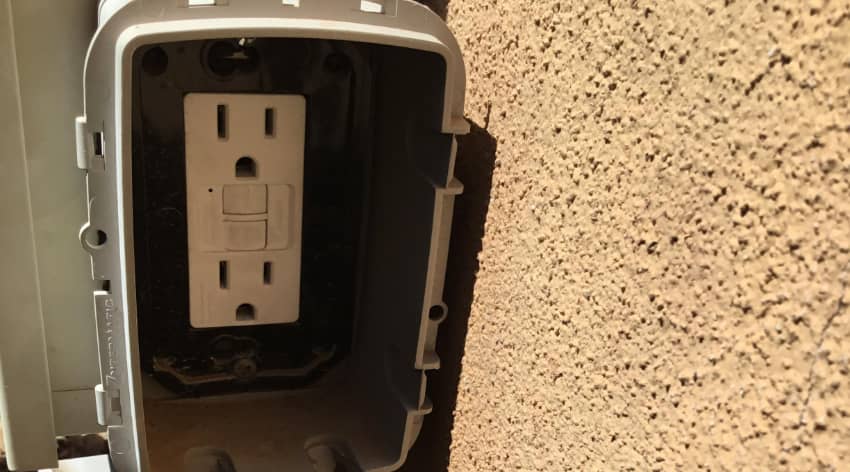
Water and electricity don’t mix, and monsoon storms can dump a massive amount of rain in a short period of time. We also get those high winds in Glendale that can blow rain sideways, allowing moisture to get into exterior outlets, outdoor fixtures, patio plugs, and garage circuits.
A GFCI that trips once after a severe storm may be responding to temporary moisture. A GFCI that trips repeatedly should be inspected.
What To Do When an Outdoor Outlet Keeps Tripping
When an outdoor outlet keeps tripping, do not keep pressing reset. Repeated tripping means the GFCI is still detecting a problem. Instead, follow these steps:
- Start by unplugging anything connected to the outdoor outlet.
- Let cords, plugs, and devices dry completely.
- Look for visible damage such as cracked covers, rust, discoloration, loose plates, or water inside the cover.
- Check whether the reset button is on the outdoor outlet, a garage GFCI, a bathroom GFCI, a laundry room outlet, or the panel.
- Try one reset only after the area is dry and safe.
- If the outlet trips again, stop using it and call an electrician.
The issue may involve moisture intrusion, damaged wiring, a faulty device, or a GFCI that needs replacement.
Storm Safety Checklist for Glendale Homeowners
A little preparation before monsoon season can help reduce electrical hazards once storms arrive. Before the heaviest storms of the season, this checklist can help you stay safe and protect your home:
- Test GFCI outlets in bathrooms, kitchens, garages, laundry rooms, and outdoor areas.
- Replace cracked, loose, or missing outdoor outlet covers.
- Use outdoor-rated cords and devices only.
- Keep cords and plugs off wet ground.
- Avoid using outdoor outlets during heavy rain.
- Keep irrigation spray pointed away from outlets and fixtures.
- Check smoke alarms and replace weak backup batteries.
- Inspect motion lights and exterior fixtures for cracks, rust, or moisture.
- Unplug sensitive electronics during severe storms if surge protection is limited.
- Stay away from downed power lines and anything touching them.
- Never touch electrical equipment while standing in water.
- Schedule service for repeated breaker trips, GFCI trips, buzzing, sparks, or burning smells.
Smoke Alarms, Sensor Lights, And Other Storm-Triggered Electrical Problems
Monsoon storms can affect more than outlets and appliances. They can also trigger smoke alarms, security sensors, motion lights, and smart home alerts.
Dust can enter smoke detector chambers and cause nuisance alarms. Humidity may affect older or dirty alarms. Power flickers can make hardwired smoke detectors chirp or reset. Lightning flashes, moving branches, rain, and dust can also cause motion sensor lights to turn on and off repeatedly.
If alarms or sensor lights only act up once during a severe storm, the issue may be temporary. If they activate repeatedly, cycle on and off at night, trip breakers, or show signs of moisture or damage, it is worth having the system inspected.
When To Call an Electrician
A little preparation up front can help stop major damage later. Before the next monsoon storm, you want to address any obvious problems you find. During your inspection, however, you may uncover issues that need professional attention. If you see any of these conditions, call George Brazil Plumbing & Electrical for a thorough inspection:
- A GFCI outlet keeps tripping.
- An outdoor outlet trips after every rain.
- Breakers trip during storms.
- Smoke alarms chirp after every power flicker.
- Motion lights cycle all night.
- Outlets feel warm.
- Fixtures buzz, spark, or smell burnt.
- The panel is hot, rusted, buzzing, or outdated.
- Electronics fail after outages.
- Your home has no whole-home surge protection.
Storm-season electrical issues won’t get better with age. They will likely repeat until the underlying problem is fixed. Waiting for the next storm can put appliances, electronics, and safety systems at risk.
George Brazil Can Help Protect Your Glendale Home
For more than 70 years, George Brazil has been helping homeowners solve plumbing and electrical problems. With more than 35 years serving the Glendale and Phoenix metro area, the technicians at George Brazil are highly-trained on how to safeguard your electrical systems against monsoon storms.
Our electricians can help with whole-home surge protection, GFCI outlet installation, GFCI troubleshooting, outdoor outlet repair, weather-resistant covers, breaker and panel inspections, smoke alarm issues, hardwired alarm concerns, motion sensor lights, exterior fixtures, and electrical safety inspections.
If you have been searching for whole house surge protector installation near me, wondering why does my GFCI keep tripping, or dealing with other problems with your electrical system, the professional electricians at George Brazil can identify the problem and recommend the right solution for your Glendale home.
FAQs — Frequently Asked Questions About Glendale Monsoon Electrical Safety
A surge protector helps reduce damage from sudden voltage spikes by redirecting excess voltage away from your connected equipment or circuits. Whole-home surge protection protects your entire home.
Why does my GFCI outlet keep tripping?
A GFCI may keep tripping because of moisture, damaged devices, faulty wiring, corrosion, an aging GFCI device, or a problem elsewhere on the protected circuit.
What causes a GFCI to trip after rain?
Rain can get inside your outdoor outlet boxes, wet cords, connected devices, or downstream outlets, causing the GFCI to detect a possible shock hazard.
Why does my outdoor outlet keep tripping?
An outdoor outlet may trip because of moisture, cracked covers, wet plugs, damaged landscape lighting, garage GFCI protection, or wiring issues.
Call George Brazil Plumbing & Electrical today for service. Our highly trained electricians respond fast, diagnose accurately, and fix it permanently. Available 24/7 for emergencies with upfront pricing and guaranteed expertise, every time/