
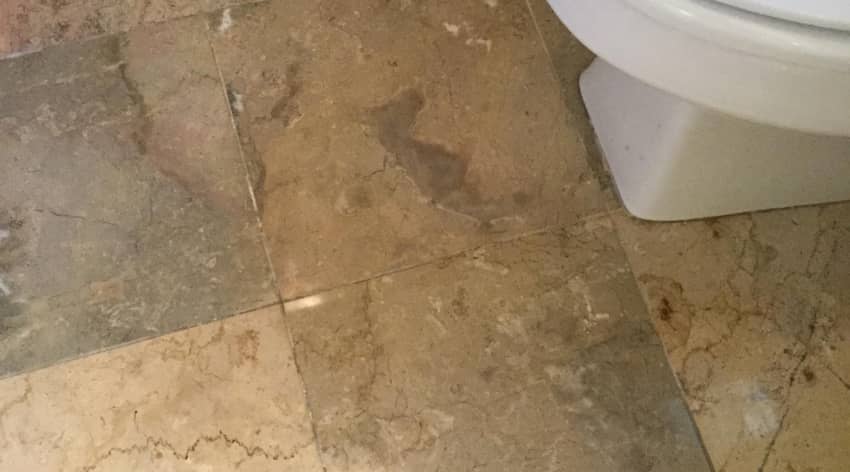
According to the Insurance information Institute, more than 22% of claims are for water damage in homes. They are more common than you might think and more expensive. The average claim is for more than $15,000 and that only includes fixing the damage, not the underlying problem.
When you’re think about water damage, your first thing is likely the obvious ones, like a washing machine supply hose that burst, an overflowing toilet, or maybe a pipe that burst inside your wall. While these can happen, the most financially devastating plumbing issues frequently occur out of sight. Specifically, they happen deep beneath your Gilbert home, buried under the concrete foundation of your property.
When an underground water line ruptures beneath your home’s foundation a leak in the concrete slab is serious stuff. It’s wasting water, but it’s also undermining the structural integrity of your home.
Phase 1: Undermining the Soil Bed
A solid, reliable concrete foundation is only as stable as the ground underneath it. When your home was built, engineers carefully graded, compacted, and leveled a dense bed of sand and soil to support the massive weight of your home. A leak in the concrete slab can upset this.
A pressurized freshwater pipe typically pushes water through your home at between 50 and 75 PSI. When a crack or pinhole leak splits a pipe open beneath your floor, that water doesn’t just seep out; it sprays under intense pressure. Over weeks and months, this continuous, high-pressure jet stream washes away the tightly packed sand and dirt supporting your foundation.
As the dirt flushes away, it creates hollow, hidden gaps known as structural voids. Without solid, compressed earth beneath it, thousands of pounds of heavy foundation concrete are suddenly left suspended in air, unsupported from below.
Phase 2: Shifting Clay, Swelling, and Slab Heaving
While the rushing water is actively eroding the sand bed in one spot, it is simultaneously creating a completely opposite, equally destructive reaction in the surrounding soil. The earth across the Gilbert area contains high concentrations of clay, which is highly expansive.
When a concrete slab water leak constantly saturates the dirt, it acts like a giant sponge, swelling and expanding in volume. Because the dense earth cannot expand downward into the bedrock, the physical force moves upward. This upward expansion applies thousands of pounds of pressure directly against the underside of your flat concrete foundation.
This mechanical phenomenon is called slab heaving. Your home’s foundation is now experiencing two violent structural forces at the exact same time: one section of the concrete is sagging into a void that’s eroded, while another section is being violently shoved upward by swelling clay. This severe, uneven bending stress forces the rigid concrete to flex far beyond its structural limits, resulting in deep, permanent foundation cracks.
Phase 3: The Structural Domino Effect Through Your Home
When the base shifts and cracks due to a leak in the concrete slab, that structural movement rapidly travels upward into your home and can cause:
- Misaligned doors and windows: Interior doors stick in their frames, garage entryways refuse to latch, or windows become incredibly difficult to slide open or closed.
- Drywall fissures: Cracks start to spiderweb across your walls, most notably radiating outward from the upper corners of door frames and where walls meet the ceiling.
- Separating millwork: Baseboards and crown molding start to pull away from the walls or gaps open up between your kitchen cabinets and the drywall.
- Sloping floors: Walking across a room might suddenly feel uneven, or you may notice a distinct tilt or slope in tile, laminate, or hardwood surfaces.
The Hidden Threat of Mold Growth
Beyond the severe structural damage, a prolonged concrete slab water leak can also create an ideal breeding ground for mold. Concrete is naturally porous, acting much like a thick hard sponge. As water pools under the foundation, it slowly wicks upward through the concrete pores and traps moisture directly beneath your interior flooring.
Before you even realize a leak exists, mold colonies can completely destroy carpeting, rot hardwood subfloors, and release hazardous airborne spores into your household air supply.
If you have noticed a sudden spike in your water utility bill, discovered a mysteriously warm spot on your floor, or spotted new cracks forming in your drywall, don’t wait for the damage to escalate. Contact George Brazil Plumbing & Electrical today to schedule a professional inspection and safeguard your home’s foundation.