When you find out you need a sewer line repair in the Phoenix area, you know it’s not good. Most people think of backhoes digging up their yard, jackhammering the sidewalk, destroying their landscaping, and an expensive bill. But that’s not always the case. Before you hire someone to start digging at your home in Gilbert, get a professional evaluation from the experienced sewer line experts at George Brazil Plumbing & Electrical.
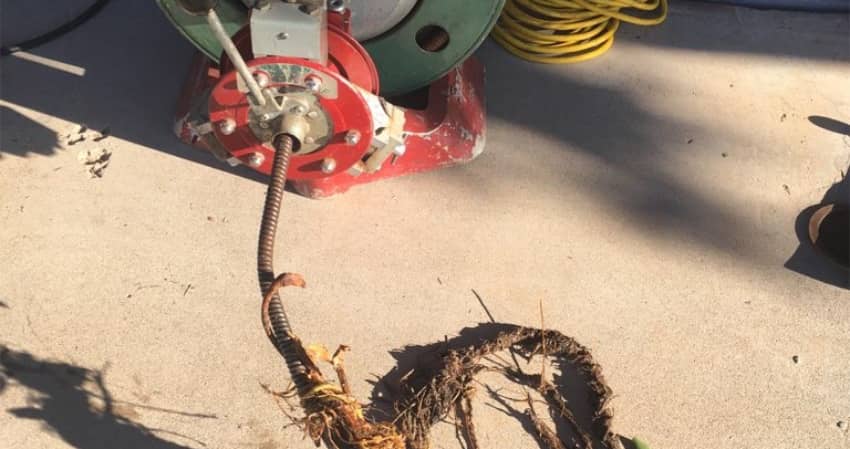
While there are several reasons you might need sewer drain cleaning or repairs, tree roots are often the culprit. But that doesn’t always mean a full-scale sewer line repair in Phoenix. And even if you do, there are options, including:
Even if you need major work, there are options for trenchless sewer repair in Phoenix ,AZ. Unfortunately, that’s where many homeowners get frustrated. One company recommends sewer drain cleaning. Another recommends hydro jetting. A third says the entire sewer line needs to be replaced.
Who’s right? The answer starts with understanding how tree roots get into sewer pipes, what symptoms they cause, and how modern sewer repair methods compare. So, before anyone starts digging or quoting you about sewer line repair in Phoenix, you want to do a sewer camera inspection to find the source of your problem.
Tree Roots Are a Common Sewer Problem in the Valley
Tree roots are one of the most common causes of sewer line problems throughout Gilbert, Chandler, Mesa, Tempe, and Phoenix. The reason is simple. Many Valley neighborhoods were developed during major growth periods between the 1970s and 1990s. Developers planted thousands of shade trees to make neighborhoods more livable in our desert climate, and now these trees have grown up.
Roots can extend a considerable distance, up to five times the width of the canopy, and sometimes even farther in search of moisture and nutrients, exactly the things found in your sewer lines. While these roots rarely break through healthy sewer pipes, they are sneaky in finding ways to get inside. If they find any of these, they’ll burrow in and start to feed:
- Small cracks
- Loose joints
- Corroded pipes
- Minor shifts in underground piping
Once roots find a source of water, they continue growing. Over time, what started as a tiny root can lead to a significant blockage or even burst your pipes, requiring expensive sewer line repairs in Phoenix.
The age of your home can often provide clues about the type of sewer system that’s underground and how vulnerable you may be to roots. For example, before 1950, clay tiles were often used and that puts them at high risk for root intrusion.
In the 1950s through 1970s, clay, cast iron, and Orangeburg pipes were common in Gilbert and the surrounding areas. These are also very high risk. Between the 70s and 1990, PVC started to be used, but cast iron was still a common choice. From 1990 until now, PVC is the norm, and that lowers your risk from tree roots. However, even newer PVC systems aren’t immune if the pipes become damaged or joints separate over time. This often happens as the desert soil erodes or shifts, causing joints to loosen or pipes to collapse.
Tree Roots in Sewer Line Systems: The Symptoms to Look For
One of the biggest mistakes homeowners make is waiting until a sewer backup occurs before calling for help. Roots intrusions typically produce a few clear warning signs well before you have an emergency situation, such as:
- Frequent drain backups: Clogs that happen repeatedly in multiple sinks, tubs, or toilets often indicate blockage in the main line rather than a single clog.
- Slow flowing drains: If multiple fixtures in your home are draining slowly despite using standard plunging methods, a root mass might be restricting the water flow.
- Gurgling toilet sounds: Strange gurgling or bubbling noises coming from your toilet bowls when water drains elsewhere in the house suggest that trapped air is fighting past a root barrier.
- Sewer odors around the property: Persistent sewage smells inside your home or out in the yard often point to a crack or breakthrough in the pipe caused by invasive root growth.
- Unusually lush green patches: A single area of your lawn that looks significantly greener or wetter than the surrounding area often indicates a leaking sewer pipe providing constant water and nutrients to tree roots.
- Sudden sinkholes or soft spots: Indentations, soft ground, or actual sinkholes forming in your yard can happen when a root-damaged pipe leaks enough water to erode the surrounding soil.
In many cases, you’ll see several of these symptoms at the same time. Don’t wait! The longer you delay, the more expensive roots in pipes removal costs may become.
Sewer Camera Inspections Are Key to Uncover the Real Source
If a plumber recommends sewer line repair in Phoenix without taking the time to find the real source, get a second opinion. An experienced plumber will first identify whether you have a root issue or something else is going on. In many cases, they’ll use a waterproof, flexible camera to travel through your sewer pipes to determine the problem.
A sewer camera inspection can identify:
- Tree root intrusion
- Grease buildup
- Pipe cracks
- Offset joints
- Standing water
- Pipe corrosion
- Partial collapses
- Pipe collapses
Just as importantly, the inspection helps determine whether the pipe is a candidate for sewer drain cleaning, sewer line jetting, replacement, or trenchless sewer repair in Phoenix, AZ. Without the information, you might easily pay for services that you don’t need or that fail to solve your problem.
Sewer Drain Cleaning vs. Hydro Jetting Sewer Line
Two of the more common approaches are sewer drain cleaning and sewer line jetting. Cleaning will bust through a clog and get the water flowing again. Hydro jetting a sewer line can get rid of scale and buildup, washing obstructions away.
Here’s how the two methods compare.
| Sewer Drain Cleaning | Hydro Jetting Sewer Line |
| Breaks through clog | Cleans entire pipe |
| Mechanical cable or auger | High-pressure water |
| Best for isolated blockages | Best for widespread buildup |
| Restores flow quickly | Thoroughly cleans pipe walls |
| May leave residue behind | Removes accumulated debris |
When Traditional Sewer Drain Cleaning Makes Sense
Traditional sewer drain cleaning is often the right choice when:
- The blockage is isolated.
- The problem is relatively new.
- There is no history of recurring clogs.
- The sewer line is otherwise in good condition.
In these situations, clearing the obstruction may be all that’s needed.
When Sewer Line Jetting Is Worth the Cost
Hydro jetting a sewer line often makes sense when:
- Root remnants remain in the pipe.
- Grease buildup is significant.
- Multiple clogs occur repeatedly.
- Sewer odors persist.
- Years of buildup have accumulated.
When Jetting Is Being Oversold
Hydro jetting is a powerful tool, but not every clog requires it. If you have a straightforward blockage or minimal root issues, you may not benefit from paying for a more extensive service. Likewise, a severely damaged sewer line may need repair rather than additional cleaning. The key is matching the solution to the actual condition of the pipe.
Roots in Pipes Removal Cost
Anytime you have a plumbing problem, one of your first question is almost always how much is this going to cost me. Unfortunately, the answer depends on a number of factors and whether it’s a quick fix or a major sewer line repair in Phoenix.
If you have a small root intrusion, you might just need pipe cleaning or spot repair of a small section of your sewer line. If other cases, sewer pipe relining in Phoenix may be your best option.
Here are the most common things that will impact the cost:
- Amount of root growth
- Length of affected pipe
- Pipe material
- Pipe condition
- Accessibility of the sewer line
- Landscaping or hardscaping above the pipe
- Whether repairs are required after root removal
This is why estimates can vary dramatically from one property to another. In simple terms, here’s what you are typically looking at depending on the severity of the problem
| Problem | Typical Solution |
| Minor root intrusion | Mechanical root cutting |
| Root buildup and debris | Hydro jetting |
| Localized damage | Spot repair |
| Moderate deterioration | Pipe relining or pipe bursting |
| Major structural failure | Replacement |
Sewer Pipe Relining in Phoenix
You might be surprised to know there are options that don’t automatically mean digging up your lawn. In many cases, sewer pipe relining or pipe bursting can be done without significant excavation.
How Pipe Relining Works
During the relining process, a flexible liner coated with a special resin is inserted into the existing sewer line. The liner is positioned inside the damaged pipe and cured in place. Once hardened, it forms a durable new pipe within the old one. You may see this called Cured-In-Place Pipe or CIPP lining, and it’s a less expensive and intrusive way to seal small cracks or places where roots burrowed in.
Benefits of Sewer Pipe Relining in Phoenix
Pipe relining has become increasingly popular because it offers several advantages:
- Minimal digging
- Faster installation
- Reduced landscape disruption
- Extended pipe life
- Improved flow characteristics
For many homeowners, the biggest advantage is avoiding the destruction of landscaping, patios, irrigation systems, and driveways. It’s not always the solution, though. Sometimes, sewer pipes are simply damaged too much.
Pipe Bursting in Phoenix
Another option may be pipe bursting, which replaces your existing pipe. With this approach, a specialized bursting head is pulled through the current pipes. This breaks apart the sewer line at the same time a new pipe is put in place. Often, this allows plumbers to dig small holes at the entrance and exit point rather than having to do major excavation. Once the new pipes are in place, they are connected to the main lines.
Who Is Responsible for Sewer Line Repair?
This is another tricky question. If sewer line repair in the Phoenix area is needed on the line at your home that connects to the city sewer system, it’s your responsibility. If the problem is in the city’s main sewer line, they are responsible.
You should know however, that your private sewer lateral may extend farther than you might think, often past your property line and underneath sidewalks and sometimes into streets before connecting. If they have to dig up the street or sidewalk, unfortunately, the city will not cover the costs of the repair.
Does Insurance Cover Root Damage?
Most homeowners’ insurance policies do not cover root damage. Roots in your pipes, corrosion, and pipes wearing out are generally considered maintenance issues. It may be worth checking your policy, however, as some insurance carriers offer riders or service-line coverage.
Avoid Paying for the Wrong Repair
One of the biggest mistakes you can make when it comes to sewer line repair in Phoenix is approving a repair before understanding the problem.
Before agreeing to any recommendation, here are a few important steps to take.
Don’t Authorize Major Repairs Without a Camera Inspection
With a camera inspection, you can see the proof of what’s going on inside your pipes. Ask for documentation.
Ask What Problem Is Actually Being Solved
Is the company addressing:
- A clog?
- Root intrusion?
- Pipe damage?
- Structural failure?
Those are very different situations and require specific solutions.
Understand Whether You’re Paying for
Many homeowners hear the word “repair” when the recommendation is actually maintenance. Others are told they need replacement when repairs may still be possible. Make sure you know all of your options so you can make the decision that’s right for you.
Ask whether alternatives exist. Sewer line jetting may be all that’s needed with spot repairs. You may qualify for sewer pipe relining in Phoenix rather than a wholesale excavation and rebuild.
FAQs — Frequently Asked Questions About Tree Roots in Sewer Lines
How do tree roots get into pipes?
Roots typically enter through cracks, joints, aging pipes, or any openings where moisture escapes.
Can hydro jetting remove tree roots?
Hydro jetting can remove smaller root growth and root remnants. Larger root masses may require mechanical cutting before jetting. In both cases, you may also need sewer line repair in Phoenix.
Does homeowners’ insurance cover root intrusion?
Usually not. Most standard policies exclude maintenance-related sewer damage.
Is trenchless sewer repair in Phoenix, AZ permanent?
When properly installed, trenchless repairs can provide long-term solutions comparable to traditional replacement methods. Cured-in-Place Pipe (CIPP) is designed to last 50 years or more.
Can roots come back after cleaning?
Yes. If openings remain in the pipe, roots will absolutely return. That’s why some situations require repairs after cleaning.
Contact George Brazil Plumbing & Electrical for an inspection. We offer same-day service and will provide you with your options and upfront, transparent pricing. We’ll recommend the right solutions to solve your problem, and not just the most expensive option.