
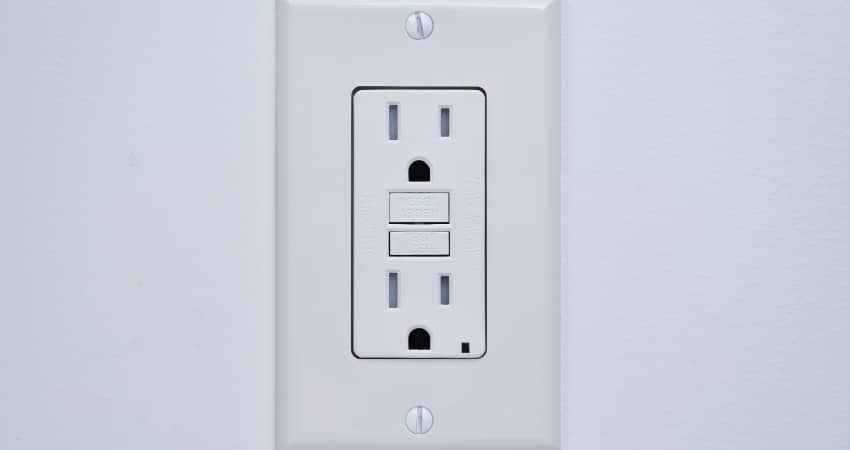
If you live in Tempe, your garage does more than store cars.
It might also serve as your workshop, gym, utility area, or storage space, and the most common way you enter your home. The extreme heat, dust storms, humidity, and moisture can make your garage a high-risk area for electricity, which is why all outlets should have GFCI protection.
But, how many GFCI outlets in garage spaces are actually required, and what GFCI outlet should you buy to stay safe and compliant? We have the answers.
What GFCI Protection Is Required in Tempe Garages
Tempe building codes follow National Electrical Code (NEC) requirements. Any electrical outlet that has a higher chance of coming into contact with moisture or potential shock hazards like tools, appliances, or potential exposure to outside elements needs GFCI protection.
In the garage, this means wall outlets, outlets near workbenches, ceiling outlets used for your garage door opener: all of them must be protected by GFCI. However, there’s an important distinction here. This does not mean every outlet must be a GFCI device. The key requirement is that each outlet is protected, whether by the device itself or by a GFCI located elsewhere on the same circuit.
So, How Many GFCI Outlets in Garage Spaces Are Needed?
It depends. You can meet the code requirements with just a single GFCI outlet installed at the first receptacle on the circuit. That device can protect every outlet downstream, keeping your entire garage compliant. But if you have more than one circuit, or the GFCI is not the first in line, you need more than one.
When You Need More Than One GFCI Device
Some garages may require more than one GFCI. For example, if:
- Your garage has two or more circuits.
- You have a detached garage with its own subpanel.
- Outlets are fed from multiple wiring paths.
- Your power equipment or appliance requires isolated circuits.
- Your exterior-facing garage outlets don’t share the same circuit as interior outlets.
In these cases, one GFCI cannot protect everything, and each circuit must have its own GFCI device or GFCI breaker.
Multi-Use Garages Need More Protection
If your garage doubles as a workshop, home gym, or tool station, you’ll likely need additional circuits for equipment like freezers, power tools, or EV chargers.
Instead of thinking about how many devices you need, it becomes more about how many circuits require protection.
Ceiling Outlets and Hard-to-Reach Areas
Sometimes overlooked, garage door opener outlets must also be GFCI-protected. If the opener’s outlet is on a different branch or in an inconvenient location, a second device may be easier than running new wiring.
What GFCI Outlet Should I Buy for a Garage in Tempe?
Arizona’s environment is hard on electrical components. Heat, dust, and occasional moisture mean you need a GFCI built for durability and compliance. Here are some of the things to keep in mind when you’re trying to figure out what GFCI outlet should you buy:
- Choose a weather-resistant GFCI: WR-rated models withstand environmental factors, making them the best fit for garage environments.
- Choose a tamper-resistant GFCI: TR outlets are required in garages and prevent accidental insertion of tools, nails, or debris.
- Match the amperage and load rating: Select a 15-amp or 20-amp GFCI that matches the circuit, and never increase amperage without confirming your wiring can support it.
- Select a self-testing GFCI: These outlets automatically verify internal safety functions and provide added reliability in harsh Tempe conditions.
- Consider a GFCI breaker when appropriate: If the garage has multiple circuits, one GFCI breaker can protect the entire run more cleanly than several individual GFCI outlets.
Does My Garage Have the Right GFCI Protection?
Take a look around your garage. If you see any of these, you might not be compliant:
- No visible GFCI outlet on the garage’s primary circuit
- Ceiling outlets are unprotected
- Outlets appear older and lack TR markings
- Detached garage outlets are on unprotected circuits
- Freezers or refrigerators plugged into non-GFCI outlets
Older homes, DIY renovations from past owners, and garages with multiple additions are more likely to have wiring gaps that violate code. A licensed electrician can trace your circuits, identify missing protection, and bring everything up to Tempe standards.
If you are unsure how many GFCI outlets your garage needs or whether your circuits are protected the right way, the experience, licensed electricians at George Brazil Plumbing & Electrical can assess the layout, update the wiring, and ensure your garage meets Tempe’s electrical code to keep you safe. Call today to schedule an appointment.