
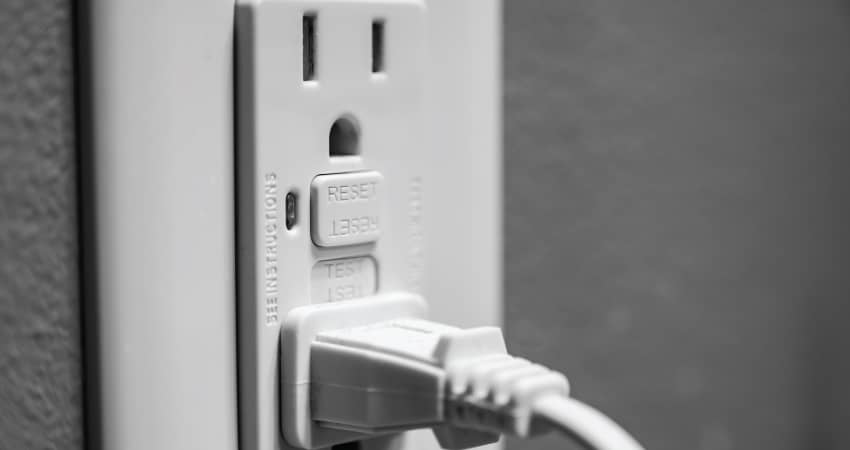
If you live in Tempe, you already know your home takes a beating. Arizona’s dust, monsoons, and extreme heat, plus a lot of older construction that often has DIY from previous owners. GFCIs may or may not be part of the mix, but they are critical components for safety in certain parts of your home. How many GFCIs do you need, what causes a GFCI to trip, and why does a GFCI keep tripping after multiple resets? We’ll explain.
What GFCI Outlets Are Required in Tempe Homes
A Ground Fault Circuit Interrupter (GFCI) is required by code in Tempe for outlets that are installed in bathrooms or within six feet of a lavatory or kitchen sink. It’s designed to sense irregular electrical flow and shut off power instantly to prevent shock, fire, or damage to your electrical system. It’s highly sensitive to water and moisture, so the GFCI trips to keep you safe. However, it can also trip for other reasons.
How Many GFCIs Do I Actually Need?
The code doesn’t spell out how many GFCIs you need, just where you need them. So, the number depends on your layout and how your outlets are wired.
Kitchens
Anywhere within six feet of a water source requires GFCI protection. Most kitchens in Tempe end up with two to four protected locations, depending on the number of countertop outlets.
Bathrooms
Each bathroom must have at least one GFCI outlet. Larger bathrooms with two sinks or makeup vanities may need more than one protected area.
Laundry Areas
Any outlet within six feet of your washer also requires GFCI protection due to moisture and vibration.
Outdoor Areas & Garages
All outdoor outlets and garage outlets must also be GFCI protected.
Other Areas That Require Protection
Outlets in or near these areas also need GFCI protection:
- Utility sinks
- Unfinished basements
- Wet bars
- Pool equipment zones
The Right Number of GFCIs: One Per Circuit or One Per Outlet?
Keep in mind that not every outline in one of the covered areas has to be a GFCI. What matters most is whether the circuit is protected. You may be able to use one GFCI to protect multiple outlets if the ones downstream are on the same circuit. For example, a single GFCI in a kitchen might protect several countertop outlets that follow it in the wiring sequence.
Still, it’s smart to install more than one for:
- Long circuit runs
- Outdoor circuits shared with indoor circuits
- When frequent tripping becomes difficult to isolate
Stacking GFCIs can create confusion. You might reset one device and not realize there’s a second GFCI downstream has also tripped. You might think there’s a problem with your breaker when it’s really multiple GFCIs.
Why Does My GFCI Keep Tripping?
What causes a GFCI to trip when everything else seems fine? Here are some of the most common reasons:
- Moisture: Water, humidity spikes, or steam in bathrooms can trigger a trip.
- Dust and debris: Arizona dust storms push fine particles into outlets, creating micro-faults that can cause a circuit to trip.
- Loose wiring or older outlets: Many older Tempe homes have worn wiring, and most GFCIs only last seven to 10 years.
- Overloaded or shared circuits: Too many appliances or devices downstream can overload the GFCI, especially those with motors or heating elements.
- A ground fault: Damaged cords, faulty appliances, or direct water contact can create a ground fault, which can be dangerous.
GFCI Reset Troubleshooting Checklist
Sometimes the fix is simple. Other times it points to a deeper issue. Let’s take a step-by-step approach to assess.
Step 1: Try Resetting the GFCI at the Device
Push the reset button firmly. If it will not reset, move to the next step.
Step 2: Check for a Downstream GFCI
Many Tempe kitchens and bathrooms have more than one GFCI. Check whether another outlet or device upstream controls the circuit.
Step 3: Disconnect All Devices and Test Again
Unplug everything and try resetting the outlet. The culprit might not be your GFCI but something you have plugged in that’s the problem.
Step 4: Inspect for Moisture Exposure
Check outdoor covers, garage outlets, bathroom outlets near sinks, and anywhere moisture is present.
When to Call an Electrician
Call in a professional if:
- The GFCI will not reset
- There is a burning smell
- The outlet keeps tripping with nothing plugged in
- You see visible damage or discoloration
These symptoms point to wiring issues behind the walls or circuit failures that require professional attention.
If your outlets keep tripping, you aren’t sure how many GFCIs you need, or you suspect a wiring issue behind the walls, it’s time to call a licensed electrician to prevent accidents and give you peace of mind.
George Brazil Plumbing & Electrical has served Arizona homeowners for decades with friendly and trustworthy electrical service designed to keep your home safe and your system running the way it should. Make an appointment today for electrical service in Tempe, and we’ll get to work.