
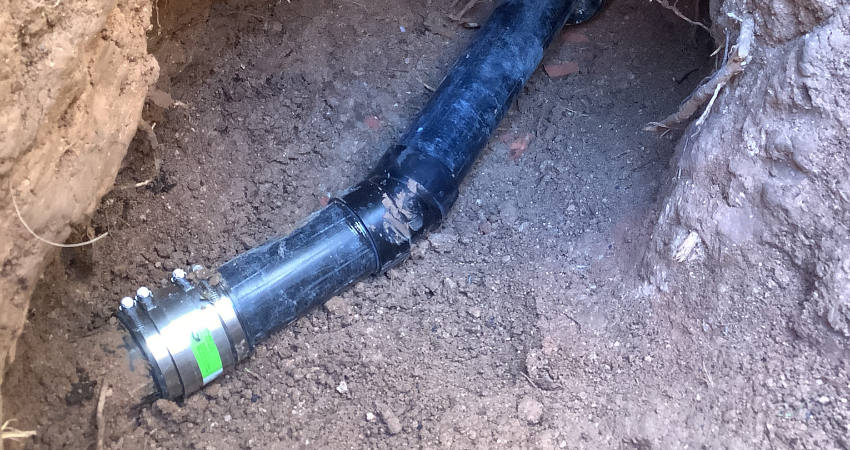
Thousands of Tempe residents may have deteriorating sewer pipes under their homes. It’s especially a problem for many homes that were built between 1940 and 1970 when what’s called Orangeburg Pipe was used to connect homes to the city’s public sewer. It’s a big enough problem that the city put out this map showing how common this is, although nobody’s certain where they are because records weren’t kept at the time.
These pipes have a 50-year lifespan. and they’re well past their limit.
When these pipes start to break down, they can crack, leak sewage into your yard, or collapse altogether. Sewage backups are common, and they’re not limited to Tempe. Older sections of Phoenix, Chandler, Gilbert, and surrounding areas all have some Orangeburg pipes still in place.
While these older sewer pipes can deteriorate, other types of pipes are vulnerable as well, requiring cast iron sewer pipe repair or repair to even the more modern polyvinyl chloride (PVC) or high-density polyethylene (HDPE) that is used today.
When problems start, they’re typically out of sight, but they can escalate quickly, especially in the Phoenix area where the desert soil, extreme heat, and hard water all contribute to the problem. You might notice a gurgling toilet, multiple drains emptying slowly, or that nasty sewage smell in your home. When you do, it’s time for a sewer repair plumber to take a look and make sure you’re not dealing with bigger issues underground.
How Your Sewer Line Works (And Where Problems Start)
Sewer systems are designed to move wastewater from your home to the municipal sewer line. Sinks, showers, toilets, tubs: everything connects to drain lines under your floor or slab, feeding into a main drain. The sewer lateral line connects to the municipal system to get rid of the waste.
The sewer system relies on gravity and consistent flow, so even small disruptions can create larger issues. If the ground shifts, your sewer pipe may get misaligned or crack.
Often, the first thing you notice is either the smell of sewer gas or clogged drains.
What Causes Sewer Line Damage Over Time
Sewer line failures are rarely caused by a single event. Most problems develop gradually due to a combination of factors.
Pipe materials naturally degrade over time. Cast iron pipes, for example, corrode internally, creating rough surfaces that trap debris and restrict flow. Hard water like we have in the Phoenix area adds scale to the inside of pipes, which also traps material and causes clogs.
Tree roots sewer line intrusion is one of the leading causes of failure. Roots naturally seek out moisture and nutrients, and there are plenty in wastewater. Roots can get into your sewer pipes through the tiniest of cracks, but once inside, they expand and grow, blocking water from flowing and eventually breaking pipes.
What Are the Signs I Need Sewer Line Services?
You’ll typically see some of these warning signs before there’s a complete failure, including:
- Recurring backups affecting multiple drains
- Persistent sewer smells inside or outside your home
- Slow drainage throughout your house
- Frequent need for drain clearing
- Wet spots, sinkholes, or soft areas in the yard
Any of these symptoms typically indicate a deeper issue within the system, requiring an inspection and sewer line repair in Tempe, AZ. In some cases, you may need an emergency plumber in Tempe to stop backups and get your system back to normal operation.
Sewer Scoping: The First Step in Accurate Diagnosis
Before you take on any repair or start digging up your yard, you need to find the root cause of the problem and find out how severe it is. Sewer scoping uses a specialized camera to inspect the inside of the pipe in real time. By inserting a thin, flexible camera into your pipes, a sewer repair plumber can perform a visual inspection and find out what’s going on and where. They’ll check for tree roots in your sewer line, corrosion, mineral buildup, grease, clogs, cracks, and other structural problems.
At the same time, sewer line locating identifies the exact path and depth of the pipe. Technicians will map, trace, and mark sewer lines using specialized tools that may include transmitters in sewer cameras or ground-penetrating radar (GPR). Sewer line locating is especially important if sewer line repair in Tempe, AZ needs to include digging up around pipes to keep any excavation to a minimum.
When Should I Replace vs. Repair a Sewer Line?
In some cases, sewer line services may be able to repair your pipes, but it typically depends on the extent of the damage and condition of your pipes. If the damage is isolated, like a small crack or a section that has corroded, you can often fix the crack or replace a section to solve the problem.
Often, however, we find widespread corrosion, fixes that don’t last, or structural damage that requires wholesale replacement. Continuing to repair individual sections can get very expensive, and you might still end up having to replace the entire sewer line in the end.
The key is to get an accurate diagnosis. Without it, you might rely on a short-term fix that causes bigger, more expensive problems later on, or overpay for replacement when it’s not necessary.
| Condition | Repair Usually Enough | Replacement Usually Needed |
| Type of damage | Isolated cracks, small leaks, minor joint separation | Collapsed pipe, severe structural damage |
| Extent of issue | Single section affected | Widespread damage along the line |
| Root intrusion | Light root intrusion that can be cleared | Heavy or recurring root growth throughout pipe |
| Pipe material condition | Pipe is structurally sound overall | Aging or failing material (especially cast-iron sewer pipe repair) |
| Frequency of problems | Occasional or first-time issue | Recurring backups or repeated repairs |
| Drain performance | Mostly normal after clearing | Ongoing slow drains or system-wide issues |
| Home age / pipe lifespan | Newer system with localized issue | Older system nearing end of lifespan |
| Inspection findings (sewer scoping) | Limited damage confirmed by camera | Multiple defects, corrosion, or misalignment |
Trenchless Sewer Line Repair: A Modern Solution
Trenchless sewer repair has become a preferred option for many homeowners because it minimizes disruption to your yard or landscaping and also delivers a long-term fix. This approach allows technicians to repair or replace pipes without extensive excavation. Technicians use pipe bursting to replace the pipe, breaking the old line and installing a new one in its place or pipe lining to create a new pipe inside the existing one’s walls.
Trenchless solutions reduce damage to landscaping, driveways, sidewalks, and structures. However, trenchless methods are not always suitable. Severely collapsed pipes or certain accessibility issues may still require traditional excavation.
Trenchless vs. Traditional Sewer Repair
| Factor | Trenchless Repair | Traditional Excavation |
| Property disruption | Minimal | High (yard, driveway, slab) |
| Timeline | Typically, 1–2 days | Several days or longer |
| Cost variability | More predictable | Can increase with excavation complexity |
| Best for | Structurally sound pipes | Collapsed or severely damaged pipes |
| Longevity | 50+ years (lining materials) | Depends on replacement material |
Trenchless solutions are ideal in many situations, but severe structural damage may still require traditional methods.
How Much Does Sewer Line Replacement Cost in Arizona?
In Arizona, minor repairs may range from $1,500 to $5,000, while more extensive repairs or partial replacements can fall between $5,000 and $10,000. Full sewer line replacement can range from $8,000 to $20,000 or more, depending on the complexity.
These prices may seem like a wide range, but that’s because there are plenty of variables. The depth of the pipe, how easy it is to access, whether it runs under a slab or landscaping, what the pipes are made of, and how much work has to be done all add up, and even two homes next door to each other can require very different sewer line services.
Material plays a role as well. A cast iron sewer pipe repair will likely be on the high side to replace it with modern material that will last for another 50–100 years.
Typical Sewer Repair Cost Scenarios in Arizona
| Scenario | Typical Cost Range |
| Basic drain clearing | $150–$500 |
| Sewer camera inspection | $250–$800 |
| Spot repair | $1,500–$5,000 |
| Trenchless lining | $4,000–$12,000 |
| Full replacement | $8,000–$20,000+ |
The cost for a sewer repair can also vary depending on whether you need an emergency plumber in Tempe or whether you can schedule the work. Repair is often a big job and requires coordinating crews and equipment. That’s why it’s so important to get a professional inspection to evaluate your unique situation and recommend the best approach to solve your sewer issues.
Does Homeowners Insurance Cover Sewer Line Replacement?
It’s a common question, but insurance only covers certain events. For example, most policies cover sudden and accidental events, such as a pipe break caused by an external factor. However, gradual issues like corrosion, aging, and tree root intrusion are typically excluded.
It’s worth checking your policy, though, because there are sometimes options for sewer line coverage which might help offset repair or replacement costs.
What Happens If You Delay Sewer Line Repair in Tempe, AZ?
Delaying sewer line repairs often leads to more severe problems and higher costs.
A minor blockage can develop into a complete obstruction, forcing wastewater back into the home. Small cracks can expand under pressure, eventually leading to pipe collapse. What begins as a slow drain can quickly turn into a full backup affecting multiple fixtures.
In Phoenix and Tempe, heat can accelerate these issues. Higher temperatures can intensify odors and contribute to faster bacterial growth when sewage is present, which can cause health problems. Sewer gases contain hydrogen sulfide, methane, and ammonia and can affect indoor air quality, which the EPA links to respiratory problems, headaches, and fatigue. The sewage itself can cause life-threatening illness if left untreated.
So, when you see any of the warning signs, you need to call for sewer line services sooner rather than later.
When You Need an Emergency Plumber in Tempe
Some sewer issues can’t wait. When problems escalate to the point of potential property damage or health risk, immediate professional attention is necessary. For example:
- Sewage backing up into sinks, tubs, or floor drains: Indicates a main line blockage and active contamination risk.
- Multiple fixtures failing at the same time: Suggests the problem is in the main sewer line, not an isolated drain.
- Strong sewer odors combined with standing water: Points to trapped or overflowing wastewater.
- Water rising quickly when using plumbing fixtures: Shows pressure buildup in the system with nowhere to go.
- Overflowing toilets, especially when other drains are used: A classic sign of a blocked sewer line.
- Wet, sunken, or collapsing areas in the yard: May indicate a broken or leaking underground pipe.
- Any situation where sewage is entering the home: Immediate response is required to prevent further damage and health hazards.
In these situations, you’ll want to call an emergency plumber in Tempe to help contain the issue and restore safe operation as quickly as possible.
FAQs—Frequently Asked Questions About Serwer Line Services and Repair
What does a sewer camera inspection find?
A sewer camera inspection will show the source of blockages, cracks, roots, corrosion, and alignment issues within the pipe. It can also determine the overall condition of the pipes and whether spot repairs can be made or replacement is needed.
How deep is a sewer line buried in Arizona?
Most residential sewer lines in Arizona are buried between 12 and 36 inches deep, though this can vary depending on the property and local codes. In some parts of the Phoenix metro, you might find sewer lines buried four feet deep or more, depending on the sloping requirements.
Can tree roots destroy a sewer line?
Yes, tree roots can enter pipes through small openings and expand, causing blockages, cracks, and even full pipe collapse over time.
How long does a sewer line last?
The lifespan depends on the material. Many older sewer pipes have already passed their expiration date. More modern PVC sewer pipes may last 50 years or longer.
If you suspect sewer line problems, don’t wait. Contact George Brazil Plumbing & Electrical for a professional inspection. We offer emergency plumbing in Tempe and throughout the Phoenix area. Schedule sewer line services today.