
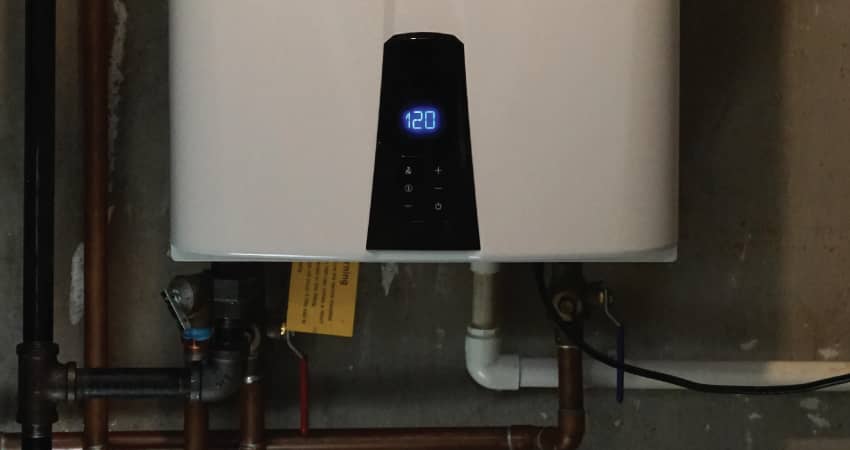
Q: How often should I flush my tankless water heater?
A: At least once a year or more often if you’re having problems
In the Scottsdale area, the water has a high mineral content. You may know it as hard water, and Scottsdale has some of the hardest water in the state. According to the city’s 2025 annual report, the water quality is high and safe to drink, but the high mineral content can be rough on your water heater, causing sediment to build up and settle on components.
You might not notice anything wrong, but even a small amount of this scale makes your tankless water heater work harder. This puts extra strain on your system and can reduce its lifespan. The good news is that if you flush your system regularly and do routine maintenance, tankless water heaters can last 10 to 15 years or longer.
Why Tankless Water Heaters Need Regular Maintenance in Scottsdale
Tankless water heaters heat water on demand rather than storing it in a tank, which makes them efficient but also more vulnerable to mineral buildup. When scale builds up on the heat exchanger and internal pathways, your system must run hotter and use more energy to produce the same amount of hot water. Components wear out faster and, eventually, you’ll see reduce performance, error codes, or shutdowns.
Many tankless manufacturers specifically require annual descaling as part of their warranty terms. In areas with extremely hard water like Scottsdale, you may benefit from flushing more frequently than once a year. A professional flush removes scale from inside the heat exchanger, clears the pathways that control water flow, and allows your heater to operate more efficiently.
During a maintenance visit, one of our experienced technicians will also clean out your system, check the sensors, burner operation, ventilation, and other components that affect system performance. This keeps things running efficiently and protects your equipment for a long life.
What Happens if You Skip Tankless Water Heater Flushing?
Nothing at first. But, you might be looking at a sudden failure, expensive repairs, or full replacement. If you don’t address scale buildup regularly, it’s only going to get worse. Here are some of the things you might start to see.
Reduced Efficiency and Higher Energy Bills
As minerals coat the heat exchanger, your system must use more energy to heat the same amount of water. Your water might not get as hot and your utility bills can rise.
Erratic Temperatures and Flow Issues
Scale disrupts the heater’s ability to regulate water temperature and flow. You may notice hot water cutting in and out or dropping unexpectedly.
Increased Wear on Internal Components
When the heater has to work harder, parts like sensors, valves, and the heat exchanger wear down faster than they should.
Unexpected Shutdowns and Error Codes
Mineral buildup can trigger the safety systems inside the unit, causing sudden shutdowns to prevent overheating.
Shortened System Lifespan
The long-term effect of all these problems is premature system failure that could have been prevented with routine care.
A yearly service appointment from George Brazil helps you avoid issues like these. Technicians familiar with Scottsdale water conditions know exactly how to remove scale safely, evaluate your system health, and make any water heater repairs you need.
Signs Your Tankless Water Heater Needs Service Now
You may need a maintenance visit sooner than your scheduled annual flush if you notice any of the following:
- Fluctuating water temperature
- Lower hot water pressure
- Rumbling, clicking, or unusual noises
- Slow or delayed heating
- Error codes
- Visible mineral buildup around external fittings
These are signs your tankless heater needs attention.
FAQs About Scottsdale Tankless Water Heaters
Can I flush my tankless water heater myself?
You can, but professional flushing is recommended. Improper descaling can damage internal sensors or void the manufacturer’s warranty.
Does hard water damage tankless heaters?
Yes. Mineral buildup is the most common cause of performance problems, error codes, and early failure in Scottsdale tankless systems.
How long does a flush take?
Most appointments take about one to two hours, depending on the condition of your system and how much scale needs to be removed.
Will flushing improve performance?
Yes. Flushing restores efficiency, helps stabilize temperatures, improves water flow, and reduces the risk of sudden shutdowns.
In some Scottsdale homes, an expansion tank helps protect your pipes and water heater from pressure buildup that can damage internal components. High pressures can cause leaks or damage to pipes that have mineral build up.
Schedule a tankless system flush and inspection today and keep the hot water flowing. Talk to one of our team members 24/7 by calling (602) 529-3749.